
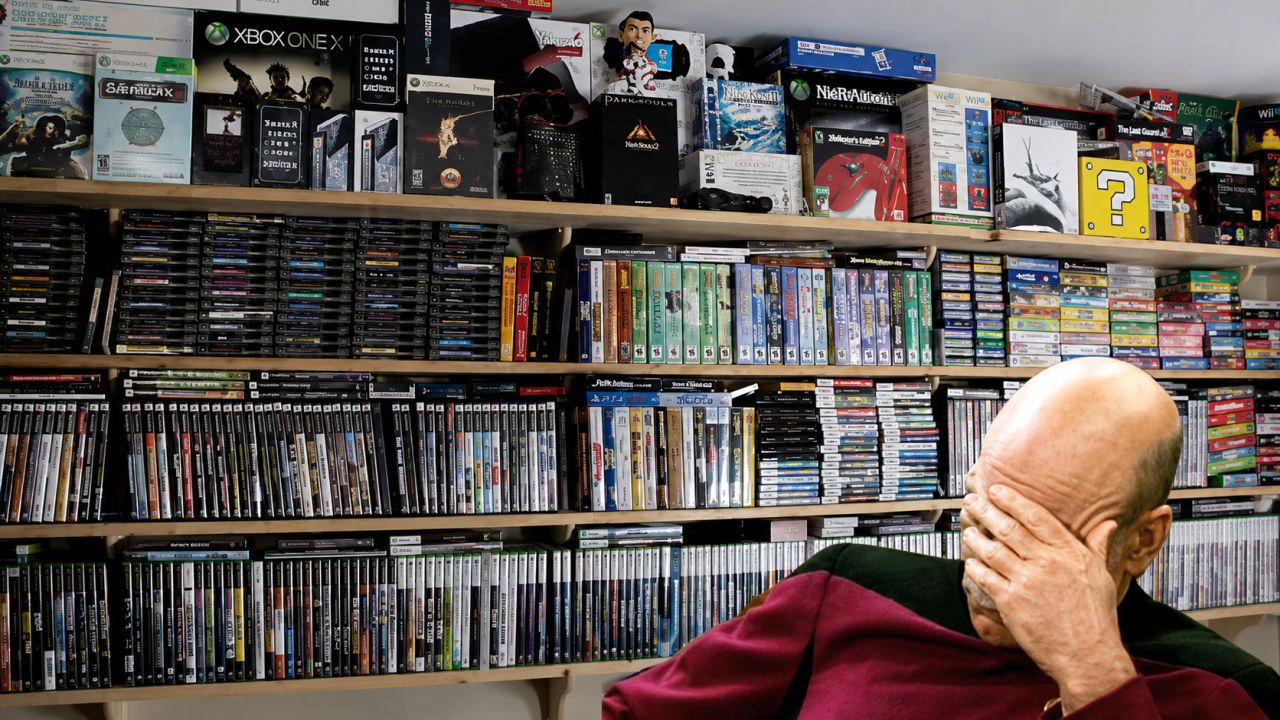
OPINION – Never before have so many excellent games been so easily accessible, yet more and more often we sit in front of digital libraries containing hundreds of titles with the strange feeling that there is “nothing to play.” Steam receives tens of thousands of releases every year, Game Pass and PlayStation Plus offer enormous catalogs, and new AAA, AA and indie games constantly pile on top of one another. Only one thing has failed to expand alongside them: our free time. The backlog is therefore no longer simply a list of games we might return to someday, but one of the strangest paradoxes in modern gaming: the more choice we have, the harder it becomes to decide what we actually want to play.
Once upon a time, a backlog might have meant a few unopened boxes sitting on a shelf after Christmas. Today, a Steam library, PlayStation and Xbox accounts, the Nintendo eShop, Epic Games Store giveaways, Game Pass, PlayStation Plus and permanent digital sales can collectively build a warehouse of games around us, a significant portion of which we will probably never finish. Strangely, that abundance does not necessarily make us feel richer. Sometimes it feels more like choosing dinner from a several-hundred-page menu when we only have forty minutes to eat.
The sheer volume really is staggering. According to SteamDB’s current statistics, more than 21,000 games were released on Steam in 2025, while the 2026 counter was already approaching 15,000 by August. Naturally, that includes countless tiny projects, asset flips, experimental software and barely visible indies, so it does not mean that twenty thousand new Clair Obscur: Expedition 33s or Baldur’s Gate 3s appear every year. But the fundamental point remains: the supply competing for our attention has become physically impossible to follow.
Meanwhile, the industry still often behaves as though a player’s time were an infinitely expandable resource. A new game launches Friday, a season starts Monday, a battle pass appears Tuesday, DLC lands Thursday, and by the weekend another major release is already demanding attention. Digital storefronts constantly show us what else we ought to try, while social media tells us what everyone is discussing right now. The backlog has become not only a shopping list, but a second news feed.
The Supply Keeps Growing, but the Day Still Has Only Twenty-Four Hours
Perhaps the clearest summary of the problem comes not from a psychologist but from Newzoo’s 2026 PC and console report. According to the market research company, industry revenue is growing again while overall player time is essentially stabilizing. In other words, new games are not necessarily creating additional playtime anymore. They are taking it from something else. The market can expand; human life cannot.
Newzoo’s director of market intelligence Emmanuel Rosier put it simply: “Scale alone no longer guarantees outcomes.” The company’s data shows that premium spending rose across major Western markets in 2025 even as playtime declined. That apparently contradictory combination describes the backlog era almost perfectly. We buy more games, care about more games and gain access to more games, but none of that gives us additional evenings.
The effect becomes even clearer in Newzoo’s analysis of release windows. Studying 155 major single-player titles, the company found that since 2021, 45 percent launched during the narrow period between mid-August and mid-November. Researchers also concluded that players are engaging with fewer new titles despite having more options than ever, often committing to only one or two major releases at the same time.
From a player’s perspective, that makes perfect sense. If three fifty-hour RPGs, two major action games and one multiplayer title that wants to become your hobby for the next five years all arrive in the same month, something inevitably gets dropped. Not because it is bad. Not necessarily because it is expensive. Simply because the same three hours between eight and eleven on Tuesday evening cannot be placed into three different games.
At Some Point, the Backlog Stops Being a Collection and Starts Feeling Like Guilt
The digital era initially felt liberating. We no longer needed shelf space or disc swapping, and sales gave us games for a few dollars that once would have cost full price. Then we learned one of the oldest laws of the Steam sale: often we are not buying a game, but the fantasy that one day we will have time to play it. A 75-percent discount still somehow feels like a bargain even when the game is never launched.
From there, it is only a short step before the library turns into a task list. There is the RPG into which we already put twenty hours before stopping. The critical darling we feel we “should” finish. The hundred-hour epic everyone is spoiling online. The old classic we have been promising ourselves for five years that we will finally play during the next quiet weekend. Eventually, instead of asking what we feel like playing, we ask what we really ought to finish.
Subscription services both reduce and intensify this feeling. Xbox Game Pass is brilliant at letting us try something we might never have purchased separately. According to 2025 Ampere Analysis data reported by GameSpot, Xbox users launched an average of 5.7 different games in one month, compared with 4.5 on Steam and 3.7 on PlayStation. Analysts attributed much of that difference to the Game Pass effect.
Yet in the same measurement, Xbox users spent less total time gaming than Steam or PlayStation users. That does not by itself prove choice paralysis, and monthly figures vary considerably depending on major releases, but it illustrates the changing consumption model rather neatly: it is easier to sample five games than to become deeply invested in one. In the past, you bought a game, took it home and probably played it. Today, twenty minutes in, a small voice is already suggesting that something even better might be waiting on the next tile in the catalog.
Old Games Are Not Going Anywhere, and That Is Exactly the Problem for New Ones
The backlog has another unusual quality: new releases are not the only thing making it larger. Old games refuse to disappear. According to Newzoo data published in 2026, 64 percent of PC playtime in 2025 went to games released before 2019. That number sounds extraordinary until you look at the titles that continue to dominate engagement year after year: Counter-Strike, Fortnite, Minecraft, Grand Theft Auto V, Roblox and other long-lived games do not politely vacate their seats when the next generation arrives.
Another Newzoo analysis from 2026 found that it took 79 PC games to account for 80 percent of total playtime in 2025, compared with only 52 games in 2022. Attention is becoming somewhat broader, then, but that does not create new time. We are simply cutting thinner slices from the same cake.
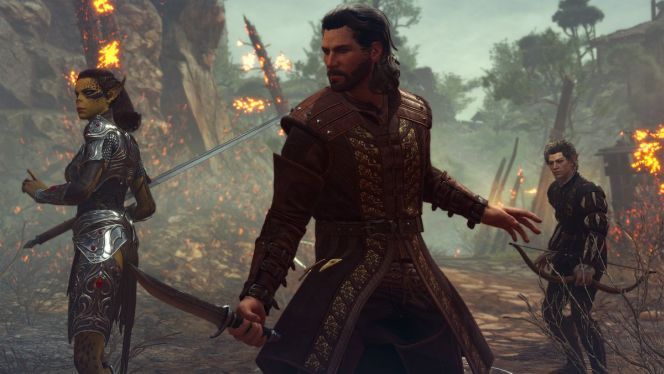
That creates a brutal environment for new releases. A 2026 game does not compete only with other games from 2026. It competes with your unfinished second run of Baldur’s Gate 3, a new Skyrim mod pack, the next Fortnite season, the Civilization campaign you opened for “just one more turn,” and the ten-year-old classic that has suddenly been remastered.
This is why it is misleading when publishers look only at the other new games launching that week. The real competition today is the entire history of gaming. Backward compatibility, digital libraries, remasters, subscriptions and live-service models allow games to remain active far longer than before. A new release no longer has to be merely good. It has to be good enough to make us put down something we already love.
A Hundred-Hour Game Is Not a Gift if We Do Not Have a Hundred Hours
Then there is modern gaming’s strange obsession with content quantity. For years, we discussed playtime as though entertainment were sold by weight. Thirty hours sounded short, sixty sounded better, and a hundred promised excellent value. That mentality helped create a world in which an RPG may include three smaller games’ worth of side quests, collectibles, crafting and map-clearing alongside its main story. On paper, that sounds wonderful. From a backlog perspective, every additional hundred-hour game is another multi-month commitment.
Former Bethesda lead quest designer Will Shen spoke directly about this in 2025. In an interview quoted by GameSpot, he argued that “a growing section of the audience” is becoming tired of committing thirty or a hundred hours to another game. Shen’s point was that players already have titles they continually return to, and adding another enormous commitment to that list is becoming a much tougher proposition.
Former PlayStation president Shawn Layden approached the same issue from another direction in summer 2026. In an Eurogamer interview summarized by GameSpot, he noted that younger players are often “time-rich and money-poor,” while people around thirty may face almost the opposite situation. Layden argued that the industry therefore needs to ask a much more basic question again: who exactly are we building this game for?
None of this means long games are bad. Elden Ring, Baldur’s Gate 3 or a great Persona work because their length is supported by meaningful content. The problem begins when duration becomes a marketing metric in itself and a focused fifteen-hour adventure is automatically treated as lesser value than an eighty-hour world padded with filler. Sometimes the greatest luxury is not getting a hundred hours for our money, but being allowed to finish something after twenty excellent ones.
Escaping the Backlog Era Requires Less Guilt, Not More Time
The industry is already feeling the economic side of the problem. In Circana’s 2026 U.S. forecast, 38 percent of respondents said higher costs would make them buy fewer full-price games at launch, while 34 percent said they would wait longer for sales. Newzoo sees the same behavior around crowded release windows: if a game does not become one of a player’s top one or two priorities, it can quickly slide into the “maybe when it is discounted” category. From there, it is one short step into the backlog.
For the player, however, the solution may be simpler than we like to admit: we do not have to finish everything. We do not need to “work through” our Steam libraries. We do not have to continue a sixty-hour game because we have already invested twenty hours in it. And we certainly do not need to play something merely because everyone else is talking about it. Gaming is a hobby, not a timesheet.
One of the most liberating realizations may simply be that a backlog is not debt. The games we bought are not sitting on the edge of the bed each evening demanding an explanation for why we have not reached them yet. If a game remains untouched for five years and then turns out to be exactly what we need on a rainy November evening, it has still served a purpose. If we never launch it, perhaps all we learned was how easy it is to fall for an 80-percent discount.
The industry, meanwhile, should accept that player time has become the real premium currency. The greatest competitive advantage is not having six hundred quests, but making players feel that the two hours they gave you tonight were worthwhile. A shorter game, a tightly edited campaign, an AA production, a thirty-hour RPG or even an eight-hour narrative adventure is not lesser value simply because it refuses to consume an entire month of our lives.
So in reality, there is no such thing as “nothing to play.” The opposite is true: there is too much. The trap of the backlog era is that we turned extraordinary abundance into homework and entertainment into an optimization problem. Yet the same rule that worked thirty years ago still works now: choose a game you genuinely want to play and keep playing while it feels good. If two hours later you want something else, turn it off. The library will wait. Unfortunately, so will the next thirty releases.
-Gergely Herpai „BadSector”-







Leave a Reply