
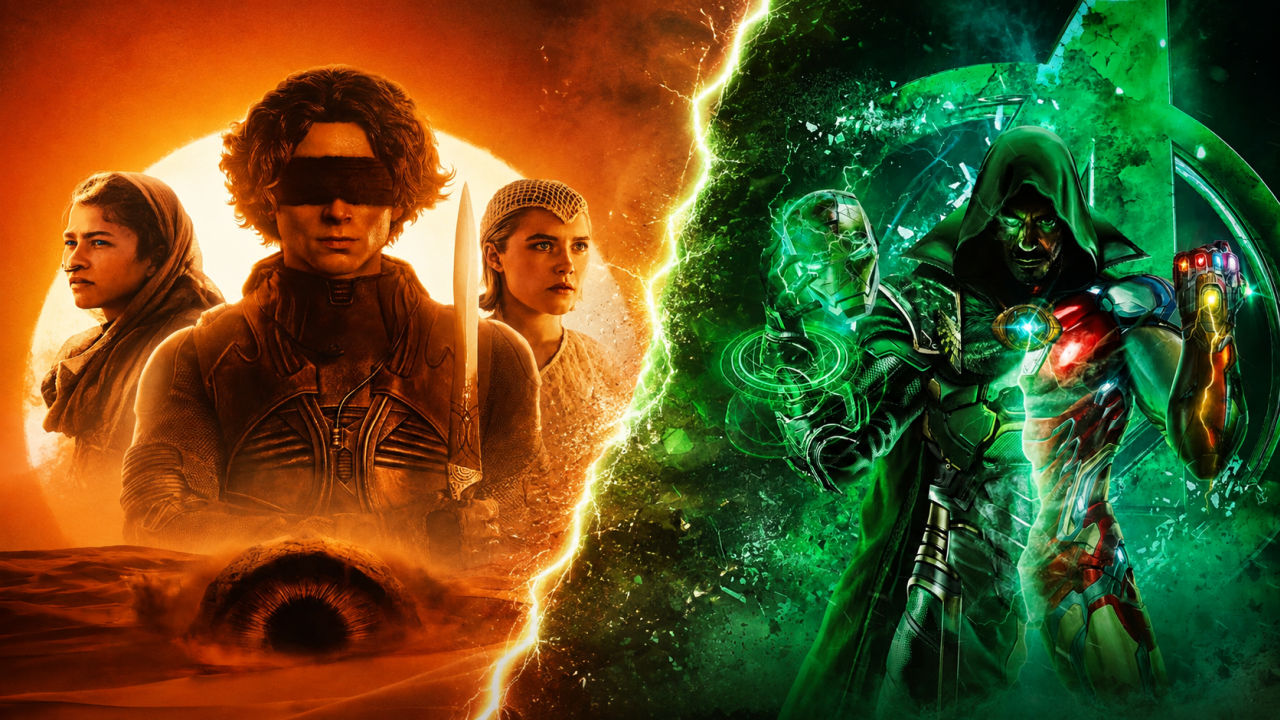
OPINION – On December 18, 2026, two Hollywood giants will arrive in U.S. theaters simultaneously, competing for the same weekend, the same premium screens and, to a significant degree, the same audience. Avengers: Doomsday brings Marvel’s former glory, Robert Downey Jr. and what appears to be half of comic-book history into battle, while Denis Villeneuve’s Dune: Part Three arrives armed with IMAX cameras, auteur prestige and the finale of one of the most carefully constructed science-fiction series of recent years. “Dunesday” is therefore far more interesting than a simple question of which movie earns more money: December may also reveal what can still persuade audiences to leave home and what kind of blockbuster Hollywood will want to make next.
Hollywood usually starts making nervous phone calls when two hundred-million-dollar productions accidentally wander into the same month. Yet Warner Bros. and Legendary’s Dune: Part Three and Disney and Marvel’s Avengers: Doomsday are currently scheduled to open in the United States on the exact same Friday, December 18, 2026. These are not distant genres, not a pink comedy facing a three-hour drama about the atomic bomb, but two enormous science-fiction spectacles. The question this time is not which member of a couple chooses which movie, but how many people have the money, time and lower-back endurance to spend roughly six hours in a theater over the same weekend.
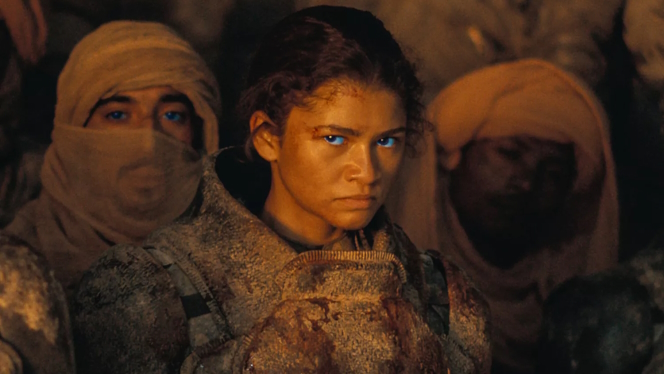
The situation is so absurd and so easily marketable that Robert Downey Jr. and Timothée Chalamet had already given it a name by January. During a conversation together, Downey noted: “We both have films opening on December 18, and we decided to coin it: we’re thinking Dunesday.” He then joked that they would see whether they were still friends by then. It is difficult to order a more Hollywood-style introduction: the studios have not officially started strangling each other, yet their stars have already begun selling the rivalry. The joke becomes even better because Florence Pugh appears in both films, making her perhaps the only person in Hollywood who genuinely cannot choose the wrong side.
Barbenheimer Cannot Simply Be Reheated
The “Dunesday” label immediately invited comparisons with the same-day release of Barbie and Oppenheimer in 2023, which unexpectedly became a cultural event. Yet the magic of Barbenheimer came precisely from the fact that those films were almost comically different. Greta Gerwig’s pink pop-cultural comedy and Christopher Nolan’s grim historical drama functioned as counterprogramming, so a substantial portion of the audience did not choose between them but watched both. The internet then performed the kind of marketing work that normally costs a studio an indecent amount of money.
Dune: Part Three and Avengers: Doomsday, however, are playing in the same sandbox. According to TheWrap’s analysis, the opening audiences for Dune: Part Two and Avengers: Endgame were both at least 60 percent male, with significant overlap among moviegoers who rush to see major science-fiction, fantasy and comic-book films on opening weekend. That does not automatically mean one movie will suffocate the other, but the comfortable Barbenheimer logic of “one on Friday, the other on Saturday” faces a much harder test here. Both productions want to feel like the event of the weekend, and consuming two events at once is more demanding than it sounds.
Some exhibitors are therefore not celebrating the pairing without reservations. A representative for one theater chain told The Hollywood Reporter simply: “Someone’s gotta move.” The representative argued that concentrating two guaranteed blockbusters into a single weekend creates an unnecessary level of overload, particularly after the difficult years theaters have endured. The position is understandable: theater owners obviously enjoy one sold-out weekend, but they would probably enjoy two sold-out weekends even more.
Variety’s March box-office analysis, however, concluded that neither movie was particularly likely to move. The Christmas corridor is enormously valuable, alternative dates in the calendar are limited, and both studios believe they are holding a film too important to retreat simply because a rival planted a flag on the same day. If nobody blinks, the result is a December game of box-office chicken. Audiences get two birthday cakes at once; unfortunately, they still have to pay separately for each slice.
Marvel Is Testing More Than Its Box Office
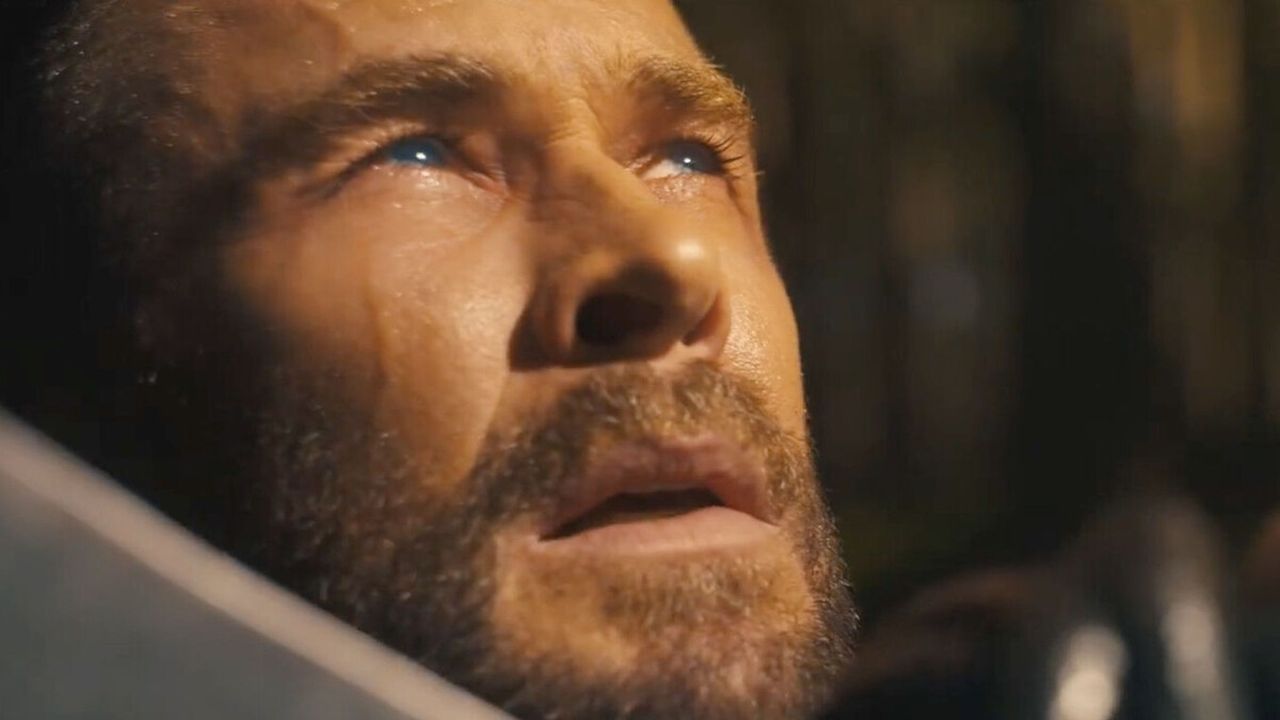
Purely by historical numbers, Marvel enters the contest from the stronger position. Avengers: Endgame opened to $357 million domestically in 2019 and eventually earned nearly $2.8 billion worldwide, records that make the financial reports of most blockbusters look like loose change. Dune: Part Two, by comparison, earned a little over $714 million globally. If we judge only by the historical weight of the franchises, Avengers: Doomsday is the heavyweight champion and Dune: Part Three is a highly elegant, extremely dangerous challenger.
Marvel, however, is not standing where it stood during Avengers: Endgame. The years afterward brought too many streaming series, too many interconnected plot threads and several weaker-performing movies that diluted the sense that every MCU release was mandatory viewing. The studio is hardly dead, and the summer of 2026 offered a rather spectacular reminder: according to Variety, Spider-Man: Brand New Day crossed $1 billion globally in only six days. “Superhero fatigue” may therefore be closer to mediocre-superhero-movie fatigue. When audiences believe something genuinely important is happening, they still remember where the theater entrance is.
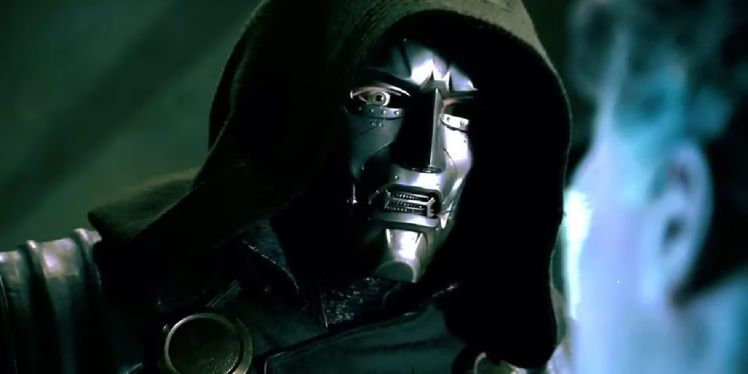
Avengers: Doomsday consequently represents more than another Marvel release. The Russo brothers are back, Robert Downey Jr. returns not as Tony Stark but as Victor von Doom, and the movie promises to bring together the Avengers, the Fantastic Four, the X-Men and several other corners of Marvel history. This could become Marvel’s great resurrection or the moment audiences recognize that the studio has brought the family silver back onto the table because it desperately needs a feast. Downey’s return could be inspired, but if the entire project exists mainly to resell memories of Avengers: Endgame, December will reveal that quickly.
Current audience research nevertheless gives Marvel a substantial advantage. Brandon Katz, director of insights and content strategy at Greenlight Analytics, argues that even though casual moviegoers are no longer automatically committed to the MCU, “the floor of core fans is still absolutely massive.” Greenlight’s late-July figures showed 77.2 percent general interest in Avengers: Doomsday among frequent moviegoers compared with 70 percent for Dune: Part Three; theatrical intent stood at 65.3 percent versus 54.8 percent. Katz said he would be shocked if Dune: Part Three outgrossed Avengers: Doomsday on opening weekend in North America, although he also believes there is enough room for both films to succeed.

Villeneuve Is Not Building a Franchise Machine, He Is Demanding a Movie Screen
Dune: Part Three arrives with an entirely different kind of strength. Across two films, Denis Villeneuve transformed a novel once routinely described as unfilmable into a prestige blockbuster capable of being a critical favorite, an awards contender and a genuine commercial success at the same time. Dune: Part Two won two Oscars from five nominations and accomplished something rarer than earning $714 million worldwide: it convinced audiences that this particular movie genuinely needed to be seen on a large screen. Hollywood writes that sentence on almost every trailer; for some reason, people actually believed Villeneuve.
The third film also clearly intends to avoid simple repetition. According to Variety’s CinemaCon report, Villeneuve said: “I didn’t want to walk in my own footsteps. I wanted to do something new.” He described the first film as more meditative and contemplative, the second as a war movie, and the third as a thriller that will be faster, more action-driven and more emotional. That is already a more interesting promise than a sequel whose primary innovation is finding room for even more characters on the poster.
Dune: Part Three is also the conclusion of Villeneuve’s own trilogy, based on Frank Herbert’s Dune Messiah. The director has described saying goodbye to Paul and Chani as the end of a ten-year journey, making this something other than another episode on an endless conveyor belt. That distinction matters. Marvel’s Avengers: Doomsday is explicitly a gateway to Avengers: Secret Wars one year later and to whatever transformation follows inside the MCU, while Villeneuve’s film is supposedly being made to finish something. In contemporary Hollywood, an ending has almost become a radical artistic statement.
And then there is Dune: Part Three’s most powerful weapon in December: IMAX. The film has secured three weeks of exclusive access to American IMAX screens, meaning Avengers: Doomsday will not debut in that format domestically. Disney responded by launching its Infinity Vision certification for other premium large-format theaters. IMAX CEO Rich Gelfond responded with remarkably little diplomacy, describing Infinity Vision not as a technological advance but as a “marketing initiative” created because Disney could not play Avengers: Doomsday in IMAX. It is rare for a dispute over projection formats to become more entertaining than the entire marketing campaign of a smaller movie.

Theaters Could Be Saved by Dunesday, Assuming They Survive the Weekend
Theoretically, the greatest winner of Dunesday could be moviegoing itself. The year 2026 has already delivered a striking theatrical rebound: after the success of Spider-Man: Brand New Day and The Odyssey, Variety reported in August that Hollywood hoped annual domestic box office would pass $10 billion for the first time since 2019. Two enormous films arriving together at the end of the year could provide the kind of final push that multiplexes continue counting well into January. If both movies are good, December 18 could genuinely become one of the largest collective theatrical weekends of the post-pandemic era.
The problem is that theaters must physically accommodate both monsters. Each wants enormous auditoriums, large numbers of showtimes and premium formats while several other holiday releases would also prefer not to disappear entirely. It is hardly a coincidence that the next Jumanji shifted to Christmas Day, one week after Dunesday. A strong slate is good for exhibition, but too many guaranteed hits arriving simultaneously can resemble trying to consume an entire month of Christmas dinners in one evening: the abundance is wonderful until somebody has to stand up.
December is unusual, however, because major films do not live entirely on their opening weekend. Holiday weekdays are strong, family schedules are flexible and successful event movies can earn enormous sums for weeks. It is therefore possible that Avengers: Doomsday wins the opening weekend decisively while Dune: Part Three builds wealth through IMAX, critical reception and longer legs. This will not be a simple hundred-meter sprint. One runner starts with a rocket strapped to its back; the other has already reserved the best lane for three weeks.
What is certain is that Hollywood does not want either movie to disappoint. One must prove that the Avengers name still represents a global theatrical event, while the other needs to demonstrate that serious, director-driven science fiction can operate at true blockbuster scale. If either one fails noticeably, studios will not spend long contemplating the subtleties. One of Hollywood’s oldest traditions is drawing a three-year strategic conclusion from the results of one weekend.
On December 18, We Are Buying Tickets to Two Different Versions of Hollywood
That is why Dunesday is more interesting than the final number beside each movie’s title. Avengers: Doomsday represents franchise Hollywood in its purest form: famous characters, returning stars, multiple generations colliding, nostalgia, universe-building and a story designed to lead directly into another movie. Dune: Part Three is also an enormous studio production and obviously part of a franchise, yet audiences associate it far more strongly with one filmmaker, a coherent visual language and the idea that a blockbuster can still feel like an auteur film. This is not David against Goliath. It is Goliath against a somewhat more artistic Goliath.
If Avengers: Doomsday crushes December, Hollywood may conclude that audiences still want shared universes, returning icons and event films built around the promise that everyone is here. In that scenario, Robert Downey Jr.’s Doctor Doom will not be viewed as a one-time rescue operation but as additional proof that nostalgia has become one of the industry’s safest currencies. If Dune: Part Three gets far closer than expected or demonstrates much stronger staying power, the message becomes very different: audiences are also willing to pay in enormous numbers for serious, stylistically distinctive spectacle designed around the theatrical screen itself.
The best result would obviously be for both movies to become enormous successes. Hollywood might then learn something more useful than “make ten more Marvel movies” or “turn everything into a three-hour desert epic”: audiences still love movie theaters when the movies feel like genuine events worth paying for. The 2026 audience no longer appears automatically simply because a studio spent $200 million. But when people believe that something should be experienced now, on a huge screen and in a room full of other people, they are still willing to get off the couch.
That is why I hope neither studio blinks before December. I want to see what Marvel’s full nostalgia arsenal and Villeneuve’s directorial prestige are worth when they have no separate weekends, no excuses and many of the same customers voting with the same wallets. Avengers: Doomsday will probably open bigger and Dune: Part Three will almost certainly sell more IMAX tickets, but the more revealing question will be which film people are still discussing a month later. On December 18, Paul Atreides and Doctor Doom are not merely competing with each other: two different ideas about what the next decade of Hollywood spectacle should look like are entering the same theater.
-Gergely Herpai „BadSector”-













Leave a Reply