
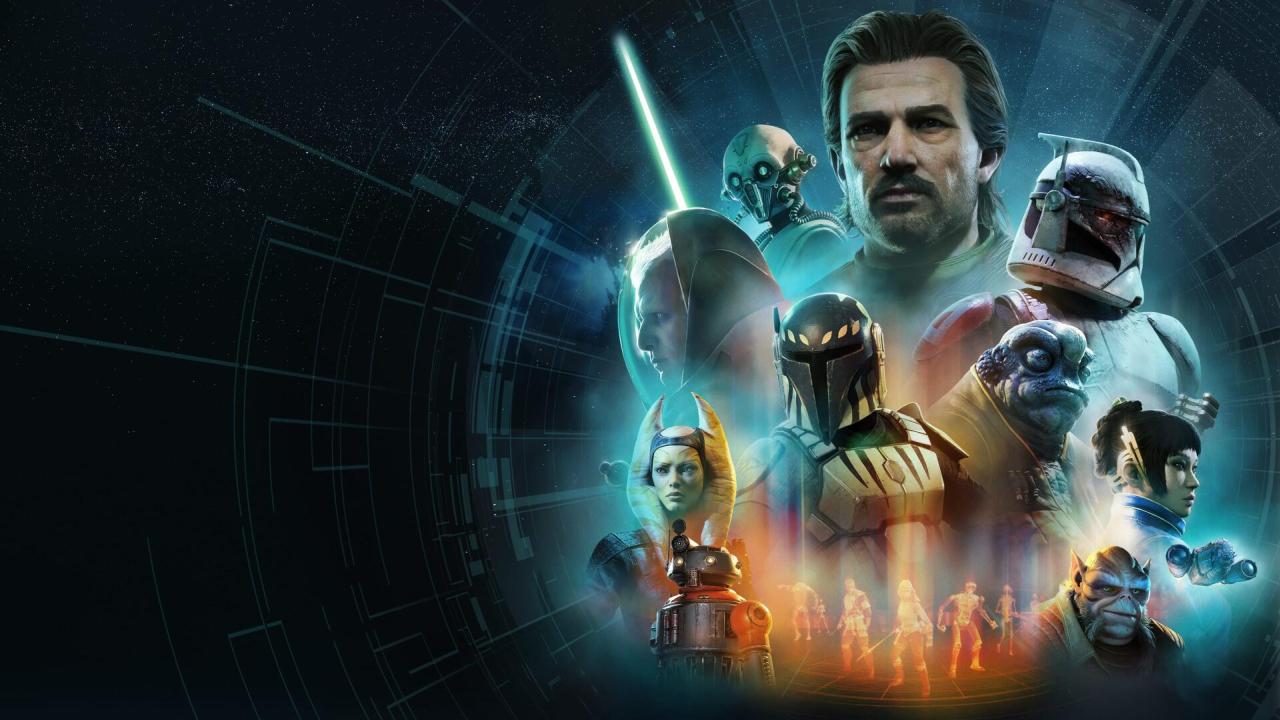
REVIEW – Star Wars: Zero Company takes one of those ideas that feels overdue the moment you play it: a squad-based tactical RPG set during the final years of the Clone Wars. Hawks and his mercenary outfit are not galactic saviors or another conveniently forgotten branch of the Skywalker family; they are professionals taking dangerous jobs in the parts of the war that rarely make it into the legends. Bit Reactor builds the campaign around four-person squads, three action points per Operator and a combat system that rewards careful positioning without burying every turn under layers of unnecessary complexity. The XCOM influence is impossible to miss, but after a few missions Zero Company stops feeling like a licensed variation on somebody else’s formula and starts making a convincing case for itself.
The combination of Star Wars and XCOM-style tactics feels so natural that the strange part is how long it took somebody to build a full game around it. Hawks is a former Republic officer who now leads Zero Company, a mercenary outfit operating during the increasingly unstable final stretch of the Clone Wars, where keeping the crew alive and the company solvent matters rather more than earning a place in galactic history. A series of relatively conventional contracts soon draws the team toward the Separatist-aligned Infinite Coil, its leader Kundri Fathom and the growing threat surrounding the Shadow Plague. The stakes expand considerably from there, but the campaign never makes the mistake of turning Hawks into a previously unknown figure without whom the entire Star Wars timeline would somehow collapse.
That smaller perspective gives the story much of its appeal. The major events of the war continue beyond the edges of Zero Company’s operations, while we deal with local conflicts, old grudges, family problems and missions that have slipped through the cracks between the Republic’s larger military campaigns. There is always a sense that history is moving somewhere unpleasant in the background, yet the game rarely feels obliged to drag its mercenaries into every famous event merely to prove that the license is being used. Hawks and his crew remain relatively small players in a huge conflict, and their victories feel more convincing because of it.
The squad itself benefits from the same restraint. Bounty hunters, clones, mercenaries, a Mandalorian, droids and a Jedi Padawan end up fighting side by side, but nobody enters the story looking as though they could flatten Darth Vader before lunch. Their personal arcs are fairly straightforward and a few end just when they begin to gather momentum, yet the group develops an easy chemistry that gradually makes the roster feel like more than a collection of useful abilities. Hawks occasionally delivers dialogue with enough cheese to provision a Hutt banquet, but there is something likable about his worn-down veteran routine. By the time the campaign starts putting the squad in serious danger, the question is no longer simply which build would be painful to lose, but which character you would genuinely rather bring home.

A Leaner Campaign With a Faster Strategic Loop
The roughly 20-to-25-hour campaign moves at a smart pace. Side operations are usually compact enough that they do not automatically consume an entire evening, while major story missions can link several tactical encounters with shorter third-person exploration sequences between them. Those sections are mechanically simple and nobody will mistake them for Jedi: Survivor, but they do useful work by giving the characters and locations a physical presence outside the tactical grid. More importantly, they break up the campaign without keeping us away from the combat for too long.
Between deployments, the Den serves as Zero Company’s headquarters. Facilities can be upgraded, equipment purchased, intelligence gathered and limited resources committed to smaller decisions that occasionally matter more than they first appear. Credits remain scarce enough that a new weapon or upgrade can still force an actual choice instead of becoming another automatic purchase. Compared with XCOM 2, however, the broader strategic layer is clearly slimmer. Players who enjoy spending almost as much time running an organization as fighting battles may miss some of that complexity, but the faster return to the field suits the pace of Zero Company surprisingly well.
Relationships between Operators also feed directly into combat. Characters deployed together develop stronger Bonds and increasingly useful synergies, which gives a veteran squad a genuine mechanical identity rather than merely making it familiar to the player. The drawback is that the system encourages loyalty to the same successful four-person team, and the campaign does not challenge that habit often enough. Injuries or permanent death can destroy a comfortable lineup in an instant, but I would have liked more missions that deliberately forced us to rely on the wider roster rather than treating the bench as insurance for disaster.

Three Action Points Make Every Turn Matter
Combat is where Zero Company makes its strongest argument. Every Operator receives three action points that can be spent on movement, attacks, abilities, healing and other tactical actions, giving each turn considerably more flexibility than a rigid move-then-fire structure. A four-person squad initially sounds restrictive, but it makes perfect sense once the game places eight or nine enemies on the field, blocks one approach and announces another wave of reinforcements. There is rarely a spare fifth soldier standing around to repair a careless decision, so even a single wasted action can become expensive.
Mission design does a good job of keeping that system from settling into routine. Some operations ask us to hold a position, others involve extraction, rescues, stopping reinforcements or surviving several connected engagements as the situation changes around the squad. Elevation, cover and flanking are familiar foundations, but the combination of enemy variety and shifting objectives keeps most maps from feeling like the same tactical puzzle with new scenery. The best encounters often look thoroughly unpleasant when they begin, with too many targets and not enough safe ground to deal with them.
Then the possibilities start to emerge. One Operator reaches higher ground, another forces an enemy out of cover, a third establishes an Overwatch lane and suddenly a battle that looked seconds away from collapse becomes a controlled firing line. These are the turns that make starting another mission at 1:30 in the morning seem perfectly reasonable. The opposite can happen just as quickly: the carefully constructed sequence falls apart because the supposedly reliable shot misses, reinforcements arrive and the tactical masterpiece becomes an emergency withdrawal. Zero Company understands that both outcomes are part of the appeal.
The Advantage system adds momentum without turning every encounter into homework. Successful linked attacks generate points that can be spent on more powerful abilities, allowing an efficient turn to set up the next major play rather than simply reducing health bars. Eight standard classes are joined by specialist roles such as Bounty Hunter and Jedi, while secondary specializations later allow Operators to develop in directions that can substantially change their battlefield function. A healer who becomes a lethal pistol specialist or a heavy fighter with scouting tools feels genuinely different, not merely like the same class with another five-percent modifier attached to it.
Overwatch is similarly well handled. Instead of activating a vague reaction-fire state and hoping the enemy cooperates, the player defines the actual firing zone, making it possible to establish kill lanes and then push or manipulate targets directly into them. Weapon categories are distinct enough that the largest damage number is not automatically the best answer, while utility items open up further tactical options. None of these systems is revolutionary in isolation, but together they create a combat model with very few wasted parts.

The Den Gives Zero Company a Life Beyond the Battlefield
Back at base, squad members talk, react to events and unlock personal missions, while even generated mercenaries contribute smaller interactions of their own. The Den never becomes a full-scale RPG hub, but after several operations it starts feeling like somewhere the company actually lives rather than an upgrade screen with extra furniture. Several character threads stop earlier than I would have liked, and there is no attempt to turn every corridor conversation into a three-hour psychological excavation, but there is enough personality here for permanent death to mean more than losing a carefully optimized build.
The Star Wars atmosphere is strongest when it works through small details instead of obvious fan service. Droid voices, classic screen wipes, Republic hardware, Separatist machinery, distant blaster fire and familiar environmental sounds constantly reinforce the setting without demanding a celebrity cameo on every planet. Bit Reactor understands that Star Wars does not need to announce itself every five minutes. Sometimes an astromech rolling through the background or the sound of the right door opening does more for the illusion than another famous face could.
The main plot never reaches the heights of Knights of the Old Republic, and Fathom in particular could have benefited from considerably more time on screen. Some companion arcs wrap up too quickly, while Hawks’ humor occasionally crosses from endearingly corny into full industrial dairy production. Even so, the story rarely gets in the way of the game, which is more valuable than it sounds in a tactics RPG. By the finale, the crew matters enough that seeing them survive the campaign feels like an outcome rather than a box the story was always going to tick.

PS5 Pro Still Needs Considerably More Polish
The PS5 Pro version we tested is far less convincing technically than the combat design surrounding it. The game is officially enhanced for Sony’s more powerful console, yet even the performance-focused presentation produced brief hitches, uneven frame delivery and noticeable slowdowns during certain camera movements. None of this destroys a turn-based tactics game, where a fraction of a second rarely determines success or failure, but that does not make the interruptions invisible. They are particularly difficult to ignore when a routine tactical camera rotation produces the kind of hesitation premium hardware should be minimizing.
Delayed texture loading is far more distracting. Camera cuts during cinematic scenes can expose a face, outfit or environmental surface at visibly reduced detail before the proper asset appears a moment later, sometimes followed by another small adjustment in material definition or lighting. Close-ups suffer the most because the game is clearly framing a character for cinematic presentation while the image is still finishing itself in front of the player. Similar behavior has been reported on other hardware as well, so it would be too simplistic to treat this as an exclusively PS5 Pro-specific problem. Whatever the exact cause, asset streaming and level-of-detail management clearly need more work.
Shadow rendering can look worse still. Large, blocky dark patches occasionally move across faces or clothing, while hair, beards and other fine geometry can develop noisy or unstable edges that clash badly with the much cleaner underlying character models. When it happens in a close-up, the contrast is severe enough to recall some of the less flattering visual shortcuts of the PS3 generation. The problem is intermittent rather than constant, but once the eye catches one of these artifacts it becomes difficult to look anywhere else.
Hair and some cloth animation create another odd inconsistency. In certain cutscenes the head and body move smoothly while strands of hair, facial hair or pieces of clothing follow in visibly choppier steps, occasionally accompanied by bright or shimmering edges. This is not simply a matter of limited geometry; the motion itself appears temporally disconnected from the rest of the character animation. A perfectly serviceable modern model can therefore look unexpectedly cheap for several seconds because different parts of the same character seem to be updating at different rhythms.
Multi-level battlefields add smaller camera frustrations. The view can cling to the wrong elevation, hide an important action behind scenery or push the cursor onto another floor during tile selection, which becomes more than a cosmetic annoyance in a game where a single square can determine an entire turn. The original PC review also reported frame drops, camera-related performance issues and enemies occupying the same tile, while players on PS5 Pro have described texture pop-in, flickering and inconsistent performance as well. Not every problem appears with the same frequency for every player, but there is clearly more technical cleanup to be done after launch.

Strong Art Direction, Much Less Consistent Rendering
The 64/100 graphics score therefore needs an important distinction between artistic direction and technical execution. Armor, droids, weapons, ships, terminals and environments fit the Clone Wars extremely well, and several tactical arenas look excellent from the standard battlefield camera. Move closer, however, and the weaknesses become more obvious: inconsistent materials, visible detail transitions, delayed textures, unstable shadows and hair-related artifacts regularly undermine character shots. The score reflects what the PS5 Pro actually produces on screen, not the much stronger work of the artists who clearly understand the visual language of Star Wars.
Audio is almost the opposite story. Blasters, lightsabers, droids and explosions sound exactly as they should, while smaller touches such as a deflected bolt ricocheting into nearby cover give the battles a physicality they did not strictly need but absolutely benefit from. The soundtrack remains recognizably Star Wars without spending the entire campaign trying to impersonate John Williams. A well-timed screen wipe or a distant droid sound often contributes more to the atmosphere than an entire sequence built around a familiar cameo.
Presentation consequently exists in two very different states. One moment everything works: the battlefield composition is strong, combat is raging in the background, the score lands perfectly and a Jedi deflection looks exactly right. Then the camera cuts closer, facial hair starts shimmering and a large shadow artifact crawls across someone’s cheek. Zero Company rarely suffers from a lack of visual identity; its technical implementation simply fails to present that identity with the consistency it deserves.

The Tactical Core Is Strong Enough to Carry the Rough Edges
The most encouraging thing about Zero Company is that after a while I stopped thinking about the rendering problems and went back to working out how many droids could be forced into a single Overwatch lane. A well-constructed turn lets us build Advantage, strip enemies out of cover, manipulate their position and finish the sequence with one carefully timed attack, creating the brief and dangerous impression that we are military geniuses. The next operation can erase that confidence immediately when the supposedly safe shot misses, another wave enters the map and the brilliant commander from five minutes ago starts looking for the extraction point.
That rhythm is exactly why the campaign is so difficult to put down. Zero Company knows how to create situations that look threatening without feeling arbitrary, and when a plan succeeds it usually feels like the result of decisions we actually made rather than statistics simply falling in our favor. When things go badly, the game is often even more interesting, because damaged plans force improvised solutions instead of immediately sending us to the reload screen. The old XCOM tension is unmistakably present, but Bit Reactor understands it well enough to do more than imitate it.
The strategic layer could go deeper, the wider roster should matter more often, and several narrative threads, particularly Fathom’s, deserve additional room. The PS5 Pro build also needs meaningful work around texture loading, shadow stability, hair animation and frame consistency, especially because those issues frequently appear during scenes designed to showcase the presentation. These are problems that patches can realistically improve; fixing a weak tactical foundation after release would be far more difficult. Fortunately, that is the part Bit Reactor got right.
If you have spent the years since XCOM 2 waiting for another substantial, big-budget turn-based tactics RPG, Star Wars: Zero Company is easy to recommend. Star Wars fans get an even better deal because the license feels integrated into the mechanics instead of painted over them. Players who are particularly sensitive to visual issues may want to wait for additional PS5 Pro updates, but the game underneath is already excellent. Just do not trust yourself when you say “one more mission,” because there is a very good chance the next time you check the clock, daylight will already be coming through the window.
-Gergely Herpai „BadSector”-
Pros
- Excellent, tense and flexible tactical combat
- Strong class combinations, abilities and squad synergies
- Authentic Star Wars atmosphere built around a likable mercenary crew
Cons
- Uneven PS5 Pro performance, delayed texture loading, shadow glitches and inconsistent hair animation
- Base management and the broader strategic layer could be deeper
- The campaign rarely forces meaningful use of the full roster
Publisher: Electronic Arts
Developer: Bit Reactor, in collaboration with Lucasfilm Games
Genre: Turn-based tactical RPG / strategy
Release: August 27, 2026
Star Wars: Zero Company
Gameplay - 92%
Graphics - 64%
Story - 82%
Music/Sound - 93%
Atmosphere - 91%
84%
EXCELLENT
Star Wars: Zero Company needs far more technical polish on PS5 Pro than we would like to see on hardware this capable, but Bit Reactor has already solved the harder problem: it created a tactical system that keeps dragging us back into the next operation. The Star Wars atmosphere is excellent, the crew is easy to like, and the battles repeatedly deliver that peculiar pleasure of spending five minutes constructing a brilliant plan before destroying it with one missed shot. If patches clean up the majority of the visual issues, there will be very little left to seriously hold against it.

![Shadow of the Road: You Can Now Try Out This Japanese Adventure [VIDEO]](https://thegeek.games/wp-content/uploads/2026/08/theGeek-05-shadow-of-the-road-1280x720-1-302x180.jpg)
![Etre: A Metroidvania with a sci-fi twist [VIDEO]](https://thegeek.games/wp-content/uploads/2026/08/theGeek-04-etre-1280x720-1-302x180.jpg)
![Greak 2: Alliance of the Storms: A Hand-Drawn Metroidvania Set in Synoraz [VIDEO]](https://thegeek.games/wp-content/uploads/2026/08/theGeek-02-greak-2-1280x720-1-302x180.jpg)
![Graveyard Keeper II: TinyBuild Joins the September Rush [VIDEO]](https://thegeek.games/wp-content/uploads/2026/08/theGeek-01-graveyard-keeper-ii-1280x720-1-302x180.jpg)


![Shadow of the Road: You Can Now Try Out This Japanese Adventure [VIDEO]](https://thegeek.games/wp-content/uploads/2026/08/theGeek-05-shadow-of-the-road-1280x720-1-300x365.jpg)
![Etre: A Metroidvania with a sci-fi twist [VIDEO]](https://thegeek.games/wp-content/uploads/2026/08/theGeek-04-etre-1280x720-1-300x365.jpg)
![Wolcen II: A Cautious Start, Strong Growth? [VIDEO]](https://thegeek.games/wp-content/themes/gameleon/assets/images/placeholders/300x365.png)
![Greak 2: Alliance of the Storms: A Hand-Drawn Metroidvania Set in Synoraz [VIDEO]](https://thegeek.games/wp-content/uploads/2026/08/theGeek-02-greak-2-1280x720-1-300x365.jpg)