
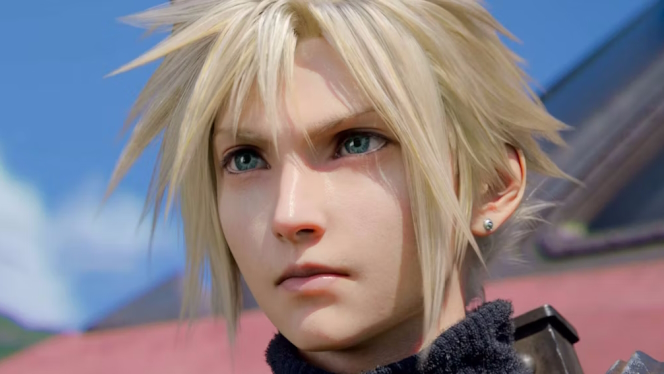
The reimagining of Final Fantasy VII is still generating debate, but Square Enix says the decision was not a creative luxury, but a technical and narrative necessity. Naoki Hamaguchi, director of Final Fantasy VII Rebirth, has once again explained why the 1997 JRPG could only be properly rebuilt as a trilogy. Meanwhile, the announcement of the third entry may now be getting closer.
Even now, some people still question Square Enix’s decision to turn Final Fantasy VII into a trilogy, even though the original JRPG was released as one complete game in 1997. A single classic has now been reimagined as three big-budget AAA projects, while Final Fantasy VII Remake Part 3 still has not been officially announced, although that could change soon. The debate, however, continues: would it have been better to compress everything into one game, or was the three-part structure really the only realistic option? According to Square Enix, this was not a matter of preference, but a sober assessment of production scale and narrative volume.
Naoki Hamaguchi, director of Final Fantasy VII Rebirth, has once again addressed why Square Enix chose a trilogy instead of a single, all-encompassing remake. According to the Japanese creative, the situation was not about the studio simply “wanting” to make a trilogy, but about the sheer amount of story and content making any other approach unrealistic. “It wasn’t so much a question of wanting to make a trilogy. The most accurate assessment is that, after objectively evaluating the enormous volume of story and content that needed to be represented, no option other than a trilogy was realistic,” Hamaguchi said in an interview with ntower.
The co-director of Final Fantasy VII Remake also acknowledged that the decision to structure the project into three parts had already been made by the time he joined the team, but he still believes it was the only viable path. To illustrate this, he pointed to the Midgar section: in the original game, it is a relatively short portion, yet it is packed with information about the world, the characters, and the foundations of the story. “It’s a relatively short part of the original game, but it’s incredibly condensed with information about the world, the characters, and the story. It was clear from the beginning that if we wanted to faithfully recreate it with modern techniques, we would need a substantial amount of content just to make it work as a standalone title,” Hamaguchi explained.
Final Fantasy VII Remake Part 3 Is Close To Being Announced
Now that the trilogy structure is firmly established, the team is making it increasingly clear that the third installment is close to being announced, and that development is progressing well. Hamaguchi previously admitted that he has already completed the game more than 40 times during production, and also said that both he and the team are working hard to create an unforgettable gaming experience. The question of DLC has also come up: since Final Fantasy VII Rebirth did not receive an expansion so the team could focus entirely on the third part, it is possible that Final Fantasy VII Remake Part 3 could receive DLC that adds more story or content. That, however, will depend on fan support and demand.
Square Enix has therefore made its position clear again: the modern reconstruction of Final Fantasy VII did not become a trilogy because it was simply more convenient to split up a classic, but because the studio believes such a vast amount of material could no longer be properly contained in a single modern AAA game. Anyone still arguing against that only has to look at the expanded version of Midgar: what was once the opening stretch of the original became a standalone game, and according to Square Enix, that is exactly why the idea of one single remake would not have worked. The third part will therefore not only be a conclusion, but also the real proof of whether the studio can complete the enormous undertaking it began years ago.
Source: 3DJuegos












Leave a Reply