
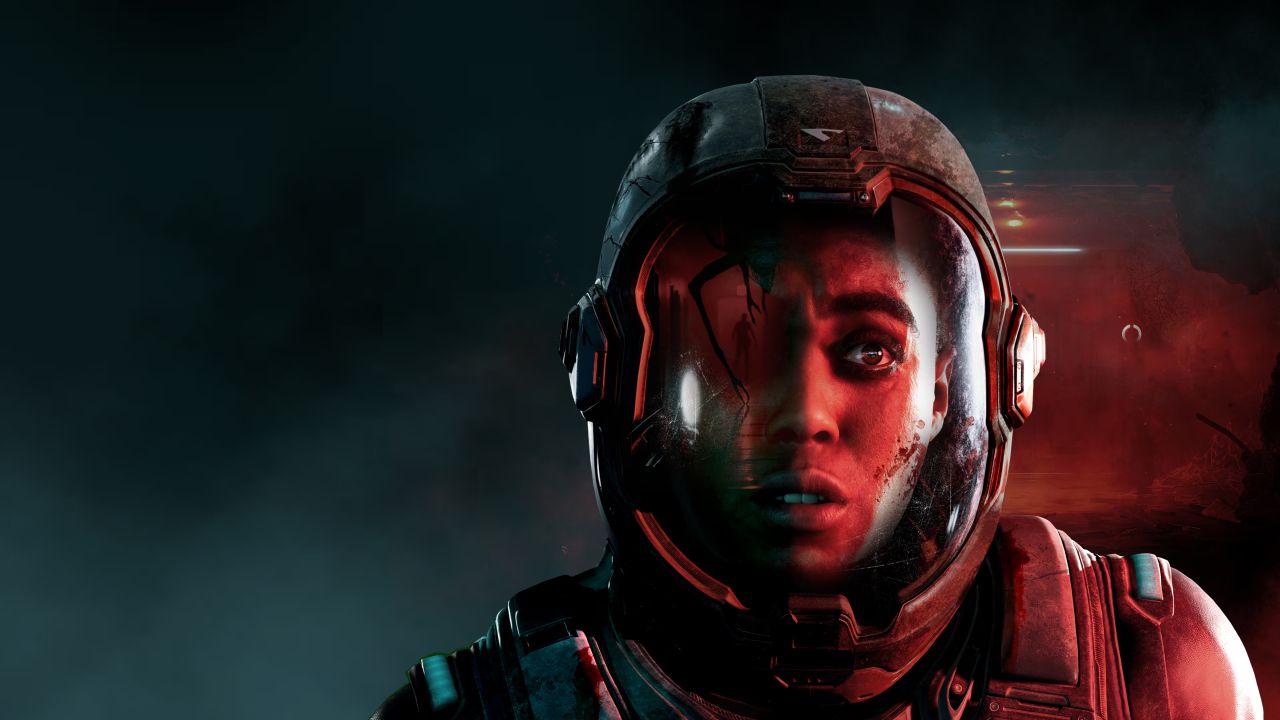
REVIEW – Directive 8020 begins where Supermassive Games’ haunted houses, woodland bloodbaths, and serial killer museums no longer feel like enough: in deep space, where not only oxygen is running low, but trust as well. This new chapter of The Dark Pictures Anthology mixes the paranoia of John Carpenter’s The Thing with the oppressive space horror of Event Horizon and Dead Space, while finally treating choices and consequences as more than decorative switches. It is one of Supermassive’s most coherent narrative games so far, even if some of its stealth sections move as if someone aboard the Cassiopeia decided at the last minute that this should also be a proper survival horror game.
Over the past decade, Supermassive Games has practically kept alive a genre that larger publishers mostly prefer to observe from a safe distance: the medium-to-high-budget interactive horror movie. Until Dawn acted like a slasher film with a controller attached, The Quarry became a more polished teenage nightmare, and The Dark Pictures Anthology has spent years trying, sometimes successfully and sometimes wearily, to sell the same old trick again: a few people enter a terrible place, make decisions, make bad decisions, and then someone dies horribly.
Directive 8020, by contrast, at least dares to take a bigger thematic step. The colony ship Cassiopeia is heading toward Tau Ceti f because Earth is dying, and humanity, naturally, has realized this at the last possible moment. The mission rapidly becomes a nightmare when the crew encounters an alien organism capable of imitating its victims. From there, the old but effective question takes over: who is human, who is not, and how long can anyone make rational decisions on a ship where even acting too normal becomes suspicious?

Every Smile Aboard the Cassiopeia Looks Suspicious
The story will not rewrite the sci-fi horror rulebook, but it knows which pages to turn. Directive 8020 openly builds on the body horror of The Thing, the corridor dread of Alien: Isolation, the space-bound madness of Event Horizon, and the industrial nightmare of Dead Space, yet it does not feel like a mere copy. It feels more like Supermassive has finally found a setting where its choice-driven formula is not just tolerable, but genuinely engaging.
Will Doyle returns as director, after his work on House of Ashes and The Devil in Me, and that can be felt in the pacing. Across eight chapters, the game builds distrust among the crew, while flashbacks and flash-forwards often pull the player forward with skill. The problem is that a few chapters slow down rather visibly, as if the game suddenly remembers that it cannot reach the next major twist just yet. At those moments, the Cassiopeia feels less like a nightmarish spacecraft and more like an expensive corridor collection.
Still, the story’s greatest strength is that the characters receive more time than they did in many of the shorter earlier Dark Pictures entries. Brianna Young, Samantha Cooper, and the other survivors are not equally memorable, but the game at least works hard enough to make them feel like more than potential corpses. Lashana Lynch adds weight to the production, and Danny Sapani also gives the cold military environment a sharper edge: everyone is too professional to collapse openly, but too human to hold together forever.
That matters because death in Supermassive’s games only truly works when it is not just mechanical punishment, but personal loss. Directive 8020 reaches that point several times. When someone dies because of a bad decision or a failed QTE, it does not always feel like a cheap trap. More often, it feels like a bill we signed six chapters earlier, before bothering to read the fine print.

Choices Finally Feel Like More Than Theater
The biggest improvement in Directive 8020 is not the spaceship, not the alien organism, and not even the fact that the game is no longer trying to sell us another ghost story. The real progress lies in the decision system. In earlier Supermassive games, choices often felt like mood-setting toggles: one character gets offended, another likes you slightly less, and then the story quietly returns to the same track. Here, several decisions return much later, and not always where the player expects them to hit.
A choice made in the first chapter can still hurt in the finale. In other words, decisions here have teeth. The game tracks whether we act with compassion, threat, decisiveness, or hesitation, and these character traits are not merely decorative menu items by the end. They can influence who takes risks, who breaks under pressure, who believes us, and who opens the wrong door at exactly the wrong time.
The Turning Points system is an interesting, slightly double-edged addition. It allows players to rewind to key scenes and try different decisions, making the experience more convenient, approachable, and less punishing. At the same time, it weakens the brutal finality that used to be one of the strongest spices in the Supermassive formula. Fortunately, it does not have to be used, so anyone who wants their own mistakes to bury the crew can still have that stricter, more traditional experience.
The communication and investigation elements also work better than expected. The wrist-mounted sensor acts as a kind of detective view, highlighting important parts of the environment, while also letting us read and answer messages from crew members. It sounds minor at first, but it contributes a lot to the relationships between characters. Directive 8020 is at its strongest when it stops trying to be an action game and simply lets a few lines, a sideways glance, or badly timed silence grow into disaster.

Stealth in Space, but Not Always Gracefully
Where the game becomes less confident is in the actual gameplay. Supermassive clearly tried to move away from the idea that Directive 8020 is merely an interactive movie, so we get more open exploration, real-time threats, and stealth sections. In theory, that is the right direction. The Cassiopeia offers larger spaces than the often corridor-like locations of previous entries, with secrets, clues, small scares, and useful information to discover, meaning that the game sometimes really does feel willing to let us investigate.
The problem is that the stealth is far less elegant than the decision system. Most of the time, the entire recipe consists of a patrolling alien, a few pieces of cover, a dark corridor, and the most cautious crouching possible. The concept is punishing, but not deep enough; it is tense, but it starts repeating itself far too quickly. By the later chapters, the dominant feeling is not always fear, but the quiet internal sigh that another crouch-run ballet to a door is about to begin.
QTEs remain part of Supermassive’s familiar arsenal, and here they mostly do their job. They are not brilliant, but they can maintain tension, especially when one wrong input can genuinely mean a character’s death. What becomes clear, however, is that the studio still does not fully know how to marry cinematic pacing with classic survival horror mechanics. When the game handles decisions and dialogue, it is strong. When it asks us to sneak and run, it sometimes feels like a better interactive scene has been replaced with a weaker action sequence.
The documents, messages, and small environmental details found during exploration do a lot of good for the world, though. The Cassiopeia is not always varied enough as a location, but when the game focuses on the crew’s past, the mission’s background, or the rising paranoia, it works. Directive 8020 is not the sci-fi horror game that invents a new language for the genre, but it is smart enough to say the old lines with good rhythm.

Beautiful Faces, Colder Images
The visual side shows a strange split. Supermassive has moved to Unreal Engine 5, and the character models, facial capture, and close-up shots are often genuinely strong. The digital versions of Lashana Lynch and Danny Sapani are detailed, the facial acting mostly works, and the flickering lights in the dark corridors deliver the clinical nightmare that this kind of space horror needs.
At the same time, something has been lost from the old Supermassive look. Until Dawn and several earlier Dark Pictures entries had a stronger, dirtier cinematic identity. Directive 8020 often looks cleaner, flatter, and less distinctive. It is not ugly, and several scenes look genuinely good, but it rarely has the kind of visual force that makes the player stop for a moment. That is especially noticeable from a studio that has always lived and died by cinematic presentation.
The audio side is more consistent. The creaking of the ship, distant alarms, suspicious noises crawling through vents, and restrained musical backing all help build tension. The voice acting is more uneven: the main performers are strong, but some of the supporting characters occasionally pull the player out of the moment. It is not disastrous, but in a game built so heavily around performance, weaker delivery is easier to notice.
In terms of content, a first playthrough can take around 6-10 hours depending on how much we explore, how often we rewind, and how thoroughly we want to pull apart the branching paths. The multiple endings, deaths, choices, and Turning Points system should make replayability strong in theory, but too much visible information can sometimes spoil larger twists in advance. The local Movie Night co-op mode remains a fine social horror setup, while tying the online component to a later update once again gives the impression that a few cabins aboard the Cassiopeia were not quite finished by launch.
Supermassive Is Moving in the Right Direction, Just Not at Full Thrust
Directive 8020 is not a revolution, but it is a navigation system pointed in a noticeably better direction. Supermassive Games is finally not just saying that our decisions matter; it repeatedly manages to make an earlier sentence, gesture, or risk hurt later. The sci-fi horror setting is built from familiar parts, but it handles paranoia, body horror, and closed-space tension well enough to give genre fans something to hold on to.
The issue is that the game’s ambition does not always meet its execution. The stealth sections are too simple, a few chapters feel like filler, and the visual identity is less distinctive than what we have previously seen from the studio. Even so, this is one of Supermassive’s most mature projects: not flawless, not brave in every respect, but with its decision system, atmosphere, and sci-fi horror, it proves that this formula still has more to offer than counting fresh bodies.
-Gergely Herpai „BadSector”-
Pro
+ Strong sci-fi horror atmosphere with effective paranoia
+ Choices and consequences finally carry more weight
+ The main characters and performances work well
Against
– Stealth sections are repetitive and clumsy
– A few chapters feel like filler
– The Unreal Engine 5 visuals are less distinctive than expected
Developer: Supermassive Games
Publisher: Supermassive Games
Genre: narrative horror, survival horror, interactive drama
Platforms: PlayStation 5, Xbox Series X|S, PC
Release Date: May 12, 2026
Directive 8020
Gameplay - 7.2
Graphics - 7.4
Story - 8.4
Music/audio - 7.8
Ambience - 8.6
7.9
GOOD
Directive 8020 is a strong sci-fi horror game that finally gives Supermassive's choice-driven formula more meaningful consequences. The paranoia, body horror, and character drama aboard the Cassiopeia work well, even if the stealth and pacing of some chapters are weaker. It is not flawless, but it is one of the studio's most mature and promising games.



![An ex-Bethesda Dev Says Including More than 1,000 Planets in Starfield Was a Bad Decision! [VIDEO]](https://thegeek.games/wp-content/uploads/2025/09/thegeek-starfield-nagy-1-302x180.png)










Leave a Reply