

Sony seems to be misleading gamers, and this isn’t even the dynamic pricing it’s testing on the PlayStation Store.
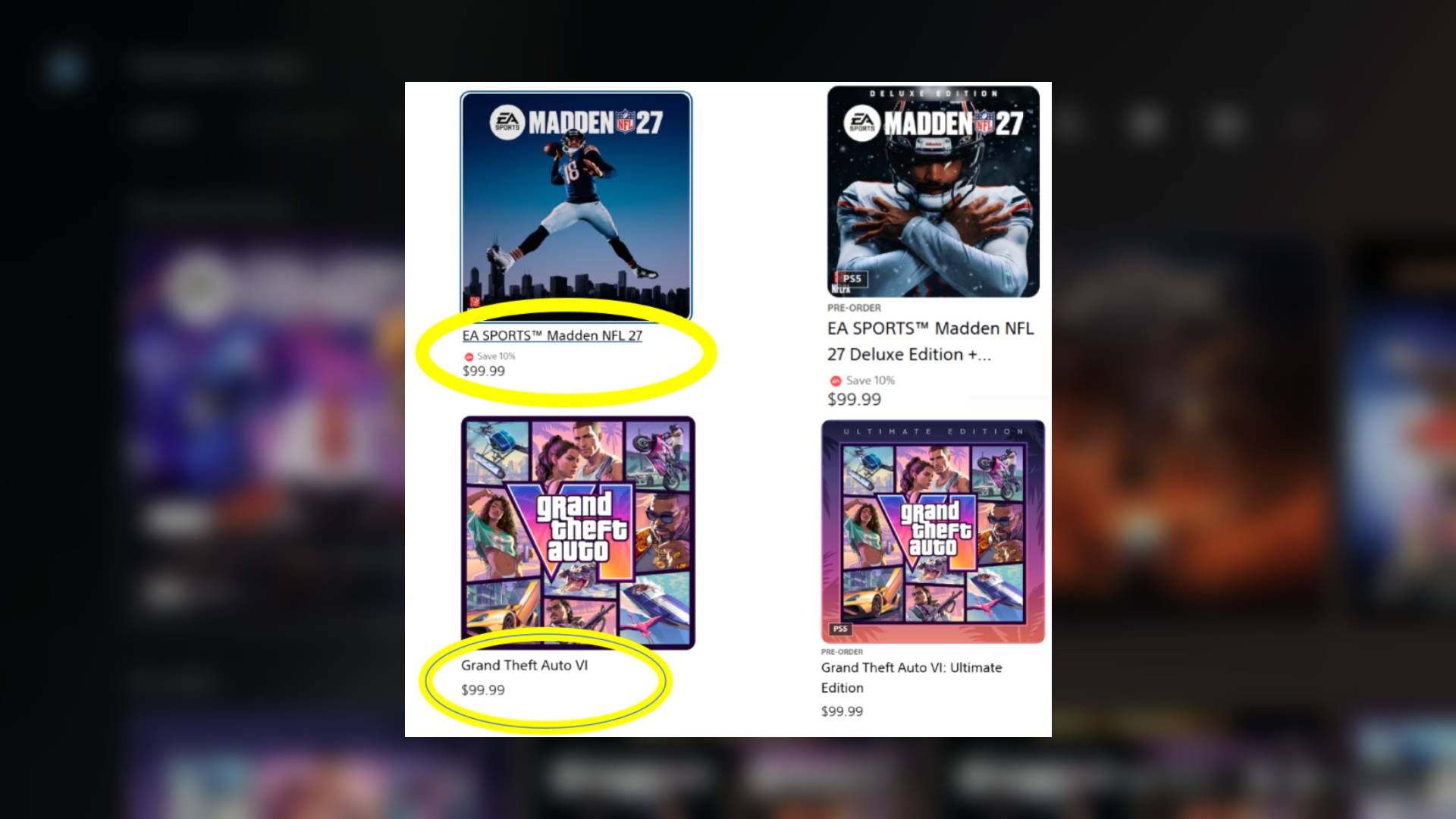
If you’ve recently visited the PlayStation Store, either on a PlayStation 5 or online, you may have noticed that some game prices are slightly higher than usual. For example, titles like Grand Theft Auto VI, EA Sports College Football 27, and EA Sports NFL 27 are all listed at $100 on the PlayStation Store, no matter where you look. However, these are the prices for the Deluxe/Ultimate editions, not the standard editions. The images and text on the store pages actually correspond to the standard editions.
PlayStation can distinguish between these editions on its listing page since links to the standard editions also appear for other games, and the store’s interface can list multiple editions with the appropriate text. This is likely an error on Sony’s part. They probably used the wrong image and text during an automated process. The covers for the NFL editions are completely different, while the covers for the Grand Theft Auto VI editions are very similar. This may confuse some potential buyers. The premium edition is clearly the intended version, as clicking on the more expensive option opens the page for that specific game edition.
Essentially, there’s no clear indication as to whether the games that appear first in the store are standard or premium editions. We hope this isn’t intentional and isn’t meant to steer players toward the more expensive version. From a business perspective, that’s exactly what they want to achieve with potential customers. However, it seems underhanded if they don’t provide full transparency from the beginning. It only takes one click to find out the truth, but even a quick glance is enough to turn us away from a game.
You could also argue that this could potentially backfire on the store because who would want to pay $100 for a sports game that comes out every year? This doesn’t reflect well on the company, especially following the announcement that they’ll stop producing physical discs by 2028. We don’t know how long they’ve been doing this because, as far as we know, it may have been going on for a while.
Source: MP1st










Leave a Reply