
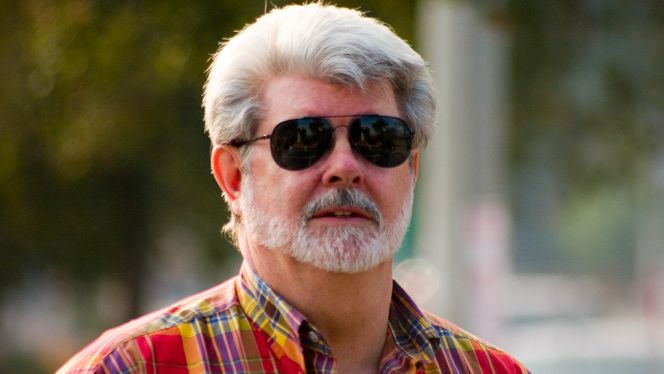
At 82, the creator of Star Wars has once again placed himself on the side of technological change. George Lucas believes artificial intelligence will make filmmaking easier, and he argues that resisting it is as futile as rejecting automobiles in favor of horses.
Generative AI remains one of the most divisive issues in entertainment. Writers, actors, directors and visual artists have raised concerns about copyright, employment and the replacement of human creativity, while studios continue exploring tools that could accelerate everything from preproduction to visual effects.
Lucas does not regard AI as a temporary experiment. Speaking to A Rabbit’s Foot, he described it as another major technological transition and said it would make the process of creating movies much easier.
George Lucas Sees AI as the Next Inevitable Filmmaking Tool
To explain his position, Lucas imagined someone insisting that horses and carriages were superior when automobiles first appeared. Cars could break down, required gasoline and could eventually be turned into tanks, he noted, but those risks did not prevent the technology from transforming the world.
“There’s nothing you can do about it. That’s progress, it’s the future.”
The argument is consistent with Lucas’s own career. He founded Industrial Light & Magic in 1975 because the effects required for Star Wars did not yet exist, then helped drive advances in digital editing, computer graphics and sound. Part of Lucasfilm’s computer division later became Pixar, while Star Wars: Episode II – Attack of the Clones helped normalize fully digital production for major studio films.
Lucas acknowledged that AI can be abused, but placed responsibility on the people using it. He suggested that artificial intelligence could also help identify manipulated material and trace its origin, while anyone employing the technology illegally should still be held accountable. In his view, the arrival of a new tool does not erase authorship or personal responsibility.
That position will not end Hollywood’s argument over training data, ownership, employment and the future role of artists. It is, however, an unsurprising stance from a filmmaker who has repeatedly embraced disruptive technology before the wider industry was ready for it.
Source: 3DJuegos

![[GC 2026] Zoopunk: Three Little Animals Kick and Punch—and Then Some [VIDEO]](https://thegeek.games/wp-content/uploads/2026/08/theGeek-Zoopunk-300x365.jpg)
![[GC 2026] Billy Boyd Joins the Cast of There Are No Ghosts at the Grand [VIDEO]](https://thegeek.games/wp-content/uploads/2026/08/theGeek-There-Are-No-Ghosts-at-the-Grand-300x365.jpg)
![[GC 2026] The Creature-Collecting Roco Kingdom Is Coming to Us from China [VIDEO]](https://thegeek.games/wp-content/uploads/2026/08/theGeek-Roco-Kingdom-clean-300x365.jpg)
![[GC 2026] Tarae: The Unbound: A New Far Eastern Flavor from Krafton [VIDEO]](https://thegeek.games/wp-content/uploads/2026/08/theGeek-Tarae-The-Unbound-300x365.jpg)
Leave a Reply