
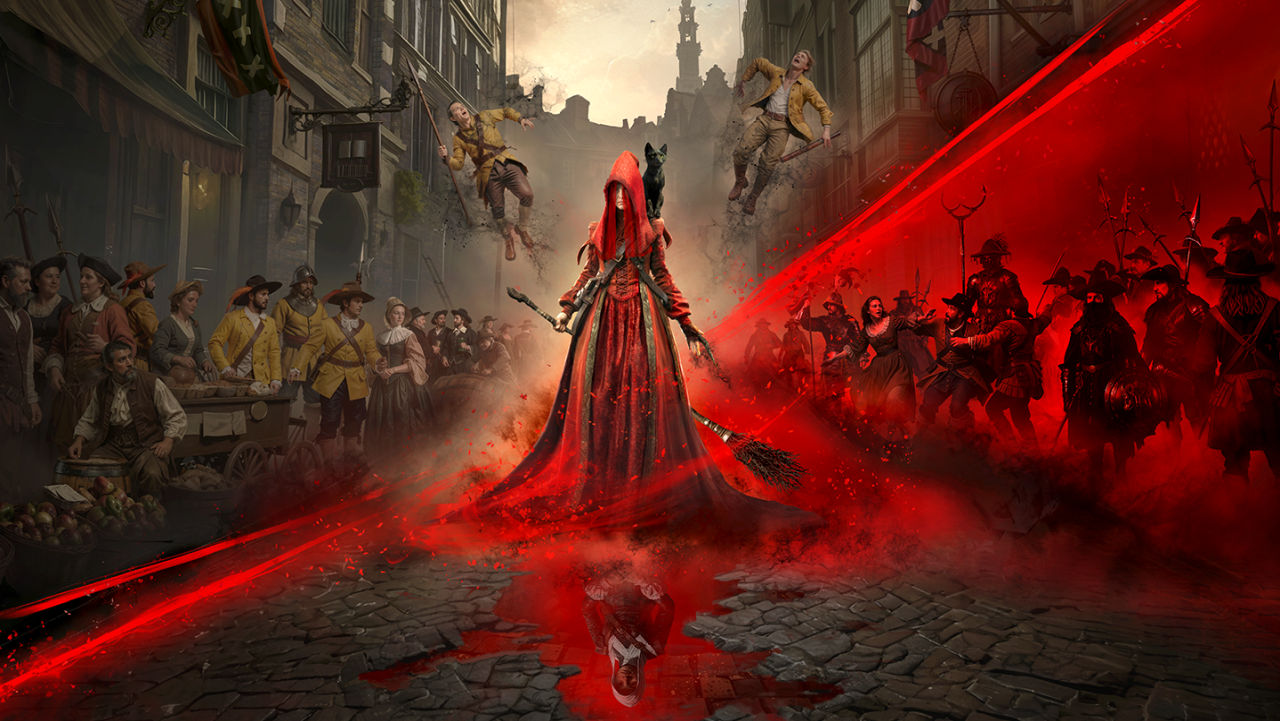
Patrice Désilets has spent roughly fifteen years attempting to turn his witch-hunting adventure 1666: Amsterdam into a finished game, and the troubled project is gradually developing a much clearer identity. Following the release of its free demo, Panache Digital Games has shared additional gameplay footage exploring the story, central characters, and supernatural abilities in greater depth.
Seeing Patrice Désilets actively developing another game is encouraging regardless of how the project ultimately turns out. The creator of Assassin’s Creed departed Ubisoft more than a decade ago and has largely pursued experimental ideas since then, but he is now returning to a concept that originally occupied him during his time with the French company. Set in a Europe consumed by witch hunts, 1666: Amsterdam resembles an unusual supernatural cousin of Assassin’s Creed, and the latest presentation attempts to resolve some of the questions left behind by its playable trial.
The footage reinforces the idea that Noa, the witch controlled by the player, will be the true centre of the narrative. Panache Digital Games describes her as a descendant of the ancient Zaindaris order, whose members are charged with tracking down beings called the Originals, mysterious entities apparently connected to the balance of the world itself. Aaron also appears in the demo and provides much of the lighter material, although his importance to the adventure extends well beyond the familiar role of comic sidekick.
Noa Can Use Several Magical Artefacts in the Open World’s Battles
Aaron is transported three centuries into the past and imprisoned inside the body of a cat, despite being destined to father a future successor to the Zaindaris bloodline. His magical feline form allows him to enter confined or inaccessible locations, giving him opportunities to examine areas from angles that Noa cannot reach. A supernatural connection lets the pair communicate and coordinate their actions, turning Aaron into an active scouting and exploration partner rather than a passive companion following behind the protagonist.
The Canadian developer also introduced several of the mystical objects that Noa will carry during her journey. The Nuxefer is an ancient manuscript she can use to preserve an account of her experiences for future generations of witches, and the demo places that same text in the hands of Cleo, Noa’s successor and Aaron’s daughter, who must decipher its contents. The Heeparan serves a more aggressive purpose by absorbing an ancient magical force known as Nux and allowing Noa to redirect that power against her enemies.
The latest showcase provides a broader sense of how the complete adventure will be organised. Players will explore multiple connected districts of Amsterdam while moving through stealth encounters, environmental traversal sequences, and battles against both Nux-corrupted creatures and human witch hunters. Despite the obvious similarities to Ubisoft’s famous franchise, 1666: Amsterdam is being designed primarily as a narrative-led experience, suggesting a relatively focused journey without lengthy stretches of directionless open-world activity.
Panache Digital Games has not announced a release date for 1666: Amsterdam, although development appears to be moving forward at a steady pace. The project’s reputation was damaged after the studio admitted that generative artificial intelligence had been used for early concept artwork and certain game assets. Panache later apologised and promised to remove all such material from the finished version, but its new presentations now have to rebuild player confidence as well as demonstrate the potential of Désilets’ long-delayed vision.
Source: 3DJuegos






![The System Requirements for Fable Are In! [VIDEO]](https://thegeek.games/wp-content/uploads/2026/08/vnews-05-fable-1280x720-1-302x180.png)





Leave a Reply