
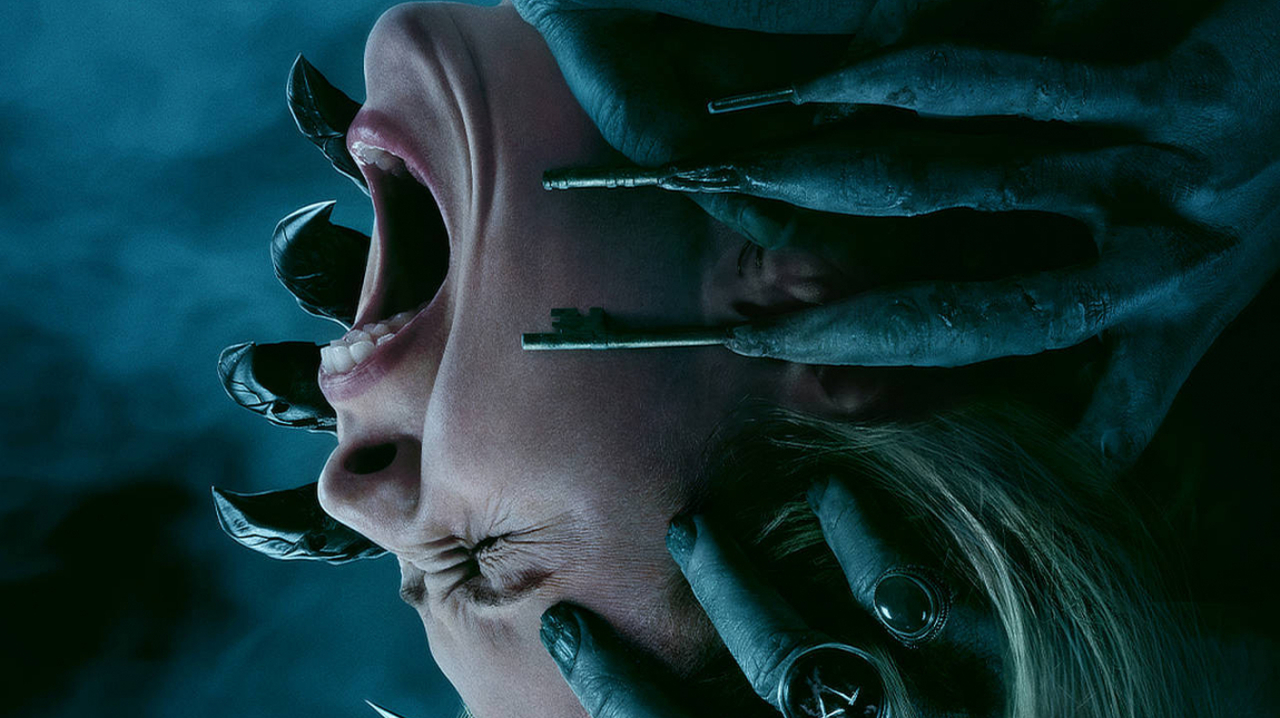
MOVIE REVIEW – Six films in, the door to the Further is still open, and Jacob Chase proves there are apparently a few new ways left to make us reconsider turning the hallway light off at night. Insidious: Out of the Further delivers a dental appointment that makes a root canal advertisement look comforting, a crawlspace built from couch cushions that mutates into a claustrophobic nightmare, and enough beautifully disgusting spirits to keep the makeup department off every children’s birthday-party list in town. The story eventually tangles itself up as if it has spent too long wandering the Further, but this sixth entry can still scare effectively, and some of its best images are likely to return the next time you wake up at three in the morning and make the mistake of looking toward the bedroom door.
The Insidious series has reached the same peculiar stage of life as most successful horror villains: it has been buried, returned, received another supposed conclusion, and then somebody at the studio looked at the numbers and discovered there was still available real estate in the afterlife. The Lambert family has largely finished its story, so film number six wisely introduces a new mother and daughter rather than inventing another convenient case of supernatural amnesia to push the same people through the same red door.
Amelia Eve plays Gemma, a single mother raising her nine-year-old daughter Maya while working as a dental hygienist. She also still lives in the same house where, as a child in 1999, she witnessed her fragile mother’s brutal death at the end of an inexplicable supernatural episode. Most people would probably include that detail somewhere before signing the mortgage documents. Horror protagonists traditionally have a more complicated relationship with property values.
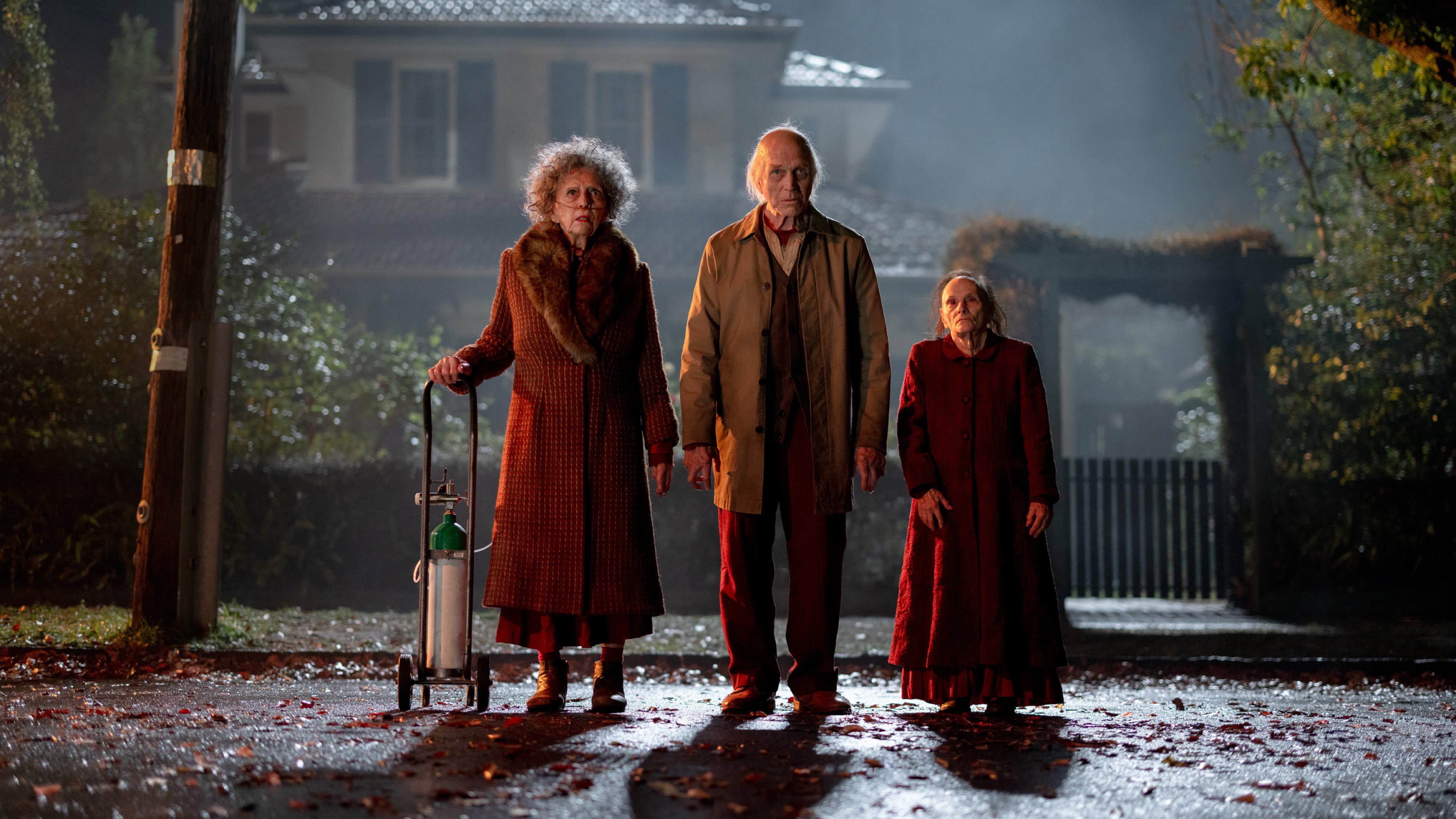
Twenty years later, Gemma’s nightmares return, several unsettling elderly strangers begin appearing around the neighborhood, and Maya notices the growing supernatural problem considerably faster than most adults. Nick, Gemma’s supportive police-officer boyfriend, at least proposes the radical idea that perhaps they should stop sleeping inside the house where supernatural forces already destroyed one generation of the family. The problem is that the haunting is no longer attached to the building. It is attached to Gemma.
The Dentist Where the Drill Is the Smaller Problem
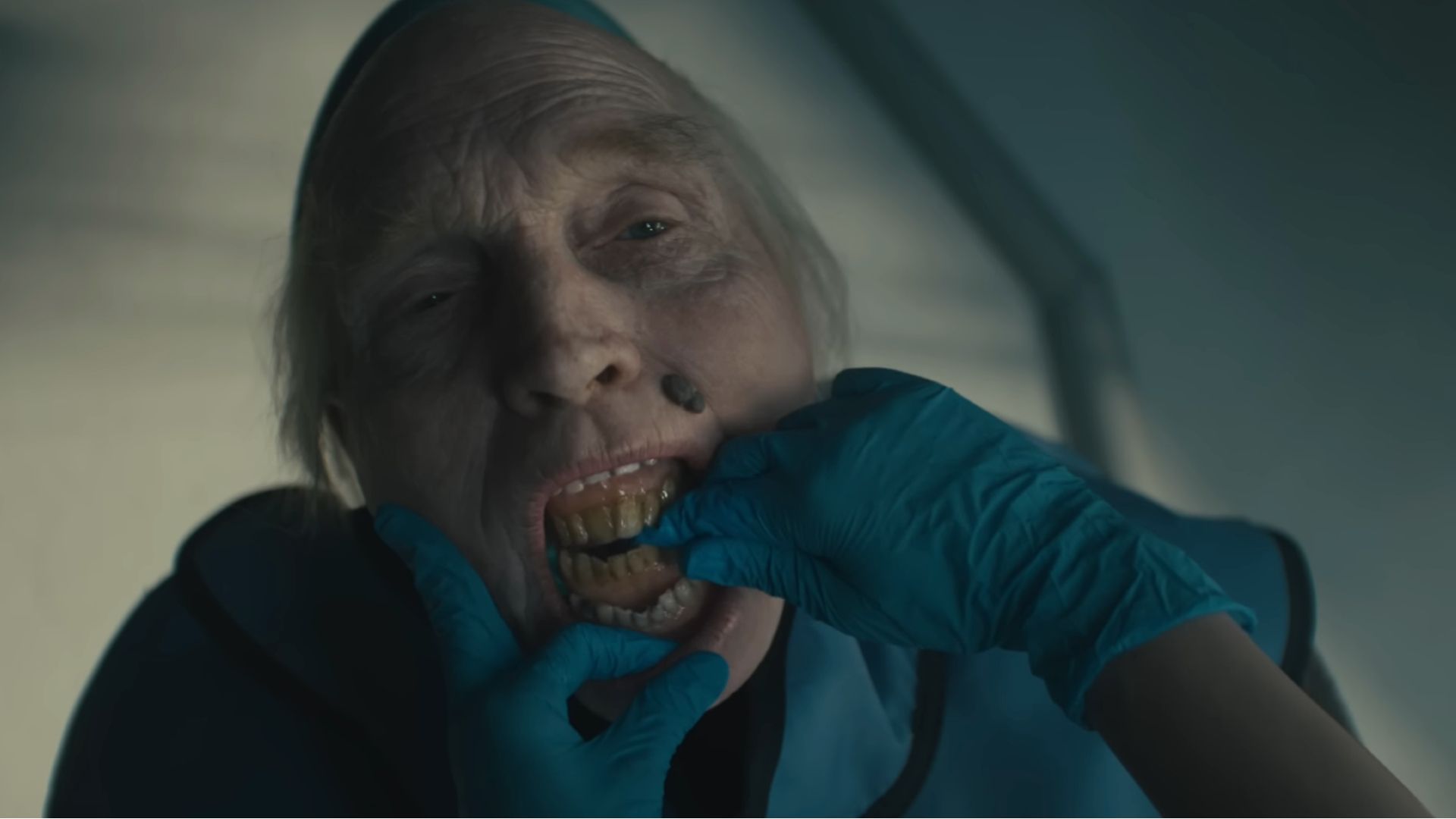
Jacob Chase establishes early that he does not intend to survive entirely on the franchise’s usual collection of dark corridors. Gemma’s profession provides one of the movie’s best opportunities, and anybody already uncomfortable with sharp metal instruments entering their mouth may wish to reschedule the next checkup. An elderly patient arrives with decaying teeth, slimy buildup and strands of hair emerging from places where dentistry generally prefers not to find hair, all while watching Gemma with disturbing calm. Chase does not rush the sequence. First it is disgusting, then suspicious, then suddenly you would very much like Gemma to say “rinse” and leave the building.
The movie is strongest when it uses concrete, familiar fears like this. Not when another character explains another rule governing another corner of the franchise mythology, but when something ordinary becomes subtly wrong. A dentist’s chair, a child’s bedroom, a cushion fort or the dark space behind a door does more work here than a long explanation about metaphysical geography.
David Garbett’s cinematography and the sound design contribute enormously. The franchise has not suddenly become shy about jump scares, and Joseph Bishara’s score still occasionally communicates with the audience’s nervous system at unreasonable volume, but Chase often allows tension to develop more patiently. Not every scare lands. The good ones at least earn the impact.
The House Isn’t Haunted – the Mother Is
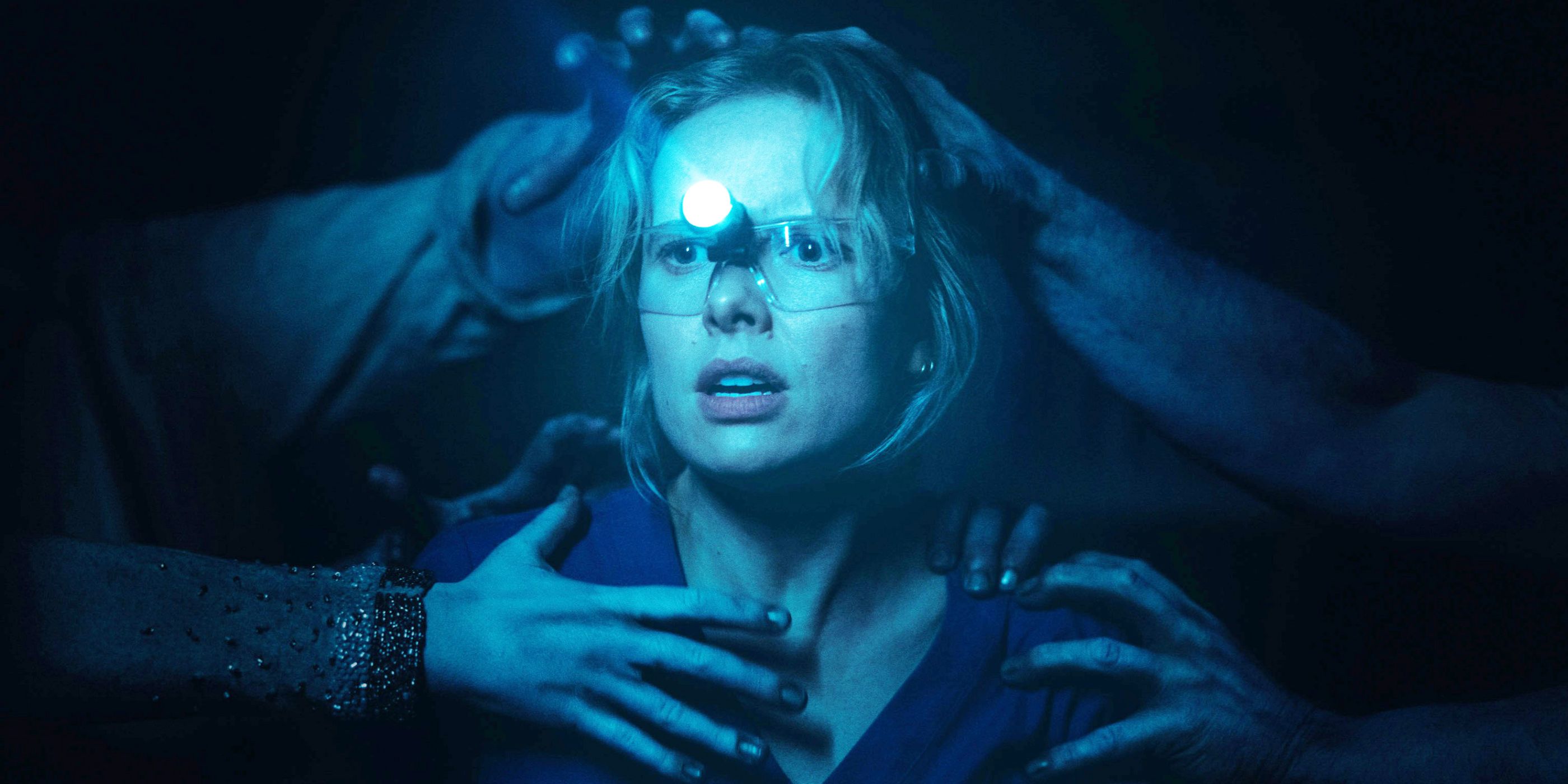
The movie’s central new idea is Gemma’s ability. She can enter the Further like other spiritually gifted characters in the series, but she can also bring things back from it. This is approximately the kind of superpower nobody would purchase as optional DLC. The spirits quickly understand the possibilities, turning Gemma into a mobile doorway between two worlds.
Amelia Eve works well in the lead because Gemma is not written as a conventional scream queen. She is a mother trying to prevent Maya from inheriting the same trauma she received from her own mother, while gradually questioning everything she believed about the tragedy of her childhood. Eve underplays that pain effectively, and her scenes with Island Austin give the movie an emotional foundation sturdy enough to survive most of the supernatural nonsense around them.
Maya is also more than the standard horror child whose only job is to stare past an adult’s shoulder and announce that someone is standing behind them. She has quirks, humor and a credible relationship with Gemma, which makes the danger matter. The best early Insidious films understood that demons and dark dimensions only become frightening when they threaten something recognizably human. Chase remembers that lesson for much of the running time.
Brandon Perea’s Nick is less complicated but provides a useful grounding presence. He is frequently the person willing to say what the audience has already been thinking for several minutes, including the apparently controversial position that a house with a documented history of supernatural family destruction may not be ideal long-term accommodation.
The Cushion Fort Does Not Lead to IKEA
The Further receives more visual freedom this time. Chase does not simply photograph the familiar foggy darkness again; he pushes the realm toward dream logic and liminal horror. The strongest sequence begins inside Maya’s innocent cushion fort. Gemma crawls inside, only for a tiny childhood passage to stretch into a suffocating system of beige corridors where ordinary spatial logic slowly stops applying.
There is some Backrooms imagery here, a touch of A Nightmare on Elm Street, and enough of the traditional Insidious visual vocabulary to keep it inside the franchise. Sequences like this justify the existence of another sequel better than any line of exposition. The Further is an elastic enough concept that the series does not need to keep visiting the same three dark rooms forever, and Chase is at his best when he remembers that.
The practical makeup work also deserves considerable praise. The wandering dead feel unpleasantly physical rather than like generic digital matter, with distorted faces and skin textures frequently doing more damage than later CGI. One elderly apparition in particular carries a wonderfully grotesque hagsploitation quality without feeling like the movie is desperately auditioning another mascot demon for future sequels.

Elise Still Knows When to Enter a Scene, Even While Dead
Of course, an Insidious movie without Lin Shaye would apparently violate some ancient contractual law. Elise Rainier has technically been dead since the first movie, which in this franchise is approximately as severe a professional obstacle as a scheduling conflict. She now operates from inside the Further, attempting to guide Gemma through Claire, a spiritually gifted tattoo artist who serves as a bridge between Elise and the living.
Shaye remains wonderful. There is a strange reassurance to Elise that briefly makes the movie feel safer even when she is literally wandering among lost souls with a lantern. The franchise understood her value long ago, which is why death has never successfully removed her from the payroll. If we are already flexible with the laws of the afterlife, this is one violation worth keeping.
Maisie Richardson-Sellers’ Claire is a promising addition, but the screenplay increasingly uses her as an exposition delivery system as the third act approaches. This is where the film begins losing some of the elegant horror it built earlier. Images, sounds and unsettling spaces gradually give way to plans, supernatural regulations and complicated demon logistics.

If You Need Oranges to Explain It, Something Has Gone Wrong
The third act is the weakest section, not because it runs out of ideas but because it develops too many of them simultaneously. Elise’s plan, Claire’s role as intermediary, the precise limits of Gemma’s power, the demons’ intentions and the mechanics of crossing between realities begin stacking on top of each other. The movie already possesses a perfectly effective emotional conflict: a mother terrified that she will pass her own inherited trauma to her daughter. It does not need quite this much supernatural administration.
At one point Claire uses pieces of orange to explain the plan to Gemma and the others. When the mechanics of defeating evil require a citrus-based presentation, it is often a sign that the screenplay has wandered slightly beyond elegant simplicity. The scene is entertaining, but it accidentally diagnoses the problem: an emotionally straightforward horror story has become a metaphysical group project.
Chase still finds strong images in the climax, and the movie never completely collapses under the weight of its mythology. The problem is mainly tonal. The measured dread of the dental scene and cushion maze gives way to louder supernatural business that feels considerably more routine.

Surprisingly Alive for Part Six
Insidious: Out of the Further begins with the obvious disadvantage of being the sixth movie in a franchise whose central dimension, recurring medium and basic supernatural language are already extremely familiar. The Further is no longer mysterious simply because somebody turns the lights red, and Elise has returned from death so many times in one form or another that mortality now seems more like a contractual suggestion. Chase nevertheless finds enough new images and specific anxieties to prevent the film from feeling entirely reheated.
It is not as fresh as James Wan’s original, nor as tightly constructed as the series at its best. The Guardian’s much harsher assessment of franchise fatigue is understandable, especially whenever this chapter begins adding rules to mythology that once worked because it was simple. For me, however, the strength of Chase’s setpieces, Amelia Eve and Island Austin’s mother-daughter dynamic, Lin Shaye’s presence, the sound design and excellent creature makeup outweigh the convoluted resolution.
Insidious: Out of the Further does not resurrect the franchise because, commercially speaking, it was never particularly dead. It simply proves there are still a few nightmares hiding inside the Further. And if my next dental appointment involves an elderly patient with too many teeth sitting in the next chair, I am leaving.
-Gergely Herpai „BadSector”-
Insidious: Out of the Further
Direction - 7.8
Actors - 7.5
Story - 6.7
Visuals/Music/Sounds - 7.9
Ambiance - 7.1
7.4
GOOD
Insidious: Out of the Further obviously cannot reinvent the Further six movies into the series, but Jacob Chase finds enough excellent horror setpieces, strong visual ideas and a convincing mother-daughter relationship to keep the franchise alive. The dental nightmare and claustrophobic cushion maze are far more memorable than the convoluted finale, while Lin Shaye can still steal a scene despite her character having been dead for years. It is not a new horror classic, but it is an effective and enjoyable sequel that may permanently change the way you look at dental floss.






Leave a Reply