
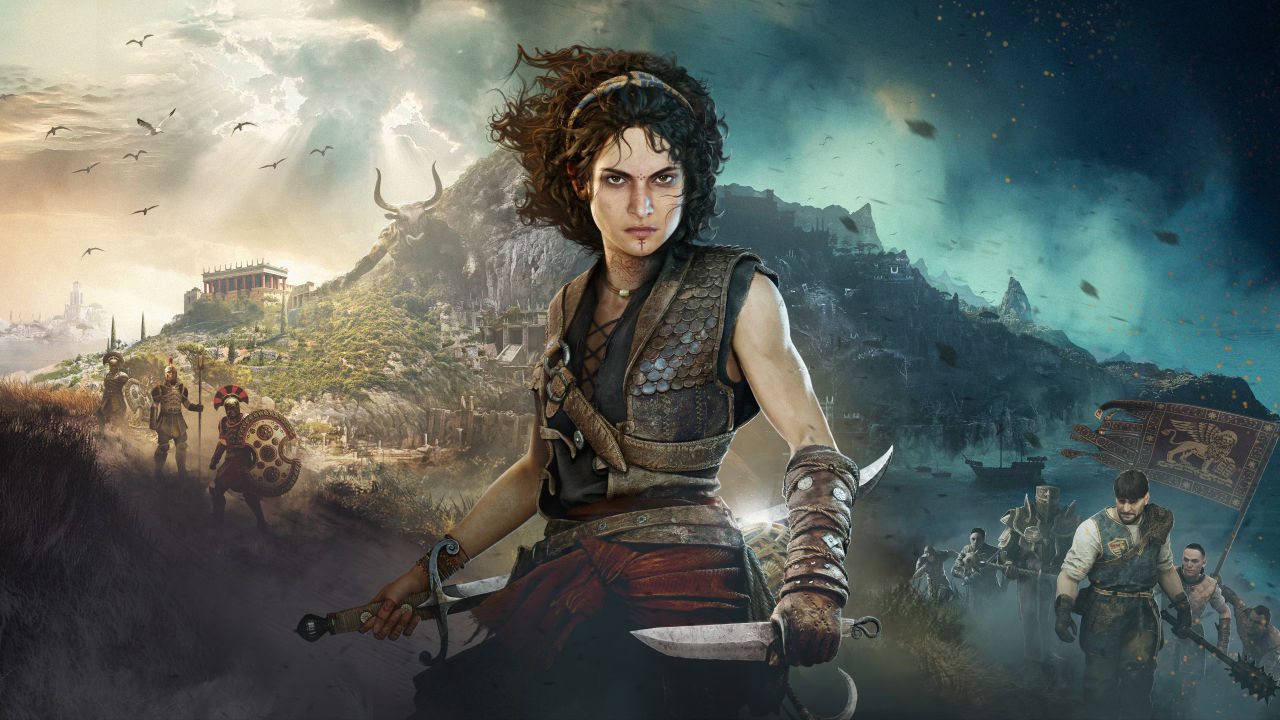
REVIEW – A Plague Tale traditionally taught us that if six armored soldiers are standing ahead and roughly a billion hungry rats are behind us, this is probably not the moment to heroically draw a sword. Resonance: A Plague Tale Legacy introduces Sophia, hands her a blade, a dagger and a grappling hook, then politely informs us that parrying is now part of the curriculum. Asobo’s new direction works surprisingly well, although the combat can sometimes feel like the smaller French cousin of modern God of War while the series’ old stealth identity sits in the corner wondering what happened to its shift. Fortunately, the gorgeous Minoan ruins, clever light puzzles, exploration and Sophia herself provide more than enough reason to cross Minotaur Island, even if Kratos does not need to update his résumé just yet.
A Plague Tale: Innocence worked in 2019 partly because it had no interest in becoming another action game. Amicia and Hugo were not medieval terminators. Most encounters were situations in which the smartest combat strategy was avoiding combat altogether. The sling, light, environmental manipulation and swarms of rats created a distinctive rhythm that Requiem later expanded into something bigger, more beautiful and considerably more devastating.
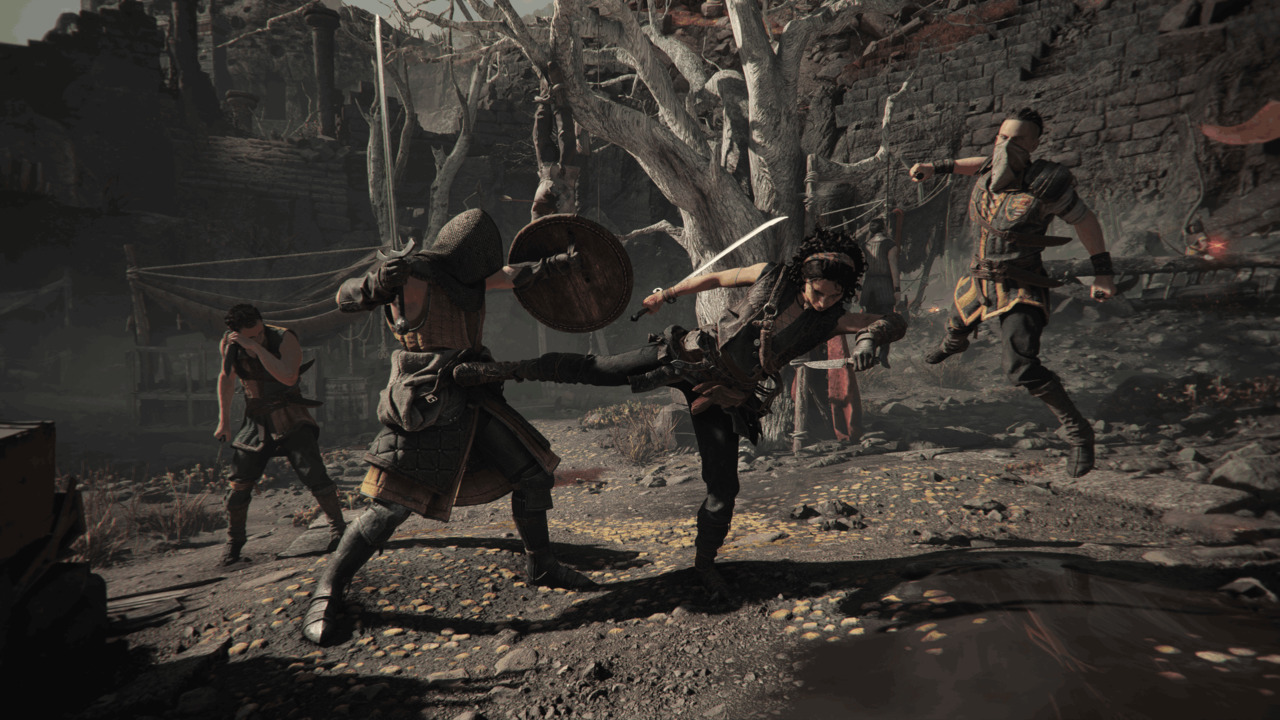
Resonance announces different rules almost as soon as serious fighting begins. Sophia is not Amicia. She is a plunderer, adventurer and warrior, and when four armed men block her path, she does not automatically search for a dark corner where she can spend twenty minutes waiting for everyone to turn around. She draws steel, uses a dagger, attacks, dodges, blocks, parries and counters, while the grappling hook gives her another useful method of making other people’s afternoons worse.
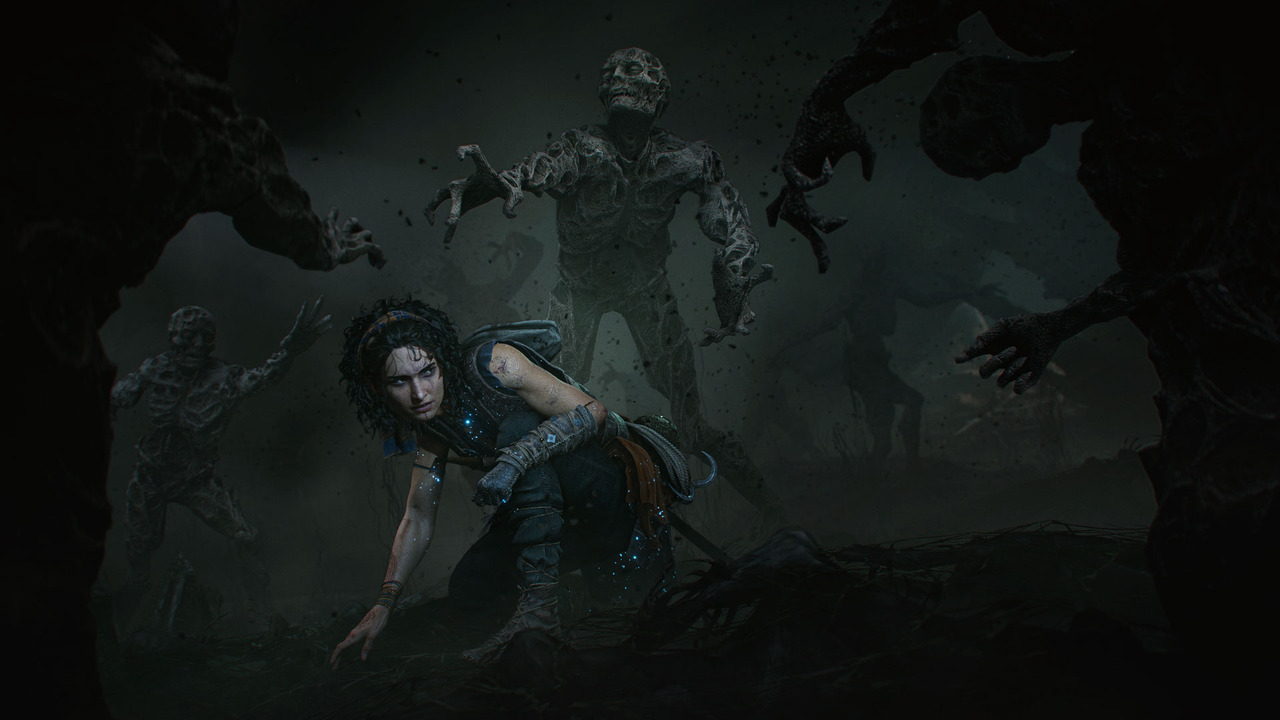
It initially feels like a radical change, but Asobo retains enough of the old formula to prevent a complete identity transplant. Certain creatures cannot be meaningfully challenged with Sophia’s sword, which against them is about as effective as submitting a politely worded complaint. These sections bring stealth, environmental awareness and escape routes back into focus, along with the comforting old Plague Tale lesson that running away can be an excellent tactical decision.
Kratos’ Sandals Are Still a Little Too Big for Sophia
The God of War comparison is difficult to avoid. Sophia has not grown a beard or started calling Leni “boy,” but the close combat, camera position, parries, dodges, special attacks and general action-adventure rhythm clearly move in a familiar direction. The differences become much easier to spot once the opening novelty wears off.
Combat feels good. It is fast, responsive and demanding enough on Normal to punish lazy timing, while finishing animations sell the fact that Sophia did not arrive on the island for a guided tour. Landing a clean parry, countering and then using the grappling hook to disrupt positioning is satisfying, particularly in a franchise where encountering a swordsman once meant that something had gone very wrong.
The limitation is that you quickly see the bottom of the system. Light attack, heavy attack, block, parry, dodge, special ability and grappling hook form most of the vocabulary. Asobo has wisely avoided ten weapon trees, twenty-five stances and a graduate degree in combo optimization, which can actually feel refreshing in a story-driven adventure of this length. Nobody needs to craft Sophia’s sword grip for +0.7% critical damage.
But relatively few new layers arrive later. Enemy combinations change and encounters become harsher, yet Sophia’s own toolkit does not expand enough to keep combat equally fresh throughout. It remains fun rather than deep. Kratos can therefore return to bed; nobody is posting his job opening yet.
Sophia Is Finally More Than That Woman From Requiem
Resonance takes place fifteen years before the later events and explores Sophia long before she enters Amicia and Hugo’s lives. Since childhood, she has experienced strange visions of a distant island. Her father takes those stories seriously enough to travel there with other soldiers, leaving the mystery behind as a wound Sophia carries into adulthood.
Years later, she makes the journey herself with Leni, a thief, ally and very useful protection against the entire adventure turning into one continuous solemn monologue. Their conversations feel natural, occasionally genuinely funny, and bring a lighter energy than Amicia and Hugo’s increasingly brutal journey ever allowed.
Sophia is an excellent lead. She is confident, stubborn and physical enough to support the game’s combat-heavy direction without becoming a medieval superhero. Her relationship with the island and her past remains personal enough that the narrative never feels like a series of ancient doors waiting for somebody with the correct glowing sphere.
The actual story does not hit as hard as Innocence or particularly Requiem. There are twists, losses and dramatic turns, but fewer moments likely to leave you staring at a wall for several minutes after the credits. That is probably healthier for everyone involved, although previous Plague Tale games have trained us to expect a drink and possibly professional counseling by the end.
Theseus Is More Than a Name in a Mythology Book
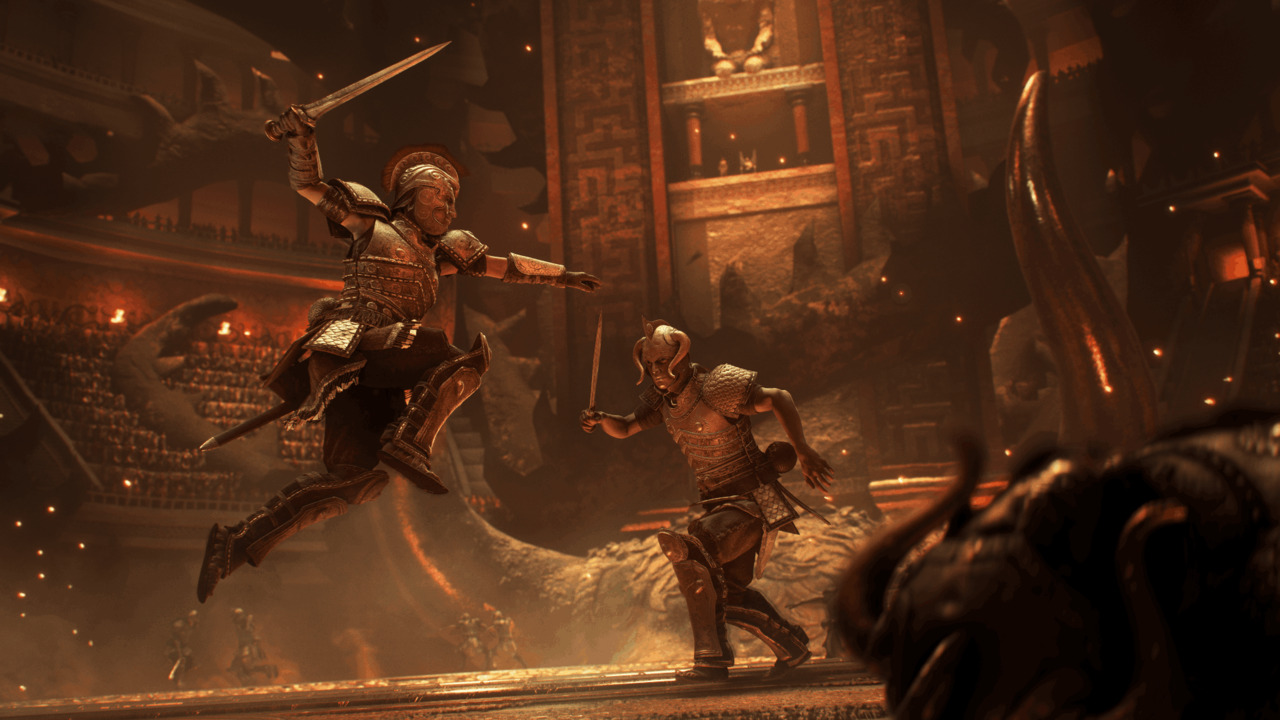
The narrative’s strongest idea is Sophia’s strange connection to Theseus. The Minoan timeline is not merely presented through visions or decorative flashbacks. Certain sections allow us to directly control the ancient warrior more than two thousand years before Sophia’s journey.
This gives Asobo room to loosen the restraints. The Minotaur myth, Daedalus and Minoan culture become part of a world that feels recognizable without pretending to be an archaeological simulator. Knossos, Akrotiri, frescoes, pottery, columns and Mediterranean motifs clearly informed an art team that wanted these environments to feel constructed rather than simply decorated.
The two timelines also interact meaningfully. Sophia is not seeing the past because somebody wanted an excuse for a spectacular ancient level. Events from Theseus’ era directly connect to her, the island and forces that will eventually shape the wider Plague Tale mythology. The Macula receives additional context without the game trying to flatten every mystery into a diagram.
Minotaur Island Clearly Had an Overtime Budget for Art Direction
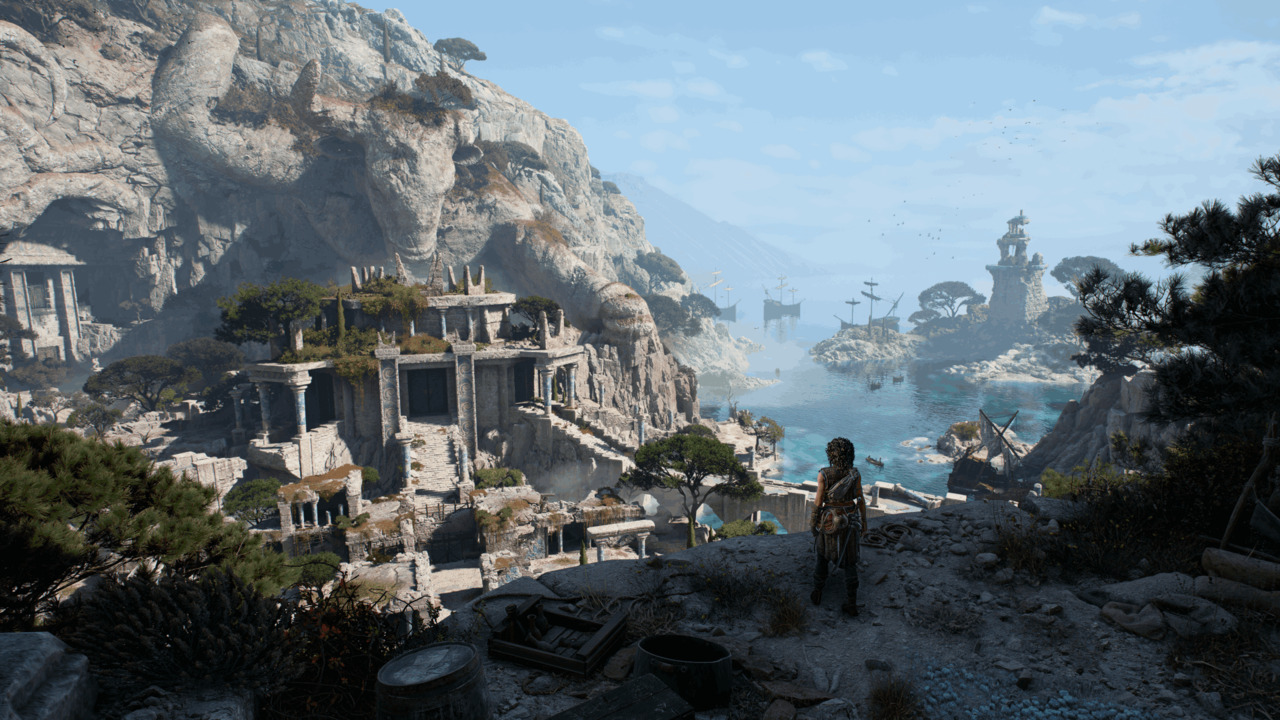
The area where Resonance is genuinely difficult to criticize is presentation. Asobo already proved in its previous games that plague pits, collapsing medieval towns and rat infestations could somehow become screenshot material. Minotaur Island finally gives the artists landscapes where every second panorama is not being photobombed by corpses and rodents.
Coastlines, forests, ruined temples, Minoan columns, underground chambers and sunlit Mediterranean spaces constantly change the visual tone. The color palette is much richer than in the earlier games, yet the atmosphere can still shift from beautiful to deeply uncomfortable without warning.
More importantly, it is not merely technically impressive. Plenty of games can render high-resolution stone, detailed trees and convincingly reflective seawater. Here, composition, architecture and lighting give environments a sense of history and purpose. Many ruins genuinely look as though they once had a function, a story and an excellent reason for someone to seal the door permanently.
Olivier Derivière’s score remains an ideal companion. It does not constantly sit on top of every scene demanding emotion, but it can open up magnificently when the scale of the setting or story demands it. The musical identity of the earlier games remains recognizable while the ancient Mediterranean material gives this chapter its own texture.
Exploration Is Optional, Unless You Enjoy Being Stronger
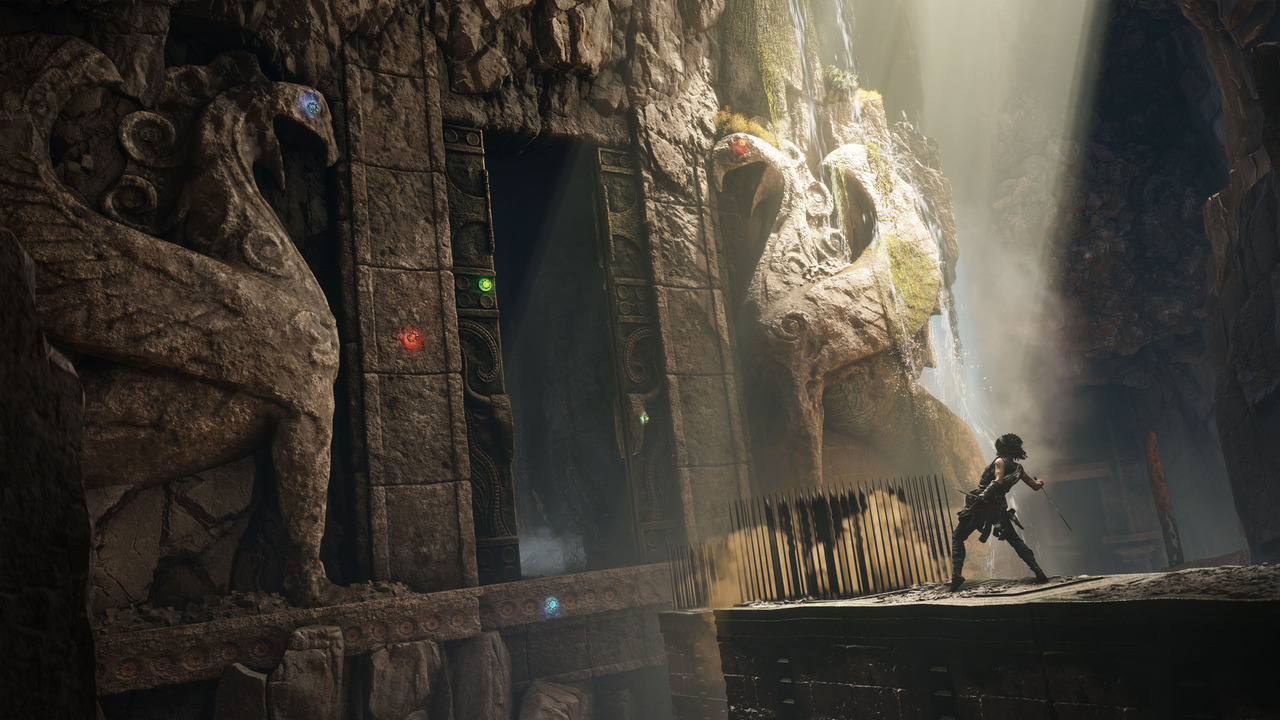
Areas are significantly more open than the narrow corridors of Innocence and Requiem. This is still not an open world, and Sophia will not spend evenings clearing thirty question marks from a regional map. Individual environments are simply large enough to hide side paths, smaller ruins and optional corners worth investigating.
Asobo connects exploration directly to progression. Resonance points used for active skills sit in relatively hidden places, while passive bonuses come from swords, rings, bracelets and other equipment discovered away from the obvious route. Players who sprint directly toward every story marker are perfectly free to do so. They should simply not be shocked when Sophia’s combat options remain approximately as sophisticated as they were several hours earlier.
This is both good incentive and mild blackmail. Rewarding curiosity with meaningful upgrades is far better than filling the world with collectible spoons, but some important progression is clearly parked off the main route. Players who naturally dislike checking behind every ruin may find the game politely but firmly attempting to retrain them.
Sophia’s mobility makes the process much more enjoyable. Parkour and the grappling hook keep movement fast, and reaching a distant ledge often involves actually reading the environment rather than waiting for yellow paint to explain what climbing is.
One Light Orb, a Hundred Doors, Somehow Still Interesting
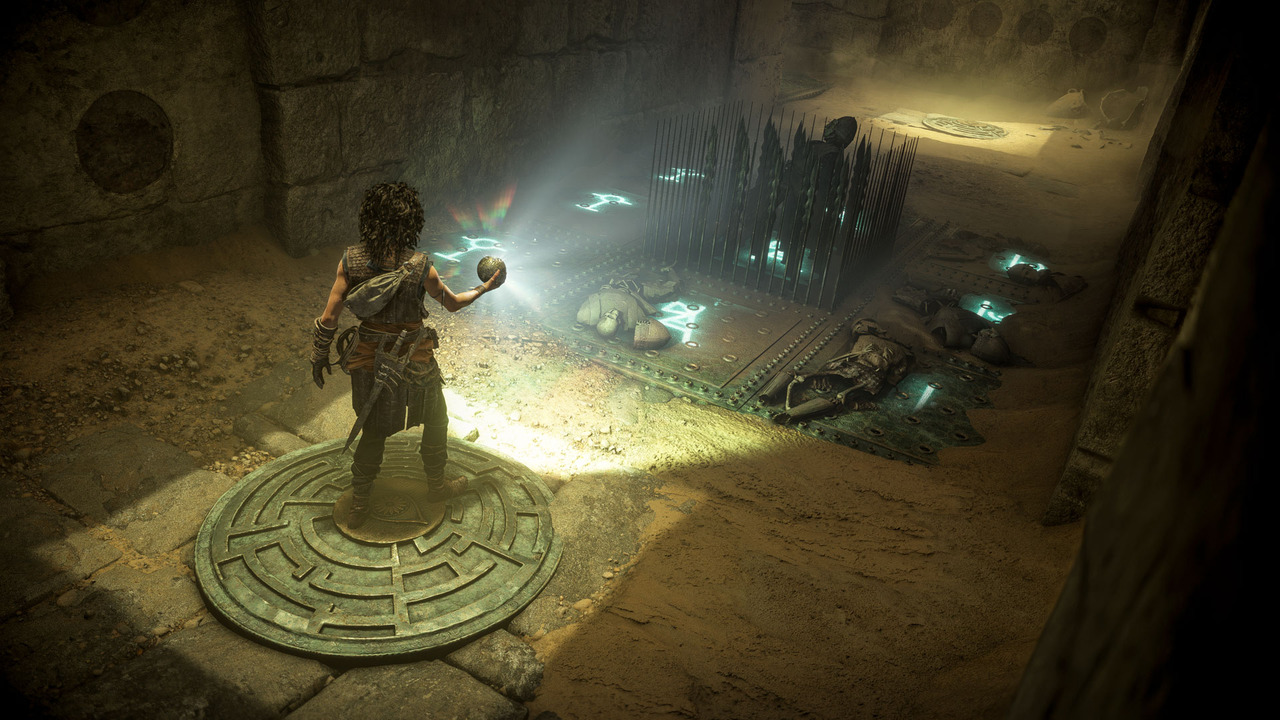
Puzzles form another major pillar, and Asobo extracts an impressive amount from relatively few fundamental ideas. Sophia uses a mysterious sphere to manipulate light, effectively turning it into the universal key for ancient doors, mechanisms and environmental challenges across the island.
This initially sounded dangerous. Asking one mechanic to carry puzzles for an entire adventure can become the design equivalent of building a full restaurant menu entirely from potatoes. Somehow, Asobo keeps varying the recipe. Angles, reflections, spatial relationships and environmental mechanisms change while the underlying logic remains understandable.
These are not brain-melting The Witness puzzles, and the game occasionally begins pointing toward the answer sooner than I would like. Players who enjoy staring at a wall for an hour with absolutely no assistance may find it overly helpful. Within the rhythm of a narrative action-adventure, however, they work beautifully and, more importantly, rarely feel like obligatory downtime inserted between fights.
Not Better Plague Tale, Just a Different One
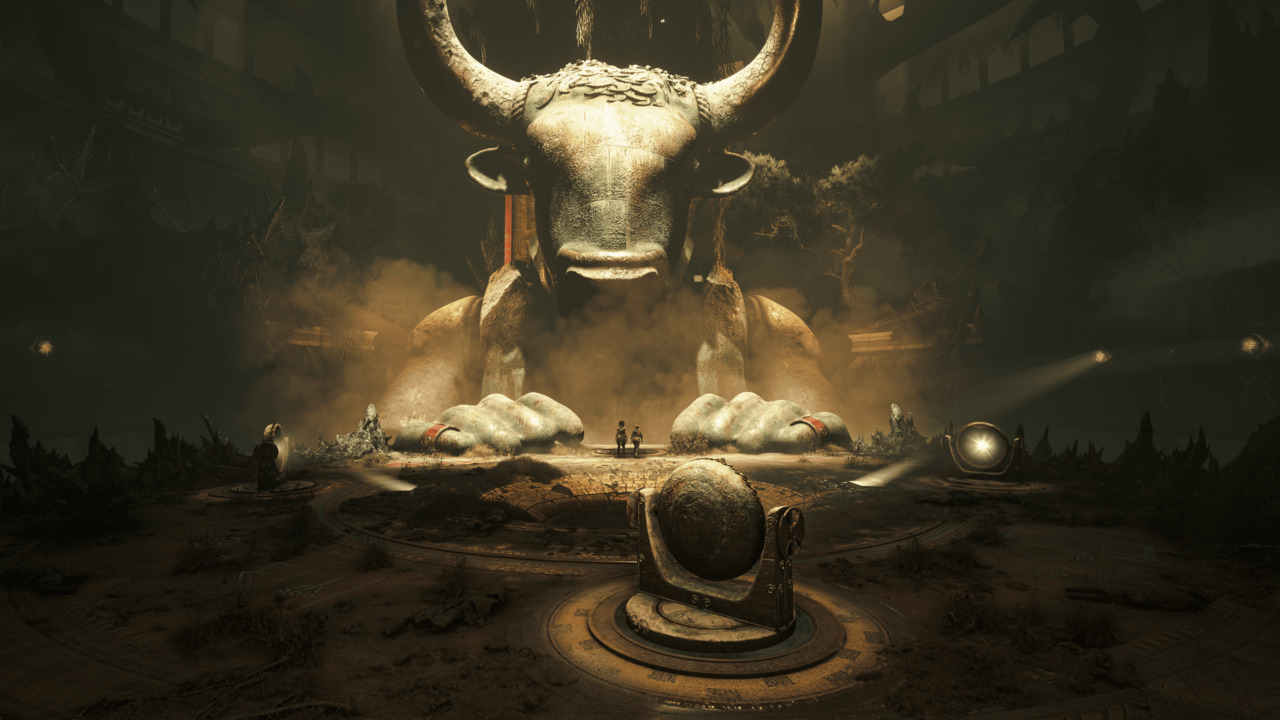
The central question surrounding Resonance: A Plague Tale Legacy is how much a series can change before it begins losing the very identity that made it special. Asobo introduces much more direct action, reduces the dominance of traditional stealth and borrows systems and rhythms that will feel familiar from other major action-adventures.
Sometimes that approach feels overly safe. Combat works but lacks enough depth to carry the whole experience by itself. Areas are more open without becoming genuinely freeform. The story is compelling without delivering the emotional damage of Requiem. Almost every individual component is good, yet fewer of them produce the feeling that nobody but Asobo could have built this exact game.
Still, the complete package works. Sophia is likable, Leni is a good companion, the ancient timeline is genuinely interesting, Minotaur Island is gorgeous, the puzzles stay engaging, and encounters with creatures regularly restore the vulnerability that has always defined this universe. Direct combat, simplistic as it may eventually become, also provides welcome variation.
Resonance is therefore not the new high point of A Plague Tale, perhaps because it spends a little too much time browsing the shelves of other successful action-adventures. It is also far more than a disposable spinoff. This is a beautiful, entertaining and confident adventure proving there is life in this universe beyond Amicia, Hugo and several billion rats.
And perhaps the most important thing is that I did not finish wishing for another swarm of rodents. I finished wanting another journey with Sophia. Next time, just give her sword a few more tricks.
-Gergely Herpai „BadSector”-
Pros:
+ A stunning and atmospheric Minoan world
+ Sophia is a great lead, while exploration and puzzles remain consistently enjoyable
+ Direct combat gives the series a refreshing new direction
Cons:
– Combat runs out of meaningful new ideas after several hours
– The story lacks the emotional impact of Innocence and especially Requiem
– The new direction can feel overly familiar from other major action-adventures
Resonance: A Plague Tale Legacy
Gameplay - 7.8
Graphics - 9.2
Story - 7.6
Music/Sound - 8.6
Atmosphere - 9.1
8.5
EXCELLENT
Resonance: A Plague Tale Legacy changes direction more aggressively than expected, and while its melee combat lacks enough depth to keep Kratos awake at night, the exceptional art direction, Sophia, ancient storyline, exploration and light-based puzzles easily carry the adventure. It is less emotionally devastating than Requiem and less original than Innocence was in its time. It is nevertheless convincing proof that the world of A Plague Tale can survive without Amicia, Hugo and several billion rats.
![[GC 2026] Ontos: A Look at Crombie's Experiment [VIDEO]](https://thegeek.games/wp-content/uploads/2026/08/theGeek-Ontos-NEW-1280x720-1-302x180.jpg)
![[GC 2026] Zoopunk: Three Little Animals Kick and Punch—and Then Some [VIDEO]](https://thegeek.games/wp-content/uploads/2026/08/theGeek-Zoopunk-302x180.jpg)
![[GC 2026] Billy Boyd Joins the Cast of There Are No Ghosts at the Grand [VIDEO]](https://thegeek.games/wp-content/uploads/2026/08/theGeek-There-Are-No-Ghosts-NEW-1280x720-1-302x180.jpg)
![[GC 2026] The Creature-Collecting Roco Kingdom Is Coming to Us from China [VIDEO]](https://thegeek.games/wp-content/uploads/2026/08/theGeek-Roco-Kingdom-clean-302x180.jpg)
![[GC 2026] Tarae: The Unbound: A New Far Eastern Flavor from Krafton [VIDEO]](https://thegeek.games/wp-content/uploads/2026/08/theGeek-Tarae-The-Unbound-302x180.jpg)
![[GC 2026] Like or Die: A Showdown Between Streamers from NCSoft [VIDEO]](https://thegeek.games/wp-content/uploads/2026/08/theGeek-Like-or-Die-clean-302x180.jpg)
![[GC 2026] Final Fantasy VII Revelation: The Planet's Crisis [VIDEO]](https://thegeek.games/wp-content/uploads/2026/08/theGeek-Final-Fantasy-VII-Revelation-302x180.jpg)


![[GC 2026] Ontos: A Look at Crombie's Experiment [VIDEO]](https://thegeek.games/wp-content/uploads/2026/08/theGeek-Ontos-NEW-1280x720-1-300x365.jpg)
![[GC 2026] Zoopunk: Three Little Animals Kick and Punch—and Then Some [VIDEO]](https://thegeek.games/wp-content/uploads/2026/08/theGeek-Zoopunk-300x365.jpg)
![[GC 2026] Billy Boyd Joins the Cast of There Are No Ghosts at the Grand [VIDEO]](https://thegeek.games/wp-content/uploads/2026/08/theGeek-There-Are-No-Ghosts-NEW-1280x720-1-300x365.jpg)
![[GC 2026] The Creature-Collecting Roco Kingdom Is Coming to Us from China [VIDEO]](https://thegeek.games/wp-content/uploads/2026/08/theGeek-Roco-Kingdom-clean-300x365.jpg)
Leave a Reply