
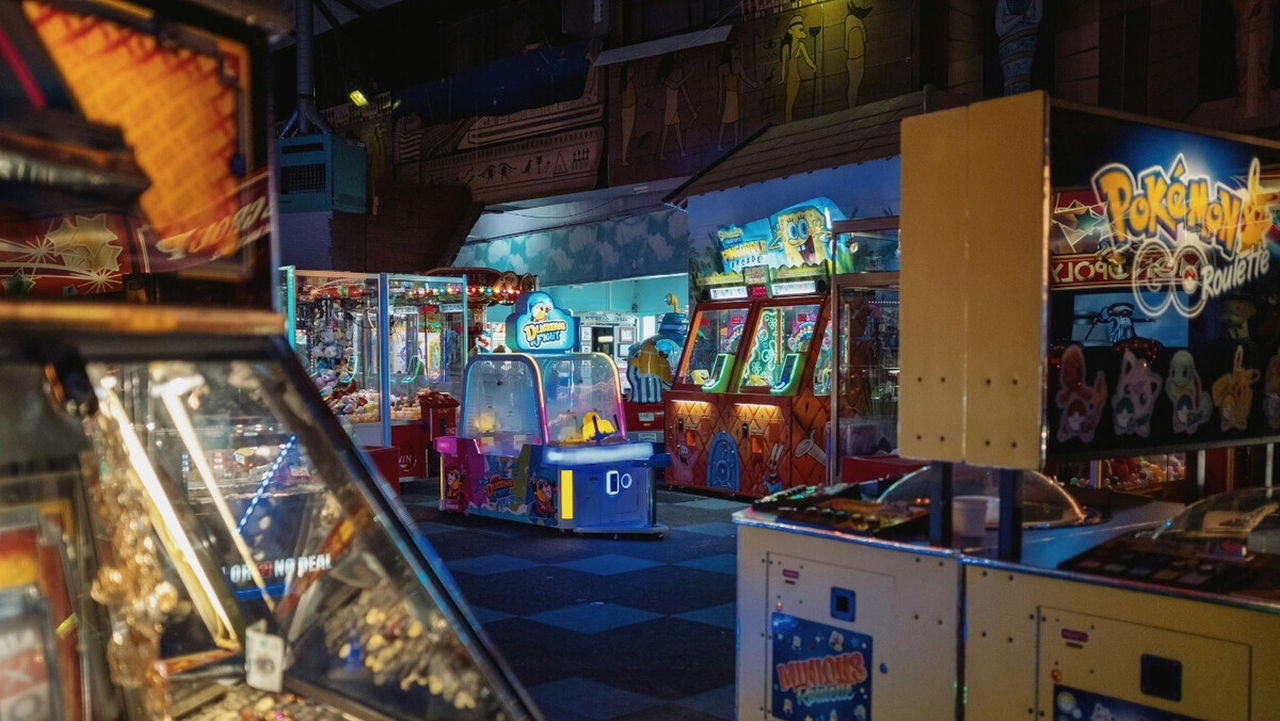
Japan remains one of the world’s last great strongholds of arcade culture, with entire multi-story buildings in districts such as Akihabara and Ikebukuro devoted to fighting games, rhythm titles, prize machines, and other attractions. For younger visitors, however, the experience comes with strict time limits: children under 16 may need an adult with them after 6 p.m., while anyone under 18 can be required to leave once the clock reaches 10 p.m.
Japan maintains a relationship with arcades that is increasingly difficult to find elsewhere. In Tokyo neighborhoods such as Akihabara and Ikebukuro, it is still easy to walk into enormous game centers spanning several floors, filled with fighting games, music machines, prize cabinets, and other attractions that have become far less common in Europe or North America. To a tourist, these places can look like entertainment spaces that stay open deep into the night with few restrictions. The rules become considerably more complicated, however, when the person trying to keep playing is a minor.
The Japan National Tourism Organization explains in its official guide that children under 16 may be required to have an adult accompanying them after 6 p.m., while minors are no longer permitted inside after 10 p.m. Staff may also request identification from visitors whose age is unclear when they attempt to enter late in the evening. That can seem surprising in a country so closely associated around the world with arcade gaming culture.
Arcades Come With a Curfew for Younger Players
The restrictions stem from Japanese laws regulating entertainment businesses. An official translation of the legislation states that establishments in this category must prevent anyone under 18 from entering or remaining on the premises after 10 p.m. Local prefectures are also allowed to impose additional rules between 6 a.m. and 10 p.m., including requirements for younger customers to be accompanied by an adult.
That explains why the exact rules can change depending on where someone is playing. The 10 p.m. restriction functions as a broad national limit, while local authorities retain room to make the rules stricter earlier in the day. A teenager may therefore spend hours playing without any problem and then suddenly reach a point where adult supervision becomes mandatory, followed later by a complete requirement to leave the arcade.
The contrast is particularly striking because arcades still occupy an important place in Japanese gaming culture. Japan’s official tourism guide presents them as spaces where modern cabinets, fighting games, rhythm games, prize machines, and attractions rarely seen in the West continue to coexist. Visitors are also reminded of more everyday etiquette, such as respecting queues, checking whether photography or video recording is permitted, and understanding that prizes won inside these establishments cannot be exchanged for cash.
Japan has therefore preserved one of the most recognizable arcade cultures anywhere in the world, but younger visitors also have to keep an eye on the time. For a minor, a gaming session may end for a reason far simpler than running out of credits or losing to the final boss: it is 10 p.m., and the rules say it is time to leave.
Source: 3DJuegos














Leave a Reply