
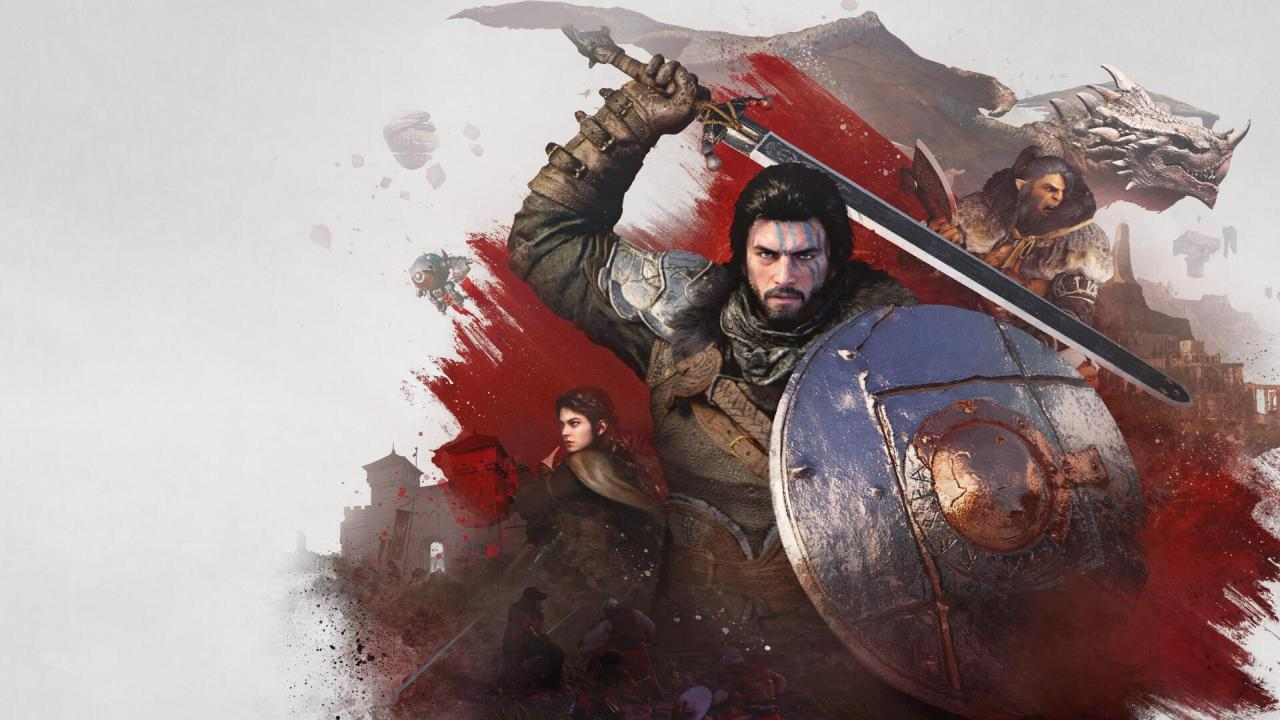
REVIEW – Crimson Desert looks, from its opening minutes on, like the kind of game that flat-out refuses to settle for “good enough.” After Black Desert Online, Pearl Abyss did not build a cautious, safe single-player adventure. It charged headfirst into a massive fantasy world packed with overlapping systems, flashy combat, broad freedom, and no shortage of ambitious ideas. When it works, it works very well: it moves beautifully, fighting in it is a real pleasure, the world is stunning, and it has that old-fashioned adventuring appetite that makes you want to disappear into it for hours at a time. The problem is that it breaks its own momentum far too often, and by the time you are truly warming up to it, it has already dragged you through several sections that a stricter editorial hand would have cut at the design-table stage.
When Pearl Abyss first announced Crimson Desert, I felt curiosity and skepticism in roughly equal measure. An online role-playing game and a single-player open-world action adventure are not the same terrain, even if the studio’s earlier game already showed that it knew how to give real-time combat weight and momentum. A project this large naturally creates expectations that can crush almost anything under them. And Crimson Desert, from the very beginning, behaved like a game that knew full well everyone was expecting too much from it.
Anyone put off by the fact that the game takes place in the same universe as Black Desert Online, despite never having spent a single minute there, can relax immediately. No prior knowledge is required, and the story is easy enough to follow on its own. The opening, in fact, is genuinely strong: Kliff and his battered mercenary outfit, the Greymanes, take a nasty opening body blow when the brutal Black Bears gang practically slaughters them, leaving only a few survivors behind. Right there, the game makes it clear that it is not trying to sell some spotless heroic legend, but a dirty, hard-edged survival story where honor, loyalty, and staying alive are not polished, presentable concepts.
Zelda Ideas, Much Less Elegant on a Controller
After Kliff plunges into a depth no one should be coming back from without a coffin involved, the game instead tosses him into a strange pocket realm called the Abyss and starts sketching out how the whole machine works. It becomes obvious fairly quickly that Crimson Desert is drawing not only from Pearl Abyss’s own past, but also from the modern Zelda games, especially Breath of the Wild and Tears of the Kingdom. On paper, that sounds good enough, because pushing, grabbing, moving objects around, and messing with the environment can absolutely be exciting in an open fantasy world like this. On paper, though, a great many things sound wonderful.
Here, those systems let Kliff grab objects, rotate them, shove them aside, and move them around in space, which serves both as a combat trick and as the basis for environmental puzzles. Pywel is full of these situations, and the game is clearly proud of them. On a controller, however, the whole thing sometimes feels like somebody realized far too late that it had originally been designed with a mouse in mind. Holding the upper-left shoulder button to bring up a reticle, hovering over the world, and cycling through contextual prompts is manageable enough as long as you are only fiddling with things lightly. But the moment the game really starts leaning on these Force-based tasks, it becomes painfully clear how fussy, touchy, and awkward the whole setup can be.

The Puzzles Are Not Smarter, Just More Annoying
A task that looks simple at first glance – rotating a stone totem precisely into place to match the proper symbols, for example – can shift in seconds from “all right, I solved that” to “why on earth did this need to be this overcomplicated?” The game demands hair-splitting precision in places where there is no real value in it. That does not make an easy puzzle any sharper. It just makes it more irritating. Once you are no longer rotating and placing things on a flat plane but in full three-dimensional space, such as in the exploding furnace section, it gets worse. The pieces do not slide cleanly into place. You spin them around by hand as if the game had made a private bet on how long it would take before your patience finally ran dry.
In itself, it would not even be a problem that Crimson Desert does not want to scream help arrows in your face every other step. On paper, that is admirable. The trouble is that the challenge here often comes not from clever thinking, but from a system that can be cumbersome, wording that is occasionally vague, and visual guidance that does not always guide much of anything. This is where the feeling of freedom gives way to pointless busywork. The flying-enemy section is a perfect example: the game suggests that you are supposed to blind the foe by reflecting light off your blade, while the solution that actually works is closer to ignoring the instructions and simply going straight at it.
What makes this worse is the absolute inconsistency of the checkpoints. Sometimes the game is merciful. Other times it feels like it is actively curious how long you can hold out before your nerves give in. If you die at the end of one of these badly signposted or overstretched segments, you can easily be forced to replay the entire chain of fiddly nonsense leading up to it. Because of that, Crimson Desert does not feel tough so much as it feels like a game picking fights with itself. The problem is not that it punishes you. The problem is that too often it punishes you for the wrong thing.
Everyone Is More Interesting Than Kliff, and That Is Not a Compliment
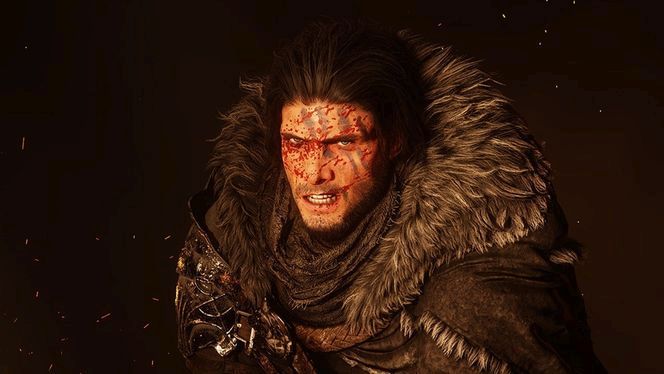
You can fast-forward through cutscenes, but the speed feels more like someone slapped the video on one-and-a-half playback than like a real skip function. After multiple attempts, that gets tiring fast, and a proper skip button would have been a much smarter solution. Kliff himself does not get enough life as a protagonist either. He does not so much drive the story as drift through it. Things happen to him, but only rarely do you feel they would not happen the same way without him. In this form, he feels more like a figure placed in front of a grim fantasy backdrop than like a true lead character.
What Pearl Abyss does surprisingly well, on the other hand, is rebuilding the Greymanes’ camp. Instead of relying on dull “go find your scattered companions, then check them off” quest design, the game gives you concrete camp management, an upgradeable base, and an infrastructure that expands bit by bit. You can send people out into the world, the camp levels up, and the whole thing adds a side layer to the main loop that actually feels alive. This is one of the areas where the game finally stops dragging around ideas collected from elsewhere and starts standing on its own feet.
That said, the picture is not perfectly clean here either. The menus, markers, and user interface tied to this side of the game can be messy and hard to read. A fair amount of that may well get patched up later, but in its current state it does not always help the game help itself. The story, meanwhile, is stronger than its protagonist. The voice work is genuinely good, the opening hits hard, and the larger political backdrop built around the king’s coma broadens the world in a convincing way. The other Greymanes are full of personality, friction, and life. Against that, Kliff feels for far too long like the one person missing from his own story.

The Fighting Works, and the Rest Sometimes Just Gets in the Way
Crimson Desert occasionally lets you switch to other characters, which sounds like a great idea at first. In practice, though, this is another system that looks much bigger on paper than it feels in finished form. Outside combat, it barely matters. Most of the story and side activities are built around Kliff anyway, so the mechanic winds up feeling more like a curiosity than real content. Which is a shame, because once the later companions with distinct fighting styles start to appear, it becomes obvious that there was room here for something far richer.
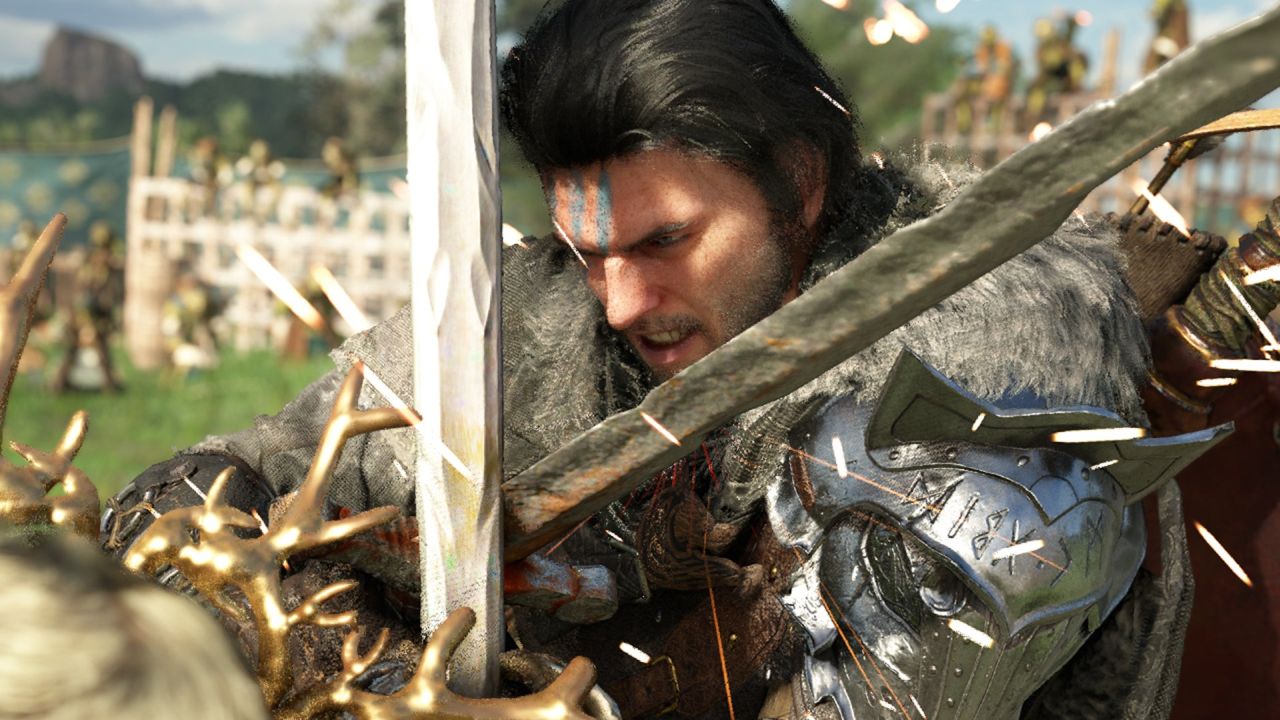
The game really comes alive when it finally stops leaning on borrowed open-world tricks and simply lets its combat system do the work. The fights are good, movement is lively, the verticality adds a lot, and the flying ability together with the grappling movement keeps the whole thing in motion. The weapon selection is satisfyingly broad too: swords, bows, firearms, hammers, huge two-handed monstrosities, even bare fists, and thankfully none of them are there just for show. They have weight, they have force, and they are fun to use. The large skill tree opens things up even more over time, adding magical moves and movement tools that genuinely expand what the game can be.
Bosses are the real test of skill. Early on, they are genuinely satisfying to overcome, because they push you to do more than just run headlong at everything. You are encouraged to improve your gear, explore the world, and engage with side content. Later on, though, some of them start to feel less like tests of mastery and more like healing-item-devouring walls that drag fights out longer than they should. Players who stick with them will still get their sense of triumph, and the game at least does a good job of making the gap between ordinary enemy groups and major boss encounters feel meaningful. But it is also clear that difficulty does not always rise intelligently. Sometimes it just plants itself on your patience and waits to see when you finally crack.
The Side Content Has Life, and Even Chopping Wood Is Weirdly Pleasurable
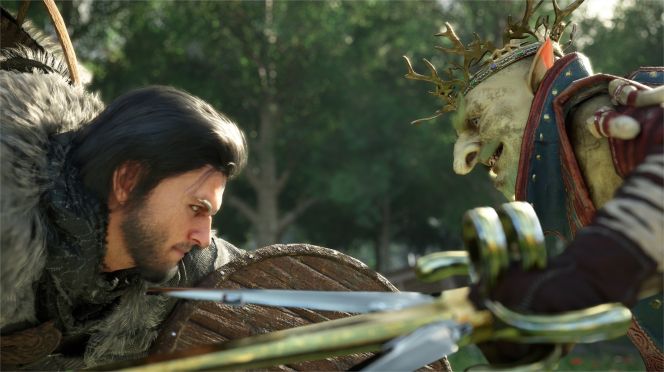
Magic is present in the system from the outset, but Crimson Desert does a very good job of gradually pushing itself further toward darker, more spectacular fantasy. As you move forward, you get more exotic mounts, grimmer monsters, more ominous scenery, and a world that slowly stops looking like a costume-drama adventure and starts feeling more like an uneasy fantasy nightmare. That gradual buildup helps a lot, because the game does not dump all its madness on you in the first hour. It lets the world open up at its own pace.
There is substance to the side quests and extra activities as well. The side quests themselves are not always groundbreaking, but they are fully voiced, which already gives them more life than many similar games ever bother with. They have some spark to them, and anyone who wants to see everything the game has to offer will have no shortage of reasons to wander. One particularly nice touch is the way certain recipes and bits of knowledge are learned: instead of just pressing a button prompt, the camera shifts into first person and Kliff visibly absorbs the material. It is a small thing, but it helps those moments feel like actual acquired experience instead of another menu entry.
Mining, woodcutting, and other forms of resource gathering are also surprisingly well done. You do not just walk up, press a button, and get some canned animation tossed at you. A tree, for example, falls in a way that takes its surroundings into account, and afterward you still have to process it into logs. You feel that same attention elsewhere too: the world does not want to be just background art. It wants to feel like a place where even the simplest activity has some tactile weight. Strange as it sounds, Crimson Desert sometimes makes chopping wood more satisfying than other games make an entire questline.
Beautiful, Big, Powerful, and Still Packed With Tiny Irritating Bits of Nonsense
Visually, on PC, the game is very strong overall. It can throw gorgeous landscapes, filthy battlefields, and striking lighting effects at the screen, and if you have enough hardware under it, it rewards you handsomely. Support for ultrawide resolutions, strong image quality, and overall technical confidence all help the world feel genuinely large and alive. Controller play is broadly fine too, except that the contextual prompts and object manipulation already mentioned have a habit of working against the game itself. This is exactly the sort of title that can show you how good a modern fantasy adventure can look while also showing you how easy it is to wreck its rhythm with a handful of badly judged little decisions.
All in all, Crimson Desert is an honestly ambitious piece of work. The combat is good, the world is huge and beautiful, and it is obvious Pearl Abyss was not afraid to move in a very different direction after its online past. Look closer, though, and there are too many small-to-medium annoyances lodged inside it. On their own, each one might have been manageable. Together, they keep pulling the whole thing back down. The touchy object interaction, the pale protagonist in a stronger surrounding story, the uneven spikes in difficulty, and the vague guidance all end up stopping the game from truly reaching the level its ambitions are so clearly straining toward.
-Gergely Herpai “BadSector”-
Pros:
+ Strong, weighty combat with excellent movement, varied weapons, and more memorable major boss fights
+ A huge, gorgeous world where camp building, wandering, and side activities can all be genuinely rewarding
+ The game is at its best when it finally trusts its own ideas instead of trying to show off with borrowed tricks
Cons:
– Object manipulation and environmental puzzles are too often fussy, finicky, and needlessly tedious
– Kliff remains too hollow for too long, even beside stronger side characters and a richer world around him
– Inconsistent checkpoints, uneven difficulty spikes, and vague guidance make the experience feel jerky and uneven
Developer: Pearl Abyss
Publisher: Pearl Abyss
Genre: open-world action-adventure game
Release: March 19, 2026
Crimson Desert
Gameplay - 7.4
Graphics - 9
Story - 5.6
Music/audio - 6.8
Ambience - 7.2
7.2
GOOD
Crimson Desert is exactly the kind of game you can admire and curse out in the same breath. When it finds its rhythm, it can swallow whole evenings without effort, because its combat, world, and sense of scale really do hit hard. But it also keeps stuffing itself with needless little irritations that turn a grand adventure into an exhausting amount of avoidable fuss.








Leave a Reply