
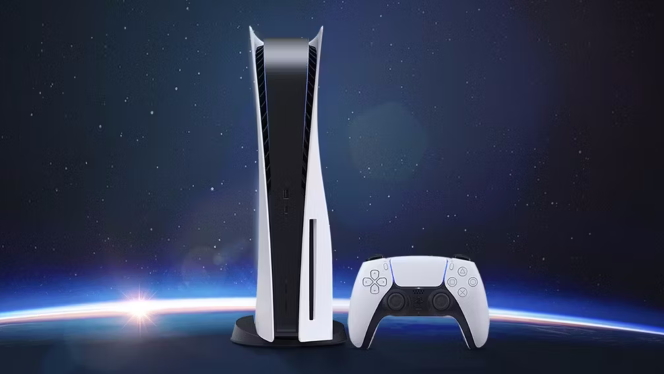
It must be said that Sony’s console wasn’t designed for this visual technology. If this is the result, then…
Since April, PlayStation 5 owners who haven’t updated their consoles in a while have been able to transform them into PCs using a new Linux bootloader. Digital Foundry recently took advantage of this breakthrough to run a path tracing test on the system. The three titles tested (Quake II RTX, Portal with RTX, and Cyberpunk 2077) represent different stages in the evolution of path tracing on PCs. Quake II RTX was the first major release to use path tracing. Although Quake II is old, path tracing breathes new life into its graphics. Portal with RTX was the first game to use Nvidia’s RTX Remix. Cyberpunk 2077, with its brutal RT Overdrive mode, represents the ultimate test of path tracing. All three games run with path tracing on the PlayStation 5, but the experience varies from game to game.
In Quake II RTX‘s benchmark scenarios with the default settings and medium global illumination, the PlayStation 5 struggles to run the game at a native 4K resolution, barely reaching 10 FPS. However, the situation improves when TAAU is set from 1080p to 4K (50% resolution scaling); the game then runs at an average of 40 FPS, an impressive feat given the system’s capabilities. With Dynamic Resolution Scaling (DRS), the PlayStation 5 can run the game at 60 FPS; however, the lower limit of the DRS range is 25% (540p). Nevertheless, the game looks good enough to be a legitimate release on the PlayStation 5 and Xbox Series. Indie games without cutting-edge features can support path tracing on the system and still provide a good experience.
The low internal resolution, essential for optimal performance with path tracing on the PlayStation 5, is also a recurring theme in the other two tests. As expected, Portal with RTX doesn’t perform as well as Quake II RTX because the former is a more advanced game than the classic FPS. At a 1080p output resolution running from an internal 540p with TAAU, the game barely reaches 30 FPS. The image quality is poor due to inadequate noise filtering; an upscaler would have improved this. While this is an interesting experiment, it’s not one that people would want to play, regardless of the playable frame rate.
Out of the three games tested, Cyberpunk 2077 performed the worst. To achieve a playable frame rate, we had to keep the internal resolution set to an extremely low level. In RT Overdrive at a 1080p resolution and in XeSS Performance mode, the in-game benchmark averaged 22.6 FPS. This is a respectable result for hardware not designed for path tracing. However, reducing the resolution to 1920×800 (an internal resolution of 348p in XeSS Performance mode) increases the average FPS to 26.9, rising to 35.5 (a 32% improvement) in PT Optimized mode, which reduces ray tracing from 2 to 1.
With AMD FSR 3.1 frame generation, the benchmark shows the game running at 70 FPS. However, the interpolated frames do not look realistic, giving the impression that the game does not actually achieve this frame rate. Nevertheless, the fact that it runs at a playable frame rate is impressive. Due to the low native resolution and upscaling solutions, the game’s appearance is subpar, and the frame rate is somewhat unstable. However, the fact that it runs in a playable form on the PlayStation 5 suggests that the PlayStation 5 Pro could attempt a demo mode targeting 30 FPS with path traced lighting.
With superior RT hardware and PSSR capabilities, the outcome of this test on the PlayStation 5 Pro would have been quite different, as demonstrated by the F1 25 path tracing demo at GDC. Since the PlayStation 6 promises a significant leap in ray tracing performance and PSSR, it’s reasonable to expect next-gen games to support path tracing in some form. However, mandatory handheld support could hold the system back.
Source: WCCFTech


![Stranded Deep 2: After Two Years, We Finally Get to See More of It! [VIDEO]](https://thegeek.games/wp-content/uploads/2026/09/Stranded-Deep-2-1280x720-1-302x180.jpg)
![Sony Is Following the Same Path Xbox Took in 2013! [VIDEO]](https://thegeek.games/wp-content/uploads/2026/09/Live-TV-on-PS5-1280x720-exact-302x180.png)








![Stranded Deep 2: After Two Years, We Finally Get to See More of It! [VIDEO]](https://thegeek.games/wp-content/uploads/2026/09/Stranded-Deep-2-1280x720-1-300x365.jpg)
![Sony Is Following the Same Path Xbox Took in 2013! [VIDEO]](https://thegeek.games/wp-content/uploads/2026/09/Live-TV-on-PS5-1280x720-exact-300x365.png)

Leave a Reply