
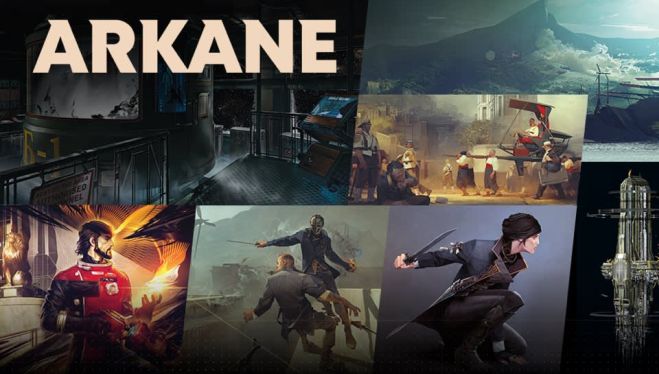
RETRO – The story of Arkane Studios is a story of stubborn genre loyalty, survival, risky ideas, and several games that still define what immersive sims can be. Behind Arx Fatalis, Dark Messiah of Might and Magic, Dishonored, Prey, and Deathloop was always the same idea: the player should not simply move through a level, but find personal solutions inside meaningful systems. Now, after the closure of Arkane Austin, the studio’s legacy and future rest on Marvel’s Blade.
Arkane has always felt like an impossible studio. It is a team that kept returning to one of the most expensive, most difficult to sell, and most fascinating genres in video games: the immersive sim. These games do not merely build impressive worlds. They create spaces where rules interact, player decisions matter, and problems rarely have only one solution. That philosophy is enormously attractive, but from a development perspective it is brutally complex, because every system must speak to the others while the player still feels genuinely free.
Arkane’s story is also split geographically: Lyon and Austin, France and Texas, fantasy and science fiction, Raphaël Colantonio and Harvey Smith. Colantonio entered the games industry in a strange way. While studying engineering and feeling torn between music and video games, he entered an Electronic Arts contest based on the Ultima series. The questions were extremely specific, the kind only an obsessive fan could answer, and Colantonio knew them all. The advertised prize, a trip to Origin Systems in Texas, was not really a prize at all. It was a disguised job offer for EA’s French branch.
The Electronic Arts of the 1990s was a very different company from the one most players know today. Origin pushed role-playing forward through Ultima, while Wing Commander helped redefine space simulation. The publisher also supported eccentric and daring projects such as Theme Park, Theme Hospital, and The Secret Files of Sherlock Holmes. Around 1997, however, Colantonio felt EA’s direction changing and Origin’s spirit fading into the background, so he eventually moved to Infogrames. He did not stay there long either. Encouraged by his uncle, he founded Arkane Studios in 1999 with four friends, determined to make the kind of game he had always imagined under the influence of Ultima Underworld.
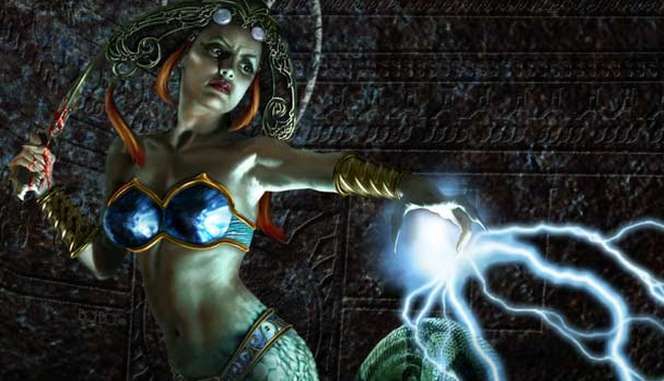
Arx Fatalis And Dark Messiah Showed Why Arkane Was Different
The first big dream was originally supposed to be Ultima Underworld 3. Colantonio met Paul Neurath, the head of Looking Glass, and the idea seemed possible, but the license was split, with part of it belonging to EA. The publisher did not want the same direction Arkane had in mind. Colantonio refused to abandon his artistic vision and instead created a new world from scratch. That is how Arx Fatalis was born, still one of Arkane’s most overlooked games. Development and publishing were difficult, and a deal with JoWood Entertainment eventually saved the project, but the launch was rough and sales did not break through. Arkane was in financial danger, even though the studio knew it had made a strong game.
Critics appreciated Arx Fatalis, but a sequel did not move forward. Arkane approached Ubisoft, which did not want to continue a poorly selling new IP, but offered the team a chance to work inside the Might and Magic universe. The result was Dark Messiah of Might and Magic, an imperfect game that eventually became a cult classic. As a warrior, players did not simply swing a sword; as a mage, they did not merely cast spells. They could freeze floors, trigger traps, knock enemies into spike walls, push barrels, use shadows for stealth, or combine those possibilities into chaotic improvisation. The game was buggy, rough, and often messy, but it delivered exactly the kind of freedom Arkane would later refine in far stronger form.
The next major project, The Crossing, was ahead of its time. The concept blended a traditional single-player campaign with online multiplayer, allowing other players to take on enemy roles and try to stop the protagonist’s progress. Today, that does not sound completely alien, but at the time it terrified publishers. Arkane met with several companies, but they either demanded too many rights or did not trust the model. Then EA returned with another experimental project, Steven Spielberg’s LMNO, an emotion-driven sci-fi action adventure with parkour elements. LMNO effectively pushed The Crossing aside, only to be cancelled later because of the financial crisis. Arkane then entered survival mode, contributing to the multiplayer side of Call of Duty: World at War and helping with BioShock 2 before ZeniMax finally gave the studio a more stable creative and financial foundation.
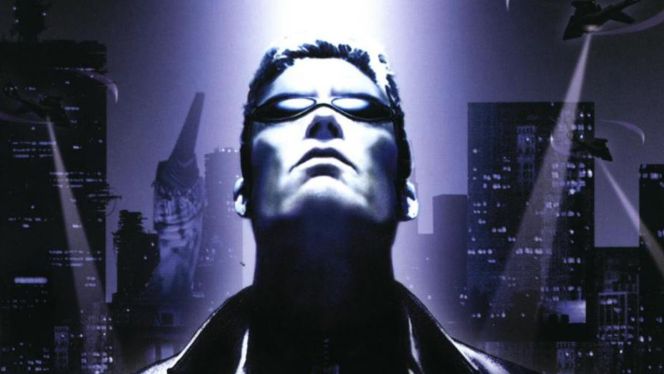
Harvey Smith And The Science-Fiction Legacy Of Deus Ex
Alongside Colantonio’s path was Harvey Smith’s, which brought in the other great branch of the immersive sim: science fiction. Smith’s life began brutally. His mother died when he was a child, his father later killed himself, and Smith eventually joined the army to escape the small town where he had grown up. He served in Germany and Saudi Arabia, took part in Operation Desert Storm, and later moved to Austin, where a friend was working in video games. That led him to Origin, first in quality assurance and then gradually closer to design.
Smith wrote a notorious list about Ultima VIII, identifying 100 unacceptable bugs and describing the game’s condition as a slap in the face to players. Richard Garriott did not respond with anger. Instead, he gave Smith a chance, and Smith fixed many of the most critical problems before being allowed to pitch his own project. That project was Technosaur, a real-time strategy game with rocket-launching dinosaurs, voice control, and stealth mechanics. EA wanted it shifted to an isometric perspective, Smith ignored the recommendation, and the project was cancelled.
The next crucial step was Deus Ex. Smith had previously tested System Shock, and he and Warren Spector had often discussed what a true spiritual successor to Ultima-style games might look like. The answer became Deus Ex, which took science fiction to a more personal, systemic, and interactive level. The game did not simply hand out missions. It offered a world where players could stack boxes, throw objects into water, chase birds on a dock, and feel that every little interaction suggested a living ruleset. The sequel, Deus Ex: Invisible War, could not reach the same depth, partly because of the compromises involved in console development. Smith later experienced with BlackSite: Area 51 how publisher pressure and impossible deadlines could crush ambition. When Colantonio offered him not just a design role at Arkane but co-ownership, Smith understood exactly how rare that opportunity was.
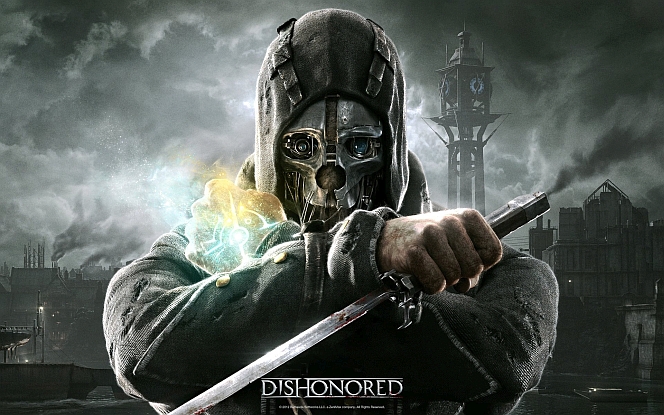
Dishonored Was The Breakthrough
After the agreement with Bethesda, Colantonio and Smith could finally prepare what later became known as the ninja presentation. The idea drew from the power-based combat of Dark Messiah, the stealth of Thief, and the systemic freedom of Deus Ex. The protagonist would be an assassin with supernatural abilities, and the setting would be neither classic fantasy nor pure science fiction, but an alternate world resembling Victorian London and operating by oilpunk rules. That is how Dunwall, Corvo Attano, and Dishonored were born.
Sébastien Mitton played a major role in shaping the game’s visual identity. He had joined Arkane during the Dark Messiah period, and after the cancelled projects, he found his strongest expression in Dishonored. The studio did not want hyperrealism. It used hand-painted textures, sharp faces, stylized proportions, and a visual language that looked neither like standard fantasy nor familiar science fiction. That made Dishonored instantly recognizable not only through its systems, but also through its art direction.
The game became both a critical and commercial success. Dishonored allowed players to move like ghosts, completing levels without being seen, but it also allowed them to become brutal and creative killing machines. Blink moved the player across space in an instant, Possession created wonderfully strange situations, and many interactions that might have looked like bugs elsewhere worked here as natural consequences of the system. The levels were not corridors, but spaces built around planning and improvisation, where the player’s own style defined the experience.
After the success of Dishonored, Arkane finally seemed capable of handling more than one major project at once. Because of its two offices, Colantonio and Smith split their focus again: Smith directed Dishonored 2, while Colantonio moved toward science fiction with Prey. Prey was not originally called Prey, but Bethesda revived the name after the cancellation of Prey 2. Arkane’s game was still an entirely separate world, and the Talos I space station became one of the most intricate 3D metroidvania-like spaces of the 2010s. The GLOO cannon, recycler grenades, and interconnected zones formed a system where players constantly discovered new routes, new tricks, and new solutions.
Deathloop Proved Arkane Could Still Innovate
Dishonored 2, meanwhile, moved the series to Karnaca, replaced rats with a mosquito plague, and made both Corvo and Emily Kaldwin playable. Sequels are dangerous. If they are too similar, players call them half-steps; if they are too different, they can alienate the audience. Smith had already learned that lesson with Deus Ex: Invisible War, but Dishonored 2 still gave the genre several iconic environments, especially the Clockwork Mansion, which remains one of the great modern examples of level design.
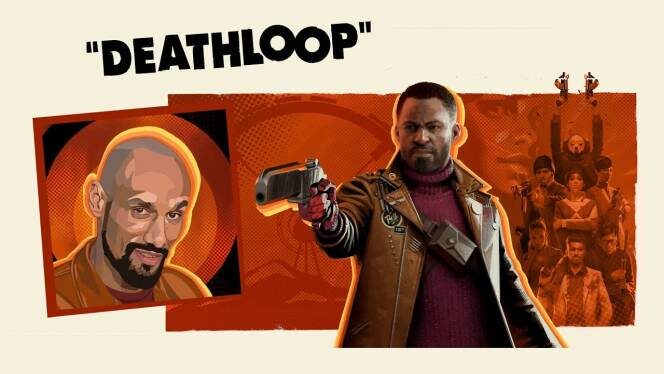
Arkane Lyon later moved in a new direction under Dinga Bakaba. Bakaba joined the studio in 2012, worked on Dishonored, became lead designer on Dishonored 2, and then directed both Death of the Outsider and Deathloop. He understood exactly what makes Arkane design work: the goal is not to build rigid chains of commands, but simple and general rules that connect in unexpected ways. If the player can possess a rat to pass through a sewer, the same system can also allow that player to avoid death during a fall. If a trap can be placed on any surface, it can also be placed on an enemy’s back. That is not a bug. It is the best kind of systemic surprise.
Deathloop wrapped that philosophy inside a time loop. Bakaba started from the observation that many players reload saves every time they are detected in Arkane games, so he wanted a structure that said: do not worry if you fail, try another way. That idea later echoed in the success of Baldur’s Gate 3, where failure is not simply a dead end but a story engine. Deathloop sold at least 5 million copies, while its total player count was likely much higher because of Game Pass. Bakaba was eventually promoted to head of Arkane Lyon.
Redfall Left A Wound, And Marvel’s Blade May Be The Next Chance
The immersive sim, however, remained a dangerous genre. It is not that these games cannot sell; it is that they are incredibly hard to make. Years ago, Bakaba said he could not even imagine how difficult it must have been to build a game like The Legend of Zelda: Breath of the Wild, before adding that if anyone could imagine it, it was probably Arkane. Colantonio left the studio in 2017 after the pressure of running such a large operation exhausted him. He later founded the much smaller WolfEye Studios, which proved with Weird West that systemic freedom does not necessarily require a gigantic production. By 2023, the game had reached 2 million players, and the team is already working on a new action RPG shooter.
Arkane’s darkest period arrived after Redfall. The 2023 cooperative action game fell far below the quality and originality players expected from the studio. Critics rejected it, fans turned away from it, and on May 7, 2024, one of the saddest pieces of recent industry news followed: Arkane Austin was closed. The team behind Prey disappeared, hundreds of jobs were lost, and Harvey Smith left as well. Smith later said he did not agree with the decision, because he believed in the studio’s future and felt the team had been working on something genuinely exciting.
Now all eyes are on Arkane Lyon and Marvel’s Blade. We have seen very little of the project, but the character and the studio’s past make it hard not to think of the Dishonored legacy: urban night, blades, movement, supernatural threat, and a protagonist balanced somewhere between hunter and prey. Bakaba once said Arkane had a tradition of taking time to replay old immersive sims, because doing so helped the team understand what those classics promised, what they delivered, and what memory had preserved from them. That kind of self-examination may matter more now than ever.
Across more than 25 years, Arkane has created genuine masterpieces, but its history also shows that uniqueness protects no one by itself. One bad decision, one troubled project, one market crisis, or one distorted expectation can be enough to make a brilliant team disappear. After Arx Fatalis, Dark Messiah of Might and Magic, Dishonored, Prey, and Deathloop, Marvel’s Blade is not just another licensed game. It may be the moment when Arkane proves that its spirit did not disappear with Austin, and that immersive sim thinking can still say something unexpected, dangerous, and memorable through a Marvel hero.
-Herpai Gergely „BadSector”-
Source: 3DJuegos









![[TGA 2025] Diablo IV: Lord of Hatred: A Character Class Returns! [VIDEO]](https://thegeek.games/wp-content/uploads/2025/12/theGeek-diablo-4-expansion-2-lord-of-hatred-paladin-skovos-horadric-cube-302x180.jpg)



Leave a Reply