
The parent company of Wizards of the Coast is a major player that pours a lot of money into game development, though that has become increasingly expensive over the years.
Over the past eight years, Hasbro has spent a staggering $1 billion to expand its gaming division and develop its own games through its studios. Given the evolution of the gaming industry over the past decade, it’s reasonable to assume that a company like Hasbro, which owns a vast amount of intellectual property, would prioritize live service – or games as a service (GaaS) – titles in its portfolio. However, this isn’t the only part of the strategy. In a new interview with The Game Business, CEO Chris Cocks clarifies that Hasbro would rather establish itself as a dominant force in the gaming industry before making a significant impact in this area.
Hasbro’s overall strategy does rely on the GaaS model to some extent. Monopoly GO has already become a massive hit as a mobile game. However, the title that established Hasbro as a notable player in the gaming world was Baldur’s Gate 3. It’s a deep, story-driven RPG ranked among the best games ever made, but Larian Studios deserves the credit for that. Now that Larian is becoming increasingly independent, Hasbro can no longer rely on them. Cocks seems intent on proving that Hasbro and Wizards of the Coast are still the place to watch for big, incredible RPGs and narrative experiences. Cocks explains that Hasbro will primarily create traditional console and PC games, such as the upcoming Exodus and Warlock, followed by lighter games and mobile titles. This strategy is shaped by the graveyard of live services that has emerged in recent years.
“We have some major brands, such as Monopoly and Clue, which are more casual games. Then, we have entertainment brands, such as My Little Pony and Peppa Pig. Finally, we have more core brands, such as D&D and Magic: The Gathering. I’d also throw Transformers and G.I. Joe into that camp. That’s a really broad portfolio. So, where should we place our bets, and where shouldn’t we? We chose core games focused on PC and console with more traditional business models. It was a safer bet for us. You can invest $100 million to build a great mobile game or a great game as a service, like a shooter. The upside is that you can make billions. But how many people achieve that level of success? It’s a very low percentage, if even that. The downside is that you don’t make anything back, and it’s basically a wash.
Statistically speaking – and this is dangerous because it’s a creative enterprise – if you invest a fair amount of money and give a talented team a fair amount of time to develop a more traditional game, you probably won’t make billions, but your chances of making your money back are much higher. Even if you fail, you’ll probably make back 50, 60, or 70 cents on the dollar. So, when we looked at the risk-reward equation and our design sensibilities – frankly, the kinds of games we like to play; I’m more of a traditional gamer – we felt that was the safer route. I think there’s always going to be demand for good games that deliver 40 to 50 hours of content at a fair price,” Cocks said.
Cocks is right that there will always be demand for good games at fair prices. Many players will surely breathe a sigh of relief knowing that the first wave of games released by Hasbro and Wizards of the Coast after Larian’s departure won’t be another doomed game with an endless development cycle. However, the big, premium, AAA-tier games that Hasbro is planning come with a hefty price tag. You might have a better chance of recouping your investment, but profitability isn’t easy to achieve.
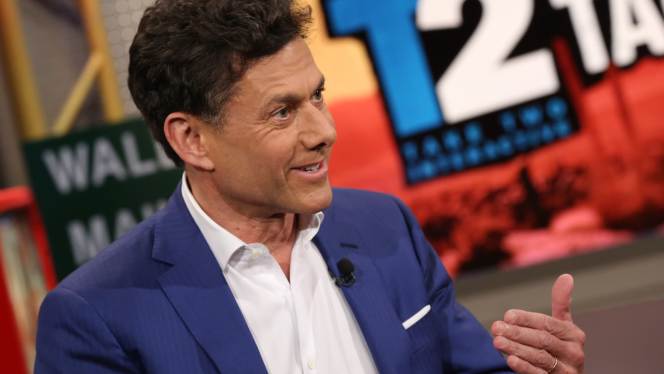
As Take-Two CEO Strauss Zelnick likes to say in interviews, creating hit series is a high-stakes game reserved for the big players. He’s happy to play it, as is Hasbro, since both companies operate on that scale. Zelnick previously said that Hasbro and Wizards of the Coast know how to make great games.
Source: WCCFTech, The Game Business













Leave a Reply