
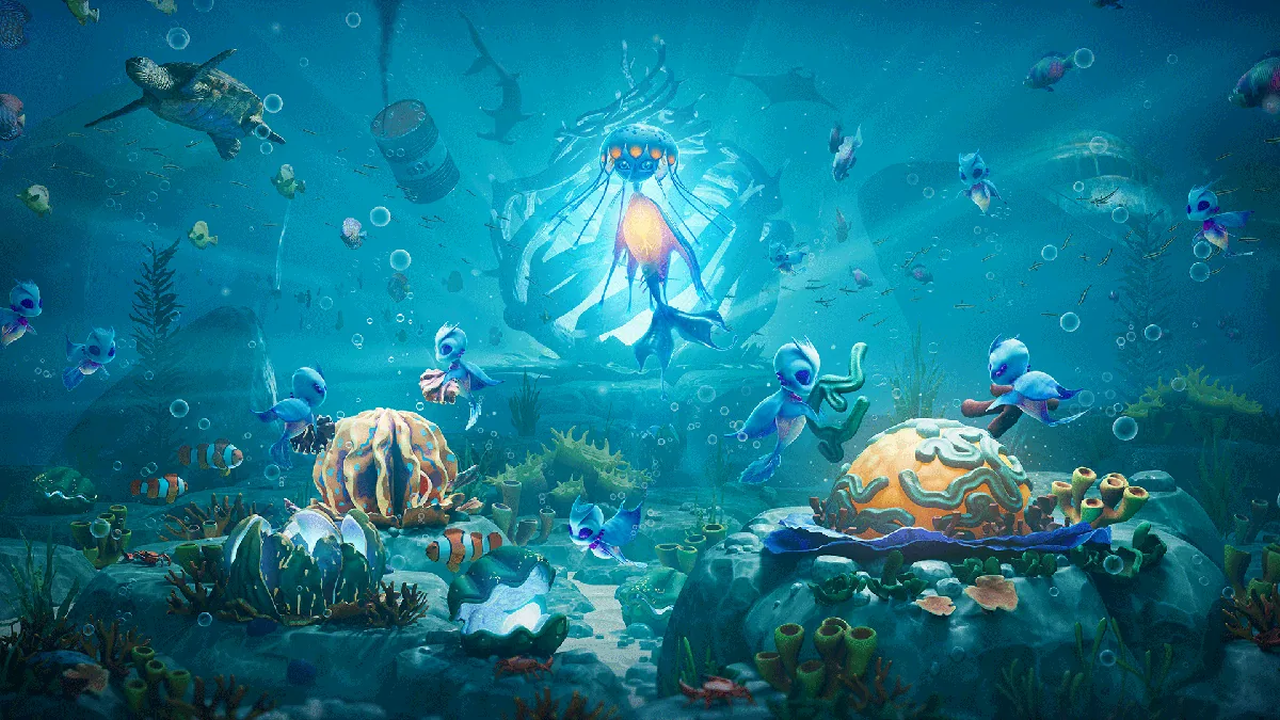
REVIEW – Life Below takes the city builder somewhere it rarely goes: the ocean floor, where “growth” isn’t just bigger numbers, it’s a living ecosystem that can collapse if you treat it like a spreadsheet. It’s calm on the surface, ruthless underneath, and it’s at its best when it forces you to stop chasing expansion and start managing consequences. Build a reef like it matters – because here, it does.
The pitch is simple, but the loop has teeth. You play Thalassa, a water sprite reborn as a guardian, appointed by Gaia to restore a failing reef. That framing isn’t just flavor text: the game keeps pulling you back to the same point – you’re not “conquering” the sea, you’re trying to stabilize it long enough for life to stick.
Everything revolves around the reef heart, your central structure and the one thing you can’t afford to neglect. If its health or comfort drops to zero, the run is over. That single rule gives the early game real tension, because you’re constantly choosing between building something new and keeping what you’ve already built alive.

Sprites, Resources, and the Reef That Won’t Grow by Itself
Progress starts with materials, but the ocean version. Coral matter and pearls are your core resources, produced through the right structures – sprout coral on sprout nodes for matter, clams for pearls – and the layout rules quickly turn “just build more” into a spatial puzzle. You can’t brute-force placement forever, and the reef pushes back when you try.
The real workforce is the water sprites. They build, harvest, craft, and essentially keep the whole colony moving. More sprites means faster progress, so sprite wells become your tempo control. It’s a smart constraint: if you don’t invest in capacity, your plans don’t fail because they’re wrong – they fail because you can’t execute them in time.

Lures, Fish, Biodiversity – Your Currency Can Swim Away
The hook is crafting lures to attract fish, and it’s more satisfying than it sounds. Different lures pull different species, but you also need the right food and habitats to keep them. This turns “getting new units” into ecosystem planning, not a loot treadmill. When it clicks, you stop thinking like a builder and start thinking like a caretaker.
Biodiversity is the game’s key resource, used for upgrades and claiming new zones, and you earn it by successfully attracting and sustaining more wildlife. The sting is that you can lose it if too many fish die – so mistakes don’t just slow you down, they undo progress. The growth coral research tree then ties it all together, unlocking new habitats and new tools for managing zones and hazards.
Zones themselves demand balance: temperature, pH, algae, and later threats like invasive species, garbage patches, and oil spills. The game doesn’t make you solve these with combat – it makes you solve them with systems. That’s where Life Below feels most confident: it wants you to build solutions, not just structures.
Atmosphere Does the Heavy Lifting, But It’s Not Perfect
The main objective is restoring ruined zones and helping the spirits within them. While a zone is unstable, it damages your structures until you re-stabilize it, which turns expansion into a calculated risk. Fix it, and you earn the right to push further by upgrading the reef heart and opening more demanding areas.
Presentation is a big win. Coral reefs look vibrant and dense, the ocean mood is strong, and the audio sells the underwater vibe without turning it into cinematic noise. It’s the kind of game where you’ll occasionally pause just to watch your ecosystem function.
There were some rough edges during my time with it – a few oddities with sprite counts and one run where food systems went off the rails – but fixes landing quickly suggests the developers are actively chasing stability. In the end, Life Below is a relaxing city builder that still asks you to pay attention. If you enjoy slow-burn management with real stakes, it’s easy to get hooked.
rating: 82% Good
final word: Life Below looks peaceful, but it plays like an ecosystem – it rewards patience and punishes sloppy planning. When the systems line up, it’s deeply satisfying to watch your reef solve problems that used to wipe you out. It’s not for everyone, but it’s a smart spin on the genre.
-Herpai Gergely „BadSector”-
Pro:
+ A genuinely fresh city builder loop built around ecology, not just expansion
+ Strong atmosphere – visuals and audio sell the underwater world
+ Biodiversity adds real stakes and meaningful progression
Kontra:
– Some systems take time to read, and the onboarding can feel light
– Occasional technical hiccups can break the calm
– If you dislike slower management pacing, it may not grab you
Publisher: Kasedo Games
Developer: Megapop
Genre: coral reef city builder, strategy, management
Platform: PC
Release date: May 26, 2026
Life Below
Gameplay - 8.1
Graphics - 8.4
Story - 7.3
Music/audio - 8.7
Ambiance - 8.5
8.2
EXCELLENT
Life Below turns city building into ecosystem care, where growth only matters if it’s stable. Biodiversity, zone tuning, and hazards give the loop weight without turning it into a stress simulator. A few rough edges remain, but the core idea is strong and genuinely different.




![[TGA 2025] Diablo IV: Lord of Hatred: A Character Class Returns! [VIDEO]](https://thegeek.games/wp-content/uploads/2025/12/theGeek-diablo-4-expansion-2-lord-of-hatred-paladin-skovos-horadric-cube-302x180.jpg)









Leave a Reply