
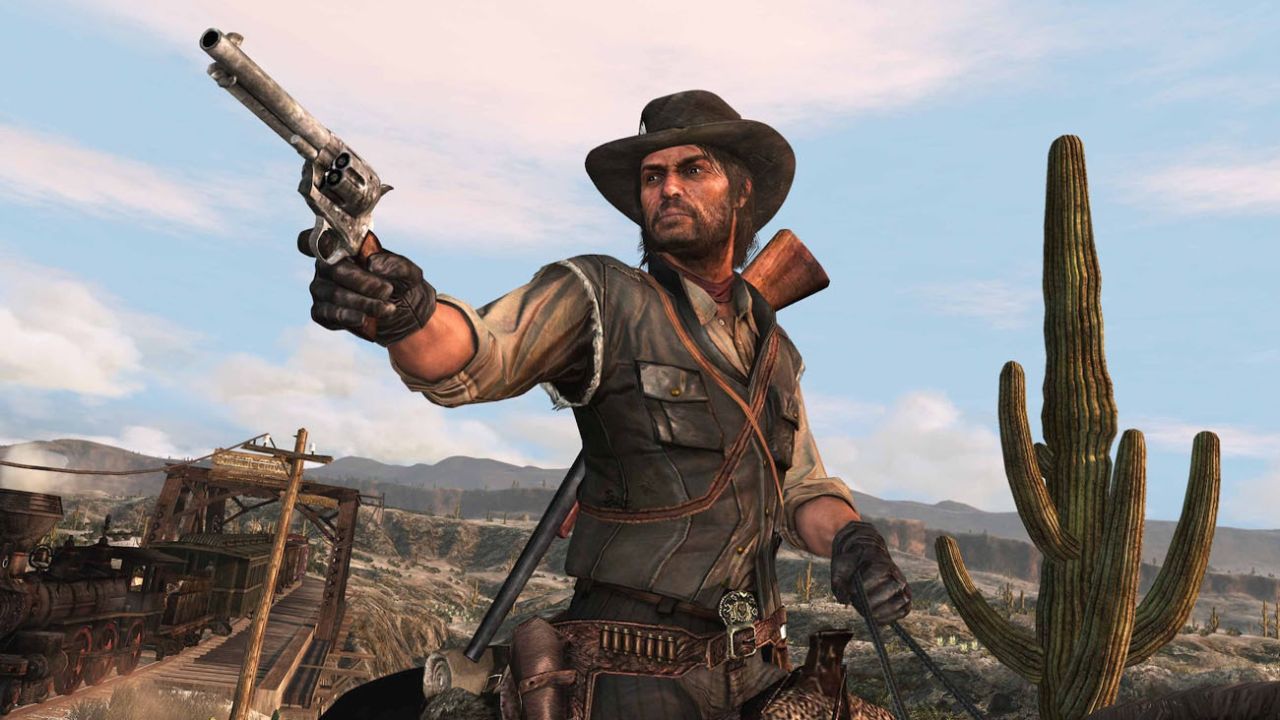
Many developers joined Rockstar believing they had landed a dream job, only for the company’s notorious crunch periods to turn that experience into something very different. Kris Roberts, a former designer on the original Red Dead Redemption, has now recalled how some of that overtime was not necessarily about solving urgent development problems, but about making sure the studio looked suitably busy whenever senior executives came to visit.
Rockstar’s overtime-heavy development culture has been discussed repeatedly over the years. Reports surrounding the final stages of Red Dead Redemption 2, for example, described exceptionally long workweeks for some employees as the studio pushed to polish every aspect of its Western. Similar pressure existed during development of the first Red Dead Redemption, although Kris Roberts remembers that some of the weekend work during that project did not always have an immediate technical or business justification.
Roberts, whose credits include the Midnight Club series and Red Dead Redemption, discussed Rockstar’s overtime culture in an interview with the Kiwi Talkz YouTube channel. While working on Midnight Club: Los Angeles, he had voluntarily moved into an hourly position after the birth of his second child because he did not want the workload of a full-time role. Moving to Red Dead Redemption, then still several years away from release, changed those expectations completely. “It was clear: you’ve come back as an exempt employee and this is going to be full-time. For us, at that time, ‘full-time’ meant prime time. We had the expectation that you’d be there at 9:30 in the morning and you’d stay until 6:00.”
According to Roberts, those hours gradually expanded. “Eventually, the core schedule expanded to include half a day on Saturday. You were expected to be there. Then, the core schedule was extended to include the entire Saturday. After that, Sunday was optional, but encouraged.” By the end, days off had effectively disappeared. “In the end, we were working every day, all day. And the message from management was, if you had something, family commitments, health issues, or whatever, take care of it. But when you’re done, come back because we need you.”
Combined with the demands of raising two children, Roberts said the workload eventually made it difficult for him to remember ordinary details of everyday life. He described the experience as producing an “amnesic state” in which there is no longer a clear recollection of exactly what happened from one day to the next. Overtime itself was not new to him: while working on Midnight Club, he had voluntarily put in extra hours and even logged on during the early morning because he wanted to help with development. “I did it because I thought it was important and I wanted to be involved in all of it,” he explained. His experience on Red Dead Redemption, however, became a turning point.
Weekend Work Wasn’t Always About Fixing Critical Problems
Roberts believes the crunch period on Red Dead Redemption included elements that felt unusually artificial compared with anything else he had experienced in game development. “There were things like, ‘Oh, an executive. Sam [Houser], Leslie [Benzies], whoever, is coming this weekend. We need everyone to pitch in.’ I remember a couple of specific examples; one Friday afternoon, management sent an email saying, ‘Just to be clear, we need to be here this weekend.’” What particularly bothered Roberts was that these demands could arrive immediately before the weekend.
“And it’s like… I’ve made promises to my kids about what we were going to do this weekend, and you’re telling me Friday afternoon, at 4:30 p.m., that I need to be here Sunday no matter what? That’s unacceptable.” Roberts stressed that this was not always because the team had critical bugs to fix before the next build or because there was some clear business reason that made weekend work essential. “It was more like, we need to give the impression that everyone is here at all times because of a visit from an executive or something.”
That experience ultimately became a breaking point for Roberts. He left Rockstar after completing Red Dead Redemption, and told Kiwi Talkz that the working culture played a meaningful role in his decision. “I think that was really a factor that pushed me past my limit and made me say, ‘I don’t want to do this anymore.’” Roberts did return to Rockstar years later to work on multiplayer design, but he now operates independently and runs his own studio, Robertsmania.
Source: 3DJuegos


![The Trailer for Robert Eggers’s Medieval Horror Film Werwulf Has Arrived [VIDEO]](https://thegeek.games/wp-content/uploads/2026/07/theGeek-werwulf-302x180.jpg)



![A Quake 4 Expansion Thought to Be Lost Has Resurfaced, and You Can Even Download It! [VIDEO]](https://thegeek.games/wp-content/uploads/2026/08/theGeek-Quake-4-Awakening-302x180.jpg)




![The Trailer for Robert Eggers’s Medieval Horror Film Werwulf Has Arrived [VIDEO]](https://thegeek.games/wp-content/uploads/2026/07/theGeek-werwulf-300x365.jpg)