OPINION – Sixty frames per second has gradually shifted from luxury to expectation during the current console generation, so at first glance it sounds rather strange that the biggest game of 2026 is still being built around a 30 FPS console target. Yet Grand Theft Auto VI is not dealing with a simple resolution toggle: Vice City’s traffic, crowds, physics, lighting and background simulation may impose workloads that cannot simply be cut in half by disabling a few graphical effects. Digital Foundry’s analysis suggests that the current base-PS5 build renders internally at around 1440p before being upscaled to a 4K output while maintaining a remarkably stable 30 FPS. But if the latest rumor is true and PS5 Pro really can deliver 60 FPS, the question becomes much more uncomfortable: is thirty frames a technical necessity, or are we approaching a world where premium hardware is required for what other games simply call Performance Mode?
With Grand Theft Auto VI approaching its November 19 release, we have finally reached the point where we no longer need to reconstruct the game entirely from still images, short trailers and internet speculation. Rockstar’s August Extended Look presentation was captured entirely from in-game footage running on a standard PlayStation 5. That matters because at least we know we are not watching a visual target running on a PC or some unannounced future machine. What Rockstar showed is a real build operating on the mass-market hardware millions of people already own.
Frame rate immediately became the obvious point of debate. According to Brazilian creator Davy Jones’ account of his conversation with Rockstar North development lead and co-director Rob Nelson, the current console builds are running at 30 FPS, and when Nelson was asked about a possible 60 FPS option later, he made no promise and said he would need to consult the technical team. That distinction matters: the current 30 FPS state is now considerably more substantial than a trailer-based guess, but Rockstar still has not published a detailed list of final graphics modes. Saying GTA VI is guaranteed to remain 30 FPS forever on every console is therefore just as premature as treating 60 FPS as confirmed.
In 2013, GTA V at Thirty Frames Was a Technical Achievement
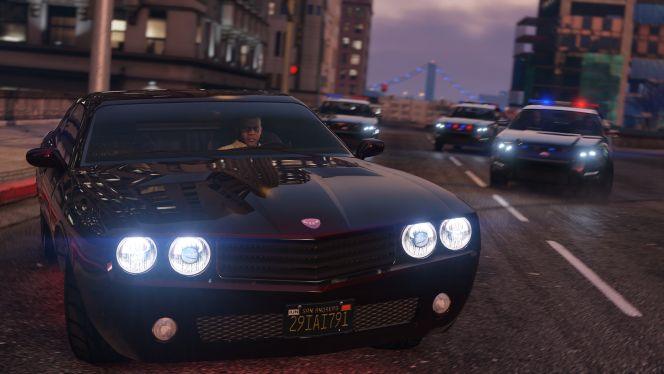
Anyone familiar with Rockstar’s history should not be particularly surprised by 30 FPS itself. When Grand Theft Auto V launched on PlayStation 3 and Xbox 360 in September 2013, both versions targeted 30 frames per second. Digital Foundry’s contemporary testing also showed that this did not mean an immaculate thirty: heavy city chases and large-scale action could drag both machines down toward 20 FPS. Even so, it would have been difficult to argue in good faith that Rockstar was technically lazy in 2013.
The PS3 was 2006 hardware running an enormous Los Santos seven years later, complete with traffic, police simulation, physics, a day-night cycle and three switchable protagonists. GTA V did not run at thirty because Rockstar somehow failed to understand that sixty looks smoother. It ran at thirty because the studio spent the available processing budget on scale and systemic complexity instead. The same philosophy later defined Red Dead Redemption 2 on the previous console generation.
Something has changed between 2013 and 2026, however. During the PS5 and Xbox Series generation, 60 FPS Performance modes have become so common that many players no longer see them as bonuses but as basic options. After 120 Hz OLEDs, VRR displays and increasingly responsive console action games, a stable 30 FPS presentation is far more noticeable than it was thirteen years ago. What looked like engineering wizardry on PS3 can reasonably be judged by a different standard on PS5.
The Problem May Not Be 4K, but Everything Vice City Is Calculating Behind It
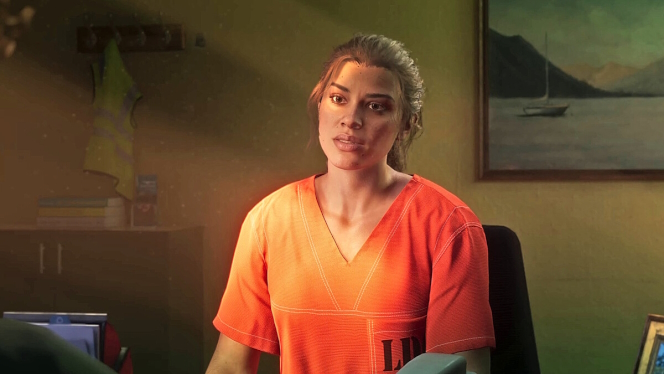
This is where one of the most important technical misconceptions enters the argument. It is easy to say, “Just lower it from 4K to 1440p and give us 60 FPS,” except current evidence suggests GTA VI is not rendering at native 4K on the base PS5 in the first place. According to GamesRadar’s summary of Digital Foundry’s latest analysis, the showcase appears to use an internal resolution around 1440p before scaling to a 4K output while holding a remarkably stable 30 FPS. Rockstar is already spending resolution to buy performance.
The real limitation may be much more CPU-heavy. At 30 FPS, the system has 33.3 milliseconds to prepare each new frame; at sixty, that budget falls to 16.7. It is not only the graphics that must be rendered twice as frequently: traffic, pedestrians, police responses, physical objects, animation and background simulation also need to update twice as often. If the processor is already approaching its limit there, cutting the rendering resolution in half does not magically make a police officer think twice as fast.
That is why Digital Foundry has described a stable 60 FPS target on current console hardware as “extremely unlikely”, while simultaneously treating the showcase as one of the generation’s most impressive demonstrations of real-time rendering. That context matters. The density of NPCs, interiors and exteriors, reflections, hair, materials, lighting, vehicles and tiny animations suggests Rockstar did not settle on thirty because it stopped optimizing halfway through development. The question is whether we accept the priority it has chosen.
Do We Forgive Rockstar for Something We Would Criticize Elsewhere?
Because this is no longer only a technical question. It is also a brand question. If a less famous open-world game announced in 2026 that it would ship exclusively at 30 FPS on console, half the comments would already be burying its optimization. When Rockstar does the same thing, the response immediately becomes, “It’s GTA, there must be a reason.” And to be fair, the studio’s track record gives it more right to that trust than most developers have earned.
GTA V made a world function on late-generation PS3 hardware that previously seemed barely imaginable there. Red Dead Redemption 2 remained an extraordinary technical accomplishment even on a base PS4 and Xbox One, again built around a 30 FPS target. Rockstar has repeatedly pushed consoles by prioritizing world complexity over higher refresh rates. That is not necessarily the decision I would always choose, but it is at least a consistent one.
Brand prestige cannot become an unlimited exemption, however. GTA VI is not a cheap technical experiment. It will be one of the most expensive and important products in the games industry, arriving thirteen years after GTA V. If any developer can reasonably be expected to investigate every viable performance option, it is Rockstar. “Thirty is fine because it’s GTA” would be just as lazy a doctrine as insisting every game must run at sixty regardless of the cost to everything else.

Then the PS5 Pro Rumor Arrives and Complicates Everything
The PlayStation 5 Pro is what makes this story genuinely interesting. Sony’s own GTA VI page already labels the game PS5 Pro Enhanced, so some Pro-specific improvement definitely exists. Neither Sony nor Rockstar has explained exactly what that means. It could involve higher internal resolution, better ray tracing, improved image quality, stronger PSSR reconstruction, higher frame rates or some combination of all of them.
On August 29, however, VICE published a report on a new claim from HipHopGamer, who says GTA VI will run at 60 FPS on PS5 Pro. The rumor received more attention than the average anonymous forum post because before the Extended Look, HipHopGamer had mentioned several details involving Jason and Lucia’s character switching and the more elaborate vehicle-theft system that later appeared in Rockstar’s presentation. Even so, VICE itself stresses that he is not regarded as a traditional Rockstar insider and Rockstar has not announced a 60 FPS PS5 Pro mode.
There is another important distinction: the rumor concerns 60 FPS, not confirmed native 4K/60 FPS. Those claims should not automatically be bundled together. If the Pro uses PSSR to reconstruct a 4K output from a lower internal resolution while somehow reaching sixty frames, that is an entirely different technical proposition from rendering native 4K at sixty. At the moment, “PS5 Pro 4K/60” is therefore wishful thinking or additional speculation, not an announced specification.
And even the Pro cannot automatically solve a CPU problem. Its graphics hardware is significantly stronger than the base PS5 and PSSR may provide a major image-quality advantage, but its CPU remains fundamentally based on the same Zen 2 architecture with only limited clock-rate uplift available. Richard Leadbetter warned well before this latest showcase that if GTA VI is genuinely CPU-bound around 30 FPS on the standard system, the Pro’s extra GPU power cannot simply perform a miracle. If HipHopGamer’s claim turns out to be correct anyway, it will be fascinating to learn what compromises or Rockstar engineering tricks made it possible.

Maybe Sixty Is Not the Real Middle Ground
There is another option that somehow gets lost in every 30-versus-60 argument: 40 FPS. At first glance it does not sound dramatically better than thirty, but on a 120 Hz display it is an excellent technical midpoint. A frame lasts 33.3 milliseconds at 30 FPS, 25 milliseconds at 40, and 16.7 at sixty. In terms of frame time, forty therefore sits exactly halfway between thirty and sixty.
That is why 40 FPS Fidelity modes have become so attractive in several PS5 games. They can preserve much of the higher visual quality while feeling noticeably better than thirty during motion and controller response. TechRadar raised exactly this possibility for GTA VI: if stable sixty really is too large a leap, a 40 FPS mode designed for 120 Hz displays could make considerable sense, particularly on PS5 Pro.
I would find that far more interesting than simply ending the discussion with “it’s a Rockstar game, therefore thirty.” A stable 30 FPS maximum-Fidelity mode, a 40 FPS option for compatible displays, and, if technically possible, a more aggressively reduced 60 FPS Performance mode would give players meaningful choice. Those who want every neon reflection and individual hair in Vice City can prioritize the image. Those who care more about responsiveness while driving, shooting and moving the camera should be allowed to prioritize that instead.
So is it embarrassing if Grand Theft Auto VI ultimately runs at 30 FPS on standard PS5 and Xbox Series consoles? Not by itself, in my view. If Rockstar really is spending the entire machine’s processing budget on creating a Vice City this dense, reactive and visually convincing, and reaching sixty would require visibly cutting back the world itself, then stable thirty is a defensible technical decision. The studio has already demonstrated that philosophy successfully with GTA V and Red Dead Redemption 2.
But if November arrives and the same world turns out to run comfortably at 60 FPS on PS5 Pro, then some uncomfortable questions become entirely fair. Not because stronger hardware should be forbidden from doing more, but because players deserve to know exactly why the refresh rate had to be halved on the base machines. And if the answer becomes that the modern GTA experience requires an $80 game plus a premium console merely to reach sixty frames, then Rockstar may indeed be able to get away with it. That does not necessarily mean we should make it easy.
-Gergely Herpai „BadSector”-