
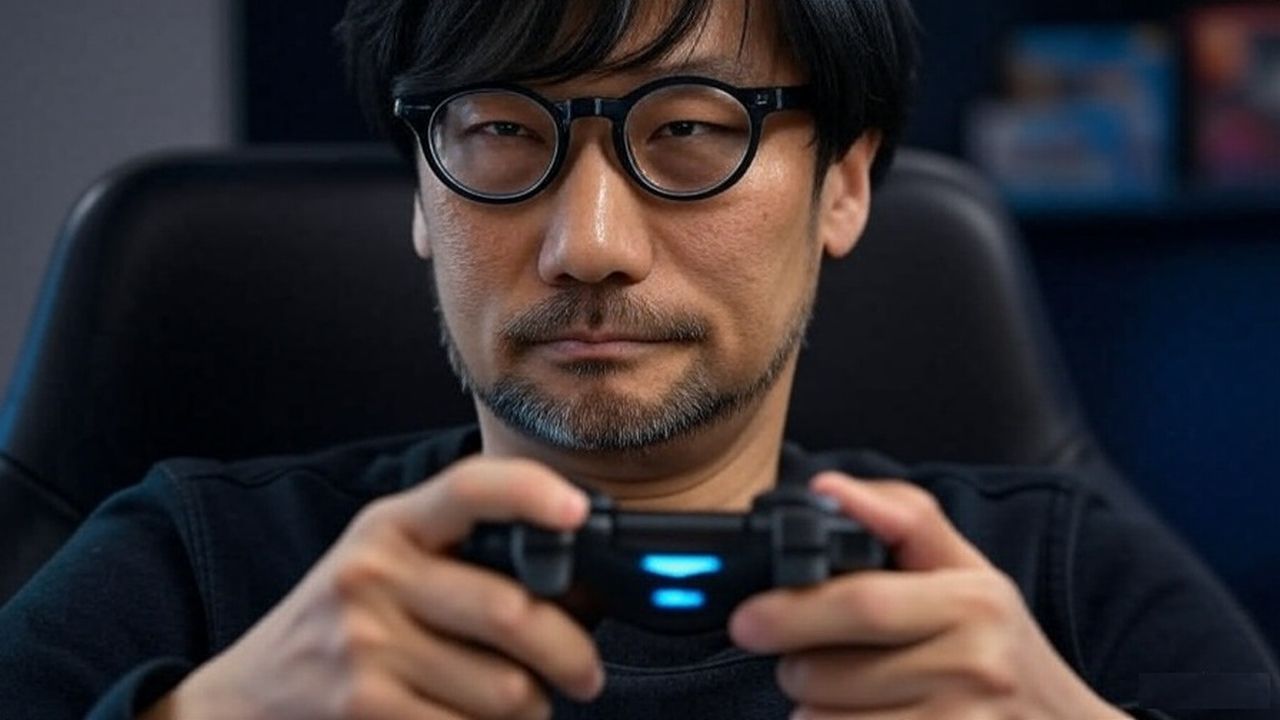
Hideo Kojima has spent more than a decade trying to make sure his name does not live on merely as an attachment to Metal Gear. The Japanese creator has never disowned Konami’s legendary series, but years before leaving the company, he had already made it clear that he did not want his entire career filed under a single franchise. Death Stranding and Kojima Productions became the most visible results of that move toward independence.
Hideo Kojima’s name is still almost automatically tied to the Metal Gear series, and that is hardly surprising. Metal Gear Solid became not only one of the defining works of stealth action, but also one of the most frequently cited examples of cinematic storytelling, political paranoia, anti-war themes, and authorship in video games. Kojima, however, had already begun to feel long before his final split with Konami that this success was both elevation and confinement. The world comfortably attached the Metal Gear label to him, while he became increasingly determined to prove that he could think beyond Solid Snake, Big Boss, and the nuclear shadow world that made him famous.
In the early 2010s, while he was still working inside Konami on his final major projects there, it was already clear that his creative direction was shifting elsewhere. His relationship with the publisher had become increasingly tense by then, and later reports described the environment around the creator in harsh terms. Kojima, however, was not trying to reject the series. He was trying to grow beyond it. For him, Metal Gear was no longer only a brand to be continued, but also an experimental field: a large-scale production where he could test new mechanics, different narrative structures, and early seeds for later independent ideas.
That was especially visible around Metal Gear Solid V: Ground Zeroes and Metal Gear Solid V: The Phantom Pain. Kojima spoke about those games not only as the next stages of the saga, but also as works that contained the foundations of future, entirely separate IPs. In 2012, he said that for his next game he was already introducing concepts intended for new intellectual properties, using the Metal Gear brand to give them shape. In hindsight, that does not feel like a minor interview detail. It reads more like the first open statement of a creative escape route.
Kojima Wanted More Than One Reference Point
The situation is probably best summed up by something he said three years before leaving Konami. Kojima wanted his future works not to be described as games by “the creator of Metal Gear Solid”, but simply as Kojima works. His own wording was direct: “I admit that I hope my future endeavors won’t be referred to as works ‘by the creator of Metal Gear.’ I haven’t really shown the world what else I’m capable of. This may sound pretentious, but I don’t like being called ‘the Metal Gear guy’ because there’s so much more I can do.”
The point of that sentence was not that Kojima wanted to turn his back on his past. It was that he did not want his past to become the only standard by which everything else would be measured. The success of Metal Gear cast the kind of enormous shadow many creators would have comfortably lived under forever. Kojima, instead, wanted to get out of that comfortable trap: the position where every new idea, every genre experiment, and every authorial decision is immediately dragged back to a single legacy.
After Konami, that ambition first took unmistakable shape with Death Stranding. Released in 2019, the game, with all its oddities, slow rhythm, divisive structure, and hard-to-classify gameplay, made it clear that Kojima was not trying to produce a safe backup copy of his own legend. Its focus on connection, isolation, fragmented storytelling, and indirect cooperation between players arrived in an AAA environment where this kind of experimentation usually hits a wall very quickly. Kojima Productions therefore did not become a nostalgic shelter after Metal Gear, but an auteur studio centered not on an old franchise, but on Kojima’s own creative personality.
That does not mean the old label has fully disappeared. The phrase “the father of Metal Gear Solid” is still too strong to vanish from every new announcement, because the series’ influence is enormous and players’ memories are stubborn. Still, Kojima has become a separate phenomenon. People no longer watch him only because he once created Solid Snake’s world, but because anything he touches is likely to become strange, debatable, over-discussed, and instantly recognizable. The shadow of Metal Gear is still behind him, but it no longer functions as a single label. It is now a huge precedent that Kojima has not denied, but has tried to outgrow.
Source: 3DJuegos






![18 Minutes of Deeper Insight into Silent Hill: Townfall [VIDEO]](https://thegeek.games/wp-content/uploads/2026/02/theGeek-Silent-Hill-Townfall-302x180.jpg)


![Code Vein II: Mask of Idris: Update and DLC Coming Soon, All at Once [VIDEO]](https://thegeek.games/wp-content/uploads/2026/02/theGeek-Code-Vein-II-302x180.jpg)
![The Second Story DLC for Borderlands 4 Launches in Three Weeks [VIDEO]](https://thegeek.games/wp-content/uploads/2025/09/theGeek-Borderlands-4-302x180.jpg)



Leave a Reply