
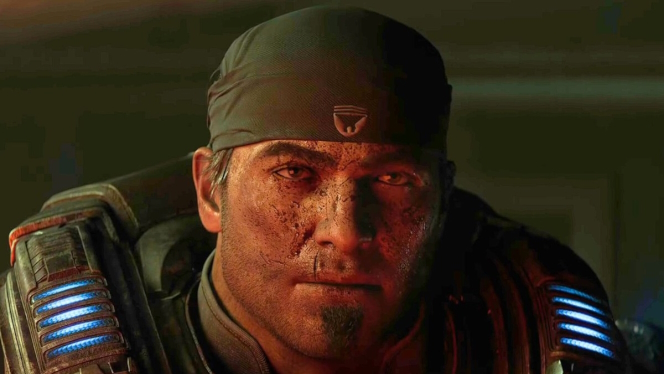
The Xbox console exclusivity of Gears of War: E-Day and Clockwork Revolution may look like a strong brand-building move at first glance, but one industry analyst says it makes little economic sense. Rhys Elliott of Alinea Analytics argues that Microsoft is pushing a strategy that can no longer meaningfully move Xbox Series X|S hardware sales, while the games are still coming to Steam anyway.
It has been a few days since Xbox announced the return of console exclusives. The first games set to launch simultaneously on PC and Xbox Series X|S, but not on PlayStation 5 or Nintendo Switch 2, are Gears of War: E-Day and Clockwork Revolution. One is slated for release this year and the other next year, and it is clear that Xbox CEO Asha Sharma made this decision to give players more reasons to buy the console. If the goal is to maximize sales, however, this may not be the strongest possible strategy.
Will Xbox Fail With Its Return to Exclusives?
Rhys Elliott, an analyst at Alinea Analytics, has weighed in on Xbox’s return to exclusive titles, speaking quite bluntly to GameSpot. In his view, Microsoft will never truly succeed again in the console market, and games such as Gears of War: E-Day and Clockwork Revolution are doomed to fail in this form. “The console as we know it has reached its end for Xbox, and it’s been that way for some time now. There’s no way to change course,” he said.
According to Elliott, an exclusive Gears title for consoles does not significantly boost Xbox Series X|S sales anymore. He argues that exclusivity as a driver of hardware sales is over for Xbox, because the user base it could attract simply is not receptive enough to justify the cost of manufacturing hardware, especially when component costs are said to have increased fivefold. When Asha Sharma announced the reboot of the Xbox business, she had already confirmed that manufacturing consoles is now much more expensive than it was a year ago, meaning the hardware side is already starting from a much weaker position.
The analyst says Xbox still has to pretend this old logic matters for a while, until it has transitioned to some new horizon where it might grow again. But Elliott also points directly at the most uncomfortable part of the decision: “And anyway, those games are on Steam.” He concludes that Gears of War: E-Day and Clockwork Revolution are more like “sacrificing lambs” meant to win hearts and minds, rather than financially rational choices.
There is still no official figure for how many Xbox Series X|S units have been sold so far, but analysts estimate that the consoles have surpassed 30 million units since November 2020. That is not insignificant on its own, but Elliott’s argument is that it is not large enough for Microsoft to comfortably exclude a PlayStation 5 audience of more than 93 million owners, especially while PC releases continue to strengthen Steam’s value proposition. “Xbox is removing some games from PlayStation while keeping them on Steam, so they continue to contribute to Steam’s value proposition without adding virtually anything to their own console’s,” he said.
One of the most striking parts of Elliott’s analysis is his prediction about when and how Xbox may inevitably return to a multiplatform strategy that also includes PlayStation 5. Publicly, such a return would likely still be framed as a “case-by-case” decision, while financial results would do the real work behind the scenes. Although Elliott is making that prediction, an Xbox executive has recently reaffirmed that the exclusives strategy is back for good.
The Alinea analyst believes the right moment for the change will come after one or two financial quarters reveal the true cost of ignoring more than 93 million PS5 owners. “I’m not sure if the long-term exclusivity switch is worthwhile, and I expect there will be some hesitation once those revenue figures are in,” he said. Rumors suggest that Gears of War: E-Day had a budget of $400 million, including marketing, and if that figure is accurate, Xbox would need to sell more than 6 million copies for the game to become profitable.
Elliott’s conclusion is that, if the data is followed, the titles that remain Xbox exclusives or launch first on Xbox will mostly be those that only a small portion of the PlayStation audience would have bought anyway. “The spreadsheet wins the argument, as always,” he said, adding that he believes Microsoft will decide next year to return to a multiplatform strategy with its Xbox Game Studios titles.
While that strategic debate unfolds, Xbox may also be facing far more painful internal changes. It recently emerged that Microsoft is considering closing at least three Xbox Game Studios: Double Fine, the team behind Psychonauts 2; Compulsion Games, known for South of Midnight and We Happy Few; and Ninja Theory, the studio behind the Hellblade series. Although Microsoft is negotiating with them about becoming independent, July could bring hundreds of layoffs and the cancellation of several games.
Sharma had already warned the community that difficult times were coming: “We won’t succeed by hiding hard truths, nor by doing the same old thing and expecting different results.” Xbox is therefore trying to rebuild the prestige of exclusivity, reduce internal risks, and survive in a hardware market where it is increasingly unclear whether the old rules of the console war still apply.
Source: 3DJuegos














Leave a Reply