Several key figures at the legendary studio had a brief exchange on Twitter that is worth summarizing.
June 22 marked the 30th anniversary of Quake. As one would expect from such a groundbreaking, influential, and timeless game, the occasion was met with widespread recognition, tributes, and celebrations. At the same time, some of the people who made the game reflected more deeply on those days. As sometimes happens when memories of youth resurface, they found themselves quite emotional. Sandy Petersen, Quake‘s co-designer who joined id Software in 1993, started the conversation by bluntly stating on Twitter that Quake ruined id Software.
How Quake ruined id Software.
There has been a lot of praise of Quake of late, with its 30th anniversary, and it’s deserved. Quake is an amazing feat of art, programming, and design. I worked on it, and everything came together almost perfectly from all of us. We ended up with… pic.twitter.com/pxtjwSwmJ5
— Sandy Petersen 🪔 (@SandyofCthulhu) June 24, 2026
“There has been a lot of praise for Quake lately, with its 30th anniversary, and it’s deserved. Quake is an amazing feat of art, programming, and design. I worked on it, and everything came together almost perfectly. We ended up with a free-wheeling, frenetic action game with enough of a visible world to grip the imagination. The whole team did a brilliant job, executing their tasks perfectly. But at a grim cost. We worked long and hard, and I think it broke us spiritually.
Here is the toll it took. Within a couple of years of finishing Quake, the following men left id Software: John Romero, Shawn Green, Dave Taylor, Mike Abrash, and American McGee. Oh, and me. Some were forced out; some left eagerly. But here’s the thing: Look at those of us who left. Every one of us went on to have an incredible career in game development. Clearly, we didn’t leave because of a lack of talent. The idea is ridiculous. We were all highly competent; we were just a little burnt out after working on Quake. If my naysayers want to say, ‘Well, Sandy, you should have clearly been ousted because you suck,’ okay, but even John Romero was gone. Michael Abrash! Id’s workhorse: Dave Taylor. An American! It wasn’t just me. Don’t you think id Software suffered by losing John Romero?
Id Software was never the same after that. In my opinion, the only other great game id produced was Quake III Arena, but it didn’t reach the level of the pre-Quake games. So, if my theory is correct and Quake destroyed id Software, was it worth it? I’d say yes, absolutely. Games are more important than game companies, and Quake is an iconic titan of the gaming world. Besides, it’s not like the people who left disappeared. John Romero is still making games. I’m still making games, as is Mike Abrash, and so on. We’re all contributing to the hobby. In fact, I’m glad I left because I got to work on the Age of Empires series, which was amazing. But man, it seems like the company could have done a better job of keeping that dream team together”, Petersen wrote.
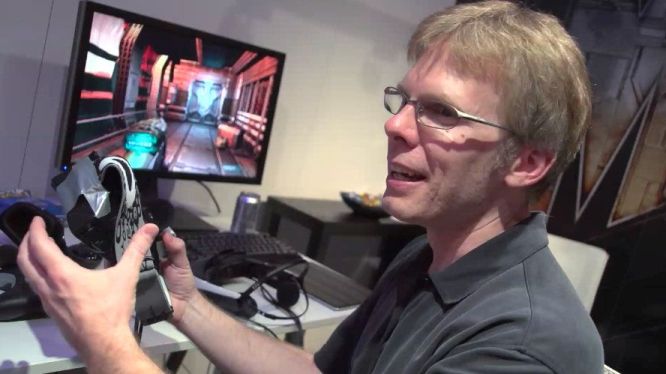
Petersen is known for having his recollections repeatedly, albeit respectfully, refuted by Romero. In this case, however, his memories largely resonated with those of another “John” from the original id Software team, John Carmack, who also reflected on the past:
There are a few things that I look back on as my mistakes in the early days.
Quake was overly ambitious technically. We could have done all the great multiplayer and modding work inside a Doom++ engine, allowing the designers to work with a more stable base instead of… https://t.co/Su4e9X0qML
— John Carmack (@ID_AA_Carmack) June 24, 2026
“There are a few things that I look back on as my mistakes in the early days. Quake was overly ambitious technically. We could have done all the great multiplayer and modding work inside a Doom++ engine, which would have allowed the designers to work with a more stable base. Instead, we pulled the rug out from under them a couple of times. The follow-up game could then have brought in full 6DOF environments and characters. I pushed everyone too hard. I didn’t understand that maturing companies need more leeway and that constantly running people at startup intensity will wear them out. Quake was also where I had to accept my personal limits. Despite working as hard as possible, I was still missing my goals.
The original corporate stock arrangement and buy/sell agreement on all of the founders’ shoulders was a mistake and resulted in bad incentives. We wanted to ensure that ownership was in the hands of people working hard on current projects, but vesting stock, the Silicon Valley standard approach, would have worked out better. One problem I don’t accept blame for is insisting that level designers be not only game designers but also have strong visual design aesthetics. They needed to create things that played well and looked awesome. It became more challenging as technology provided a richer palette. Romero did well with this, setting our company’s expectations early on. We should have paired up artists and designers earlier. However, there was infighting among the designers. The ones who could manage the visuals disparaged those who couldn’t. Sorry, Sandy”, Carmack responded.
I think part of the problem might’ve been that John Carmack’s intensity combined decided we all needed to be in the same big room together. He’d read about this way of “focusing” the team and it did. But we also had nowhere we could decompress or hide out.
To be clear, I myself…
— Sandy Petersen 🪔 (@SandyofCthulhu) June 24, 2026
The breakup of id Software, which took place in a somewhat tense atmosphere, was thoroughly documented in the years that followed. For example, American McGee was reportedly fired by John Carmack for underperforming on Quake-related tasks. However, Tim Sweeney later suggested that McGee was actually ousted by another employee. In another tweet, Petersen pointed out Carmack’s fiery temperament: “I think part of the problem might’ve been that John Carmack decided we all needed to be in the same big room together because of his intensity. He’d read that this way of ‘focusing’ the team worked, and it did. But we also had nowhere to decompress or hide out. To be clear, I NEVER had my own office at id; I was always in the open central space. But I think losing their offices affected Abrash, Taylor, Green, and Romero.” It didn’t take long for Romero to join the conversation with his thoughts, which aren’t too different from Carmack’s opinion.
I’m proud of Quake. We all are. Quake changed games forever. That said… https://t.co/qJEDpjW1BV
— John Romero 🤘🏽 (@romero) June 24, 2026
“I’m proud of Quake. We all are. Quake changed gaming forever. We were in our 20s and used to working as much as possible and pushing ourselves past what was reasonable because that’s how id had always worked. At the time, it felt normal. But looking back, it wasn’t sustainable for everyone, especially as the team grew. John and I have talked about this since then, and we agree that we should have made a DOOM++ first while the engine stabilized and then taken the full 3D step afterwards. Quake may have been too ambitious, but we all believed in that ambition.
We were trying to take the next great leap. None of us knew what that leap was or how long it would take at the beginning. We were building the road and the car that would drive on it simultaneously. No one had ever done anything like Quake before. The level design is also important. At id, we assumed that level designers would also have a strong visual sense. The maps had to be fun to play and look great, of course. However, Quake made that more difficult because the maps had to function as gameplay spaces and convincing 3D environments. As a coder, designer, and artist, this felt natural to me. The Wizard’s Manse is a good example of what we were going for.
American McGee was also really good at this. The verticality in some of his levels, particularly in The Vaults of Zin, was outstanding. There are a hundred things we could have done differently, but we did the best we could with what we knew at the time. Having a media circus around us certainly didn’t help, but id Software, Wolfenstein, DOOM, and Quake still go on. Maybe that was what we came together to do. That is more than enough for any game developer, any team, or any lifetime, really”, Romero chimed in.
It really was a hell of a game. Thanks for kicking off this discussion, Sandy.
— John Romero 🤘🏽 (@romero) June 24, 2026
They acknowledge that they were all younger back then, that the world was a different place, and, as Romero put it, that they gave it their all. After Carmack apologized, Petersen said he didn’t blame him for the way things turned out and told Romero he’d done an incredible job on Quake. Romero thanked Petersen for bringing them together, saying it really was an incredible game. At least it ended well…
Source: PCGamer







![Monster Hunter Wilds: Ascendance’s Daily Boosted Action Overviews Have Begun [VIDEO]](https://thegeek.games/wp-content/uploads/2026/09/bca47e7d475d4cc4-302x180.jpg)
![Lost Museum: Echoes of the Chromageists: Adventures in the Lost Museum [VIDEO]](https://thegeek.games/wp-content/uploads/2026/09/1c2bd0af3f56a59c-1-302x180.jpg)