
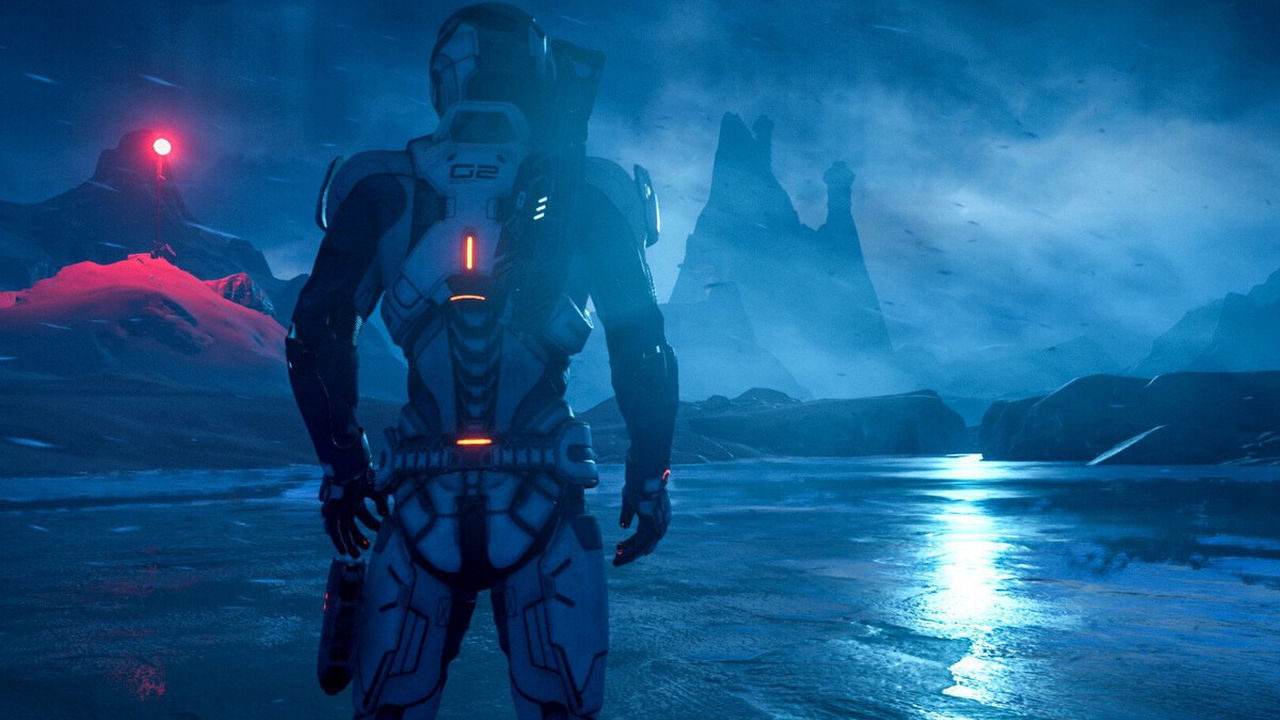
Mass Effect: Corsair was conceived as a looser Nintendo DS spin-off where players would explore the galaxy as an independent smuggler with their own ship rather than following Commander Shepard’s military path. BioWare had already started working on an early flight system, but EA’s financial calculations ultimately ended the project.
The original Mass Effect introduced players to one of gaming’s richest science fiction universes through Commander Shepard’s mission, and the later entries in the main trilogy remained tied to that same perspective. All three games are still available through Mass Effect: Legendary Edition, but BioWare once considered expanding the setting in far more ambitious directions. Among the ideas was a Nintendo DS spin-off that would have put players in a completely different role within the galaxy.
The cancelled project was called Mass Effect: Corsair, and former BioWare executive producer Mark Darrah discussed it in a MinnMax video interview later covered by GameSpot. Instead of controlling a Spectre or military commander, players would have taken the role of an independent pirate or smuggler with a ship of their own. “You would have a ship and be independent, more like a Han Solo character than a Spectre. You would travel around, pick up cargo, explore, and sell the information you found to the Human Alliance.”
The concept would have pushed the franchise much closer to an open-ended space sandbox than the dialogue-driven, party-based RPG structure of the main games. Corsair was meant to take place in a distant and less explored part of the galaxy, an area Darrah compared to a space-age Wild West. Taking cargo jobs, investigating unknown locations, and selling valuable discoveries were all expected to form part of the core experience, alongside travelling freely in the player’s own ship.
BioWare looked to Star Control as one of the project’s main inspirations, which meant that the game would have featured both a first-person perspective and space battles. Development was still at a very early stage, however, so this was nowhere near a finished Nintendo DS release. “Pretty much all we had was an early version of the flight controls. The rest of the game was not really built, and we were still trying to work out how the idea could function within the franchise.”
It Was Difficult to Reconcile With Mass Effect’s Existing Rules
The biggest creative problem involved the way travel works in the Mass Effect universe. Fast movement between star systems relies on mass relays in the main games, while Corsair was built around freer exploration and a more ship-focused style of travelling. “Corsair did not quite fit into the franchise, because the way FTL travel works in Mass Effect is somewhat different.” Darrah nevertheless believed that the series’ rules could have been adjusted with enough creative commitment.
The real reason the game was cancelled was not the lore challenge, but the economics of releasing it on Nintendo DS. Mass Effect: Corsair would have required one of the handheld’s most expensive, highest-capacity cartridges, sharply increasing manufacturing costs. DS games were also sold at a much lower price than home console releases, leaving little room for profit, while EA reportedly expected sales of only around 50,000 copies. That forecast was enough for the publisher to decide that continuing development was no longer financially viable.
It remains a genuinely appealing lost idea: a Mass Effect game where players could become independent space smugglers, take on cargo work, uncover secrets, and fight from the cockpit of their own ship. BioWare is now working on the next mainline entry in the series, although very little has been shared publicly since its announcement. In the meantime, science fiction RPG fans can also look toward 2027 releases such as Exodus, created by former Mass Effect developers, and Owlcat Games’ The Expanse: Osiris Reborn.
Source: 3DJuegos








Leave a Reply