
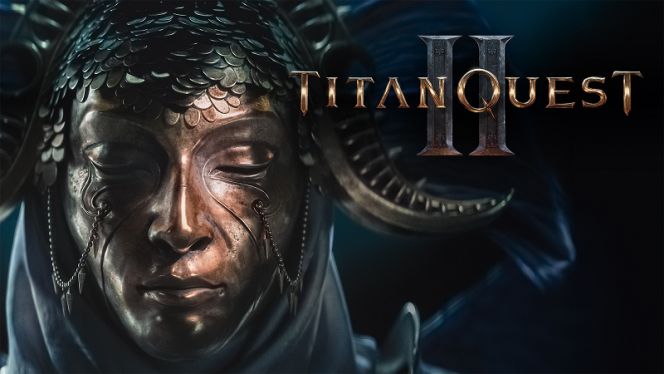
Grimlore Games and THQ Nordic have released a fairly major update for the game – no, it is not déjà vu, the publisher has appeared in today’s news three times.
In Masters of Spirit, players can call on the forces of the Underworld to summon shades of the dead and cast otherworldly spells. However, this comes at a cost: players must draw from their own life force to sustain their advance. Spirit contains 10 new Actives and 26 new Passives. The developers are also taking the first step toward a larger change regarding Passives, starting with Spirit. The goal of the following changes is to make Passives a more interesting choice when creating our builds. More Passives have been added than in previous Masteries. This enables them to offer more choices between slightly different effects that can provide bonuses for similar builds. Previously, each Passive could only have three Feats. This restriction has now been removed. This should reduce the number of situations in which our Feats were almost predetermined by our build direction. Instead, it offers more actual choices based on the area in which your build needs help.
The developers hope that this will allow for more interesting and nuanced build crafting. For now, this new approach is only present in Spirit, but the developers will try to add it to the older Masteries gradually if we enjoy it. One potential downside is that the addition of these new choices makes it slightly more difficult to get an overview of Passives than in the past. They are aware of this and will try to provide solutions in the future. They are looking forward to receiving our feedback on this new approach and on Spirit in general.
Crafting allows us to perform various actions on items, adjusting some of their properties. For example, we can replace an affix with a different one at random, subject to item rules, reroll the values of an affix, or add affixes to items if they have fewer than the maximum possible. We can also level up an entire item to our level. Crafting is an important part of ARPGs and is also much discussed for good reason. If it becomes too easy, the thrill of hunting for exciting loot is lost, which undermines the core gameplay. If outcomes are too difficult to control, it becomes a very unsatisfying and repetitive experience.
The role of crafting also changes during different phases of the game. It should be used differently during leveling and campaign play compared with later stages of a character’s progression. For this reason, the developers opted for a straightforward system that hopefully strikes a good balance. It should be easy to understand but offer the right amount of control. The aim is to encourage players to do some crafting during the early stages of character development. Initial improvements can be obtained cheaply, but we will soon reach a point where it is better to wait for the next natural upgrade instead of spending further resources. In the later stages of the game, we can focus more efficiently on farming resources and thus try to get the perfect rolls for our items. However, we may still want to look for a new base if we do not get the desired results after a while. These two things are both achieved through escalating crafting costs and the materials used at each stage of crafting an item. They are looking forward to receiving our feedback on this feature, including the costs and ways to obtain materials. They will continue to fine-tune this feature in the future.
They have increased the player’s base movement speed. They have addressed complaints that the game feels slow, particularly at the beginning. This change should hopefully address the issue. They have tried to strike a balance, as they still want players to feel they are progressing when investing in Movement Speed through gear and builds. They have also reviewed item rewards and improved certain drop rates, primarily for Epic items and Relics.
Titan Quest II is currently only available on PC via Early Access, but the full version is also being developed for PlayStation 5 and Xbox Series.


![Shadow of the Road: You Can Now Try Out This Japanese Adventure [VIDEO]](https://thegeek.games/wp-content/uploads/2026/08/theGeek-05-shadow-of-the-road-1280x720-1-302x180.jpg)
![Etre: A Metroidvania with a sci-fi twist [VIDEO]](https://thegeek.games/wp-content/uploads/2026/08/theGeek-04-etre-1280x720-1-302x180.jpg)
![Greak 2: Alliance of the Storms: A Hand-Drawn Metroidvania Set in Synoraz [VIDEO]](https://thegeek.games/wp-content/uploads/2026/08/theGeek-02-greak-2-1280x720-1-302x180.jpg)
![Graveyard Keeper II: TinyBuild Joins the September Rush [VIDEO]](https://thegeek.games/wp-content/uploads/2026/08/theGeek-01-graveyard-keeper-ii-1280x720-1-302x180.jpg)


![Shadow of the Road: You Can Now Try Out This Japanese Adventure [VIDEO]](https://thegeek.games/wp-content/uploads/2026/08/theGeek-05-shadow-of-the-road-1280x720-1-300x365.jpg)
![Etre: A Metroidvania with a sci-fi twist [VIDEO]](https://thegeek.games/wp-content/uploads/2026/08/theGeek-04-etre-1280x720-1-300x365.jpg)
![Wolcen II: A Cautious Start, Strong Growth? [VIDEO]](https://thegeek.games/wp-content/themes/gameleon/assets/images/placeholders/300x365.png)
![Greak 2: Alliance of the Storms: A Hand-Drawn Metroidvania Set in Synoraz [VIDEO]](https://thegeek.games/wp-content/uploads/2026/08/theGeek-02-greak-2-1280x720-1-300x365.jpg)
Leave a Reply