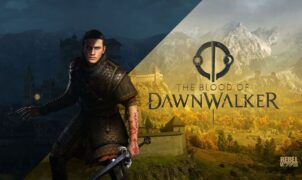
REVIEW – A significant number of Rebel Wolves’ founders and key developers learned their craft at CD Projekt RED, including veterans who helped shape the world, quests, and direction of The Witcher 3. You can feel that lineage almost immediately: Vale Sangora’s muddy villages, morally compromised characters, dense conversations, and grim medieval setting unmistakably share the same Eastern European RPG bloodline. The trouble begins when Dawnwalker tries not merely to inherit from Geralt, but to overthink things that The Witcher 3 solved more simply – and often more elegantly – eleven years ago. The result is an ambitious and occasionally excellent vampire RPG whose story is easy to sink your teeth into, even as its combat, camera, and needlessly elaborate mechanics regularly try to yank those teeth back out.
There is also a strange personal sense of coming full circle here. Back in 2000, I reviewed Vampire: The Masquerade – Redemption for the Hungarian edition of GameStar, and that original piece was later republished as one of our own retro articles; at the time, it was one of the first serious attempts to let us play the bloodsucker rather than the hero hunting one. Since then I’ve worked my way through Bloodlines, Vampyr, Swansong, and more than a few smaller digital bloodbaths, so Dawnwalker’s subject matter was hardly going to leave me cold. Medieval Eastern Europe, vampires, and the creative DNA of The Witcher 3 sounded on paper like someone had assembled an RPG menu specifically for me.
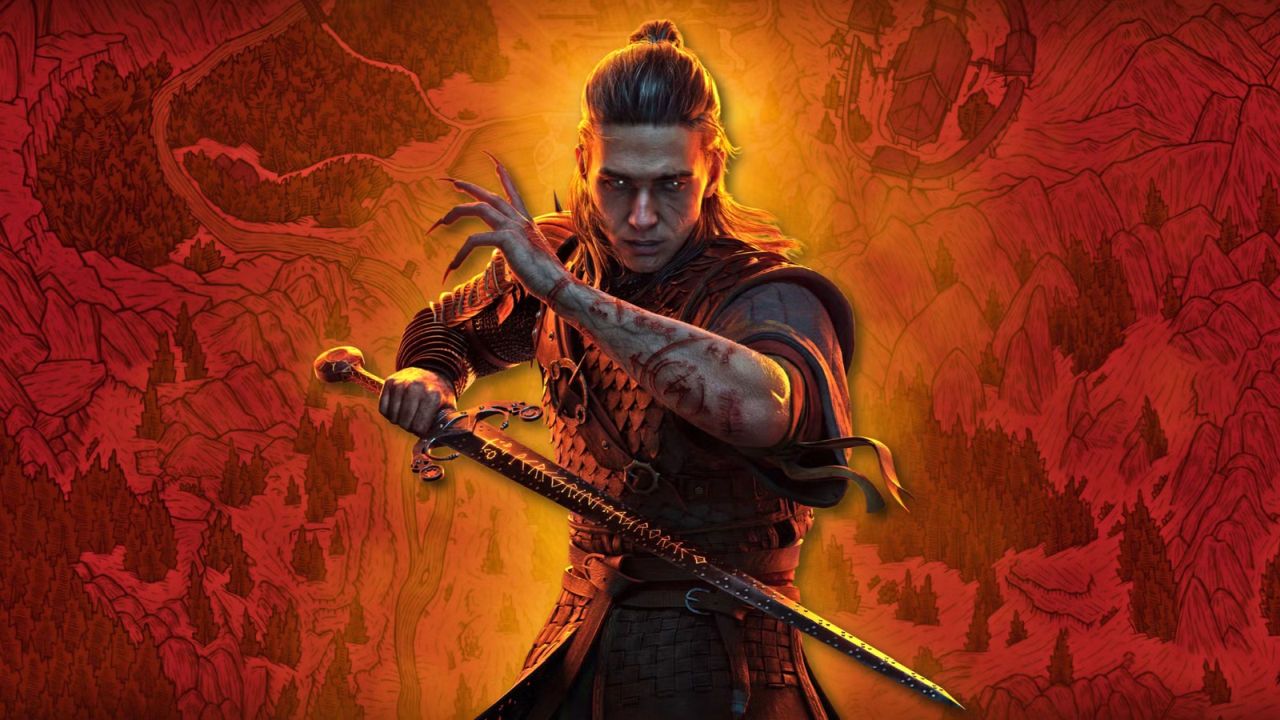
Rebel Wolves also avoids the most obvious version of the familiar “I’m a vampire, therefore I eat everyone after dark” setup. It is 1347, the fictional valley of Vale Sangora is crushed beneath the rule of Brencis and his vampiric court, and the population literally pays its taxes in blood. Coen’s family becomes caught in that system while he is transformed into something far stranger: by day he can move through the world as a human, but after sunset the creature the locals have every reason to fear begins to surface. We have thirty days and thirty nights to become stronger, gather allies, uncover information, and ultimately rescue Coen’s family from Brencis.
That alone is a more interesting hook than the acreage of question marks many open-world RPGs try to sell as content. At its best, Dawnwalker makes it feel as though we are not simply clearing quests but actively deciding what deserves a portion of the final free weeks of Coen’s life. The problem is that the game gradually begins reassuring us that everything will probably be fine: the calendar is far more forgiving than the opening hours imply, the pressure of time steadily dissipates, and eventually hours feel more like a currency than a death sentence hanging over our heads. The concept remains smart, but it bares its fangs far less often than it should.

Thirty days to save everyone – no need to rush, apparently
Time functions as an actual resource. Wandering the world and engaging in most combat does not advance the clock by itself, but certain quest stages, training, resting, and major activities do, theoretically placing a quiet question behind every decision: is this worth spending several of our thirty days on? During the opening ten hours, the idea works extremely well. We calculate routes, hesitate before accepting side quests, think carefully about skill investments, and learn that even improving Coen can carry a temporal cost instead of being another automatic click in a menu.
There is something genuinely bold about an RPG trying to cure players of the traditional “clear every icon first, save civilization later” compulsion. Unfortunately, Rebel Wolves ultimately seems reluctant to slam the coffin lid down hard enough. The calendar is generous enough that a normal playthrough can accommodate much of the meaningful content, while the narrative itself fails to remind us aggressively enough that a family is supposedly counting down to its execution. The result is a curious disconnect where the mechanics insist every hour matters, but the drama frequently suggests we can probably squeeze in another ruined shrine and half a dozen wolves before dinner.
The choice system is similarly uneven. There are genuinely interesting situations in which the game refuses to place a glowing “good person” button next to an obvious “bastard” alternative, and the cast is usually well written enough that their fates matter. Elsewhere, different dialogue paths converge on remarkably similar results, the infamy system promises more dramatic repercussions than we routinely see, and some of the biggest consequences reserve their real impact for the ending. Multiple conclusions should make this fertile ground for replaying the game differently, which makes the absence of New Game Plus particularly strange; one of Dawnwalker’s most interesting concepts is least supported precisely when a second playthrough would encourage us to experiment with it.
Human by day, vampire by night – finally, an identity crisis with a purpose
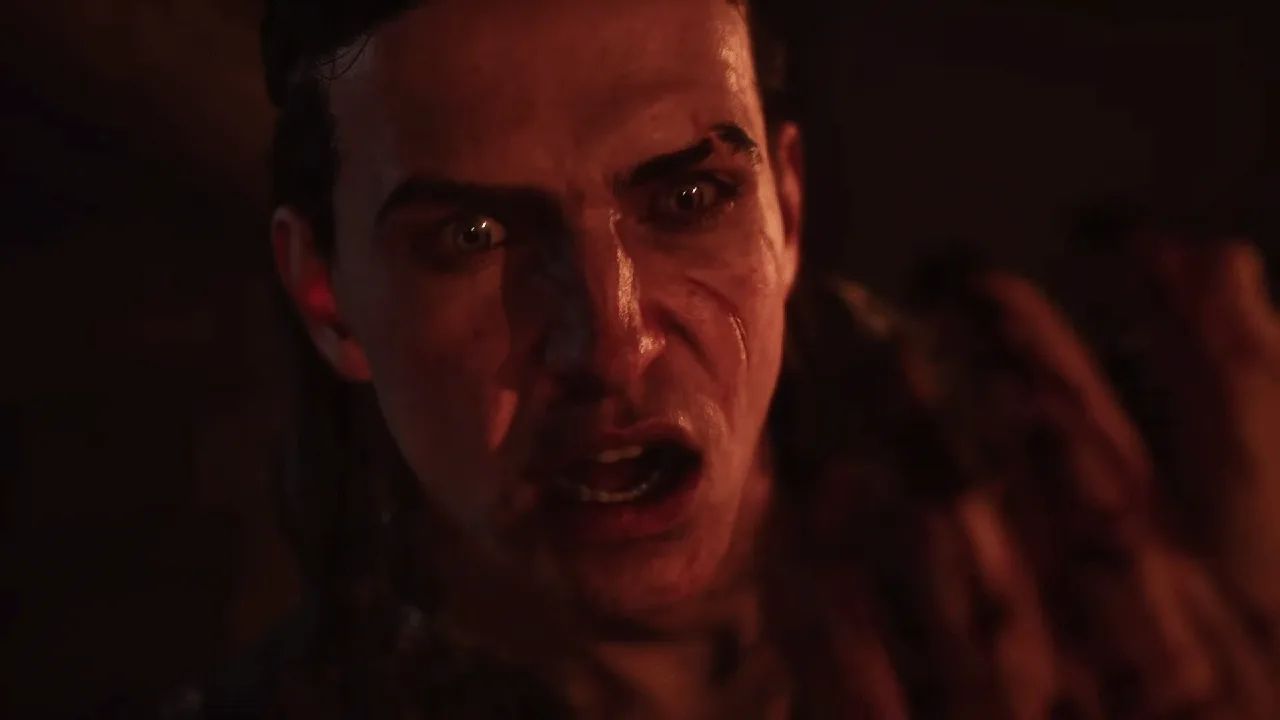
The day-and-night duality works much better. As a human, Coen resembles a more conventional dark-fantasy RPG protagonist: he uses a sword, learns magic, acquires abilities from books and teachers, and can navigate social situations in which arriving as an openly supernatural predator would probably shorten the conversation. Once night falls, however, the rhythm changes considerably. We can teleport, use supernatural traversal to reach otherwise inaccessible locations, regenerate more easily, and gradually transform Coen from an unfortunate peasant boy into exactly the sort of thing villagers lock their doors against before sunset.
Tying vampiric progression to feeding and corruption is an especially good idea. The more blood we consume, the more powerful abilities become available, so in theory we are constantly negotiating with the monster inside Coen. The problem is that corruption carries too few genuinely painful disadvantages, turning what is presented as a moral dilemma into something mechanically closer to asking whether we would like better skills or, for some inexplicable reason, prefer not to have them. In a vampire RPG, that bargain should hurt considerably more.
Bloodlust is another system capable of generating fantastic emergent stories in theory. At critical health, Coen can lose control and potentially drain the very NPC he was speaking to moments earlier, instantly rewriting whatever conversation or quest we thought we were pursuing. Unfortunately, vampire form offers so many ways to recover health that the condition rarely becomes a persistent danger, leaving bloodlust more as an interesting warning than an ever-present threat. I would have preferred more obscure and unpredictable triggers capable of genuinely overturning a scene in the middle of a quest.
Nighttime traversal is similarly impressive and awkward at the same time. Short-range teleportation fits the vampire fantasy beautifully, and moving across walls and rooftops initially feels liberating, but Coen’s momentum occasionally behaves as if Geralt’s old 2015 alternative movement setting has somehow survived inside him. It is easy to overshoot a ledge, wall movement can turn into an argument with the geometry, and several supernatural maneuvers feel functional rather than graceful. The fantasy works, but another layer of polish was needed to make Coen feel like a predator rather than an unusually ambitious corpse doing parkour.

Swordplay that desperately wants to prove how clever it is
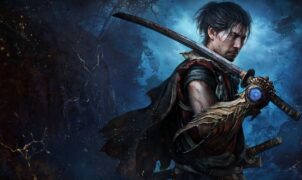
This is where Dawnwalker lost the most blood for me. Rebel Wolves was not content with a direct, immediately readable action-RPG combat system and instead built attacks and defense around multiple directions: we must identify where a strike is coming from, block or parry in the correct direction, reposition, activate abilities, switch targets, and keep track of whichever enemy the camera has apparently decided is more important than the one we were actually fighting. In a one-on-one duel, there is a genuine rhythm to it, and when you read an opponent perfectly, parry several consecutive blows, and finish the exchange with a bloody execution, you briefly understand exactly why the developers believed so strongly in the system.
The moment two, three, or more opponents arrive, however, fencing class turns into rush-hour traffic management. The same analog stick is involved in positioning and directional defense, automatic targeting has opinions about who deserves your attention, and active abilities ask for still more interface management through a wheel or additional inputs. Instead of fighting instinctively, I too often felt as though I needed to defeat the control scheme before getting around to the enemy. You can absolutely learn it and become efficient, but there is still a meaningful difference between “I’ve learned how to tolerate this” and “this feels great in my hands.”
The most uncomfortable comparison is obviously The Witcher 3. Nobody ever confused Geralt’s swordplay with Sekiro, but eleven years later it still feels more immediate, more readable, and above all more fluid. Dodging, rolling, Signs, and sword attacks combine into a comparatively simple language that allows us to watch the battle rather than perform administrative work with our thumbs. Dawnwalker layers more technique onto the same space and somehow ends up feeling clumsier, which is particularly ironic coming from a studio whose creative DNA is so closely tied to Geralt’s adventure.
The limited bestiary does not help. Enemy types are surprisingly few, their fundamental attack patterns become familiar quickly, and a large portion of later encounters repeats the same directional responses with different health bars attached. Bosses often look good, but mechanically they rarely introduce situations that fundamentally rewrite the rhythm we have already learned. A system that initially appears complicated therefore manages the unusual feat of becoming both overengineered and repetitive at the same time.

The deadliest bloodsucker is actually the camera
The camera and targeting deserve their own section because in some fights I spent more time battling them than the monsters. In confined spaces, the view has a habit of burying itself in walls, columns, or Coen’s shoulder, while larger groups can cause lock-on to jump between targets with the confidence of a system convinced it knows better than I do which enemy I was trying to finish. It becomes particularly irritating when the camera abandons a nearly dead foe just as another attack arrives from off-screen in a combat model specifically built around precise directional reactions. Elegant swordplay is difficult when the cinematographer appears to be a drunk bat.
Group combat becomes more manageable if we surrender to the system, accept its preferred rhythm, and treat each incoming attacker as another duel in a sequence. That can work mechanically, but it also requires relinquishing some control over free camera movement and target selection. For me, that is the wrong compromise. An action RPG lives or dies on the feeling that I control my character, and if the combat works best when I stop trying to control parts of it, that sounds less like elegant design and more like a warning sign.
The game also leans heavily on combat despite having a protagonist who should theoretically be a stealth designer’s dream. Coen can teleport, move across walls, and hunt from above, yet stealth remains remarkably shallow, so many quests eventually funnel us toward another direct confrontation. That means another encounter with the same limited enemy pool and another opportunity for the camera to audition for the role of Brencis’ most loyal servant. More meaningful non-combat routes would have done wonders for preventing the weakest mechanical system from dominating so much of the experience.

Vale Sangora looks good – someone just forgot to turn up the color
Visually, Dawnwalker makes a stronger first impression than it maintains over the long haul. Vale Sangora’s mountain-ringed vistas, medieval streets, castles, villages, and particularly the verticality of Svartrau can produce genuinely striking images, while the art direction targets exactly the muddy Eastern European dark fantasy this story needs. But forests, ruins, villages, and rocky wilderness begin recycling their visual vocabulary fairly quickly, so thirty hours into the adventure the world feels considerably less varied than it did on the first night. It is an attractive place, but sometimes it feels as though we are walking around the same overcast October afternoon from different directions.
On PC, the lack of native HDR support is particularly baffling. In a game whose entire visual identity is built from blood, candlelight, moonlight, deep forests, torch-lit rooms, and black castle interiors, failing to make proper use of an HDR display almost feels like artistic self-sabotage. In SDR, the presentation frequently looks slightly gray, black levels do not always have the depth this world demands, and the intentionally restrained palette can become a little too restrained. Auto HDR and third-party solutions can improve matters, but in 2026 this should not be something PC players have to assemble themselves after spending full price on the game.
Nor do I think the console versions justify visual superlatives. PS5’s Balanced mode has been reported to hold its roughly 40fps target reliably, and the game is technically competent overall, but clipping, modest facial animation, and environmental repetition repeatedly remind us that this is the first large-scale project from a new studio. Powerful PCs can push detail significantly further, although launch-period stuttering and optimization complaints have not exactly been the ideal calling card there either. That leaves graphics at 7.2 for me: good, occasionally beautiful, but nowhere near the visual blood feast the screenshots might suggest.
Music and sound are in better shape, even if the Witcher lineage is once again difficult to miss. Some combat themes use such familiar instrumentation and rhythms that I almost found myself looking around for Geralt’s silver sword, but the medieval textures, darker musical palette, and vampiric sound effects generally serve the setting well. Voice acting is more uneven, particularly when somewhat stiff facial animation struggles to keep up with the performers, though the more important characters usually convince. Atmosphere often owes more to the writing and audio than to raw technical spectacle.

The Witcher 3 casts a longer shadow than Brencis
It is both a blessing and a curse that Dawnwalker so obviously belongs to the same spiritual family as The Witcher 3. Quest structure, dialogue rhythm, filthy villages, folk superstition, political cynicism, music, and even some of the weight in Coen’s movement constantly remind us where so much of Rebel Wolves came from. When the game is dealing with writing, world-building, and side characters, that comparison is often flattering. When we are fighting, walking through another variation of the same forest, or wrestling with the camera, it becomes much less comfortable because an eleven-year-old game can still feel more polished.
Coen is no Geralt either, which would not be a problem by itself, but his less distinctive personality means the supporting cast routinely becomes more interesting than the protagonist. Brencis’ court, the stories of ordinary villagers, and the vampires’ appropriation of religious imagery linger far more strongly than the Dawnwalker himself, who often functions as a vessel for player choice rather than an iconic personality. That can be a deliberate virtue in some RPGs, but Dawnwalker’s cinematic dialogue and Witcher-like character direction make the absence of a stronger central presence more noticeable. Even so, the story remains one of the game’s best elements, and the finale does a satisfying job of bringing several earlier choices back into play.
The critical spread around the game actually captures this contradiction remarkably well. JeuxVideo’s 15/20, Game Informer’s 7/10, and Hungarian outlet androgeek’s 7.5/10 all draw the line in roughly the same place I do: the concept and writing often deserve something above an eight, while mechanical execution repeatedly drags the overall experience downward. GamesRadar was even harsher at 3/5, while other publications have handed out eights and nines, making Dawnwalker the sort of game where two radically different reviews can both make complete sense. It mostly depends on how much mechanical awkwardness you are willing to forgive in exchange for an excellent world.
A good first bite, but the wound is not deep enough yet
The Blood of Dawnwalker is ultimately far more interesting than a simple list of its flaws might suggest. Its day-and-night duality, thirty-day structure, vampiric progression, strong supporting cast, and Vale Sangora’s history provide foundations from which a genuinely major RPG series could grow. It is also obvious that Rebel Wolves did not simply want to manufacture a Witcher clone, instead trying to twist a familiar formula with systems of its own. I would much rather play an overly ambitious and occasionally awkward game than a perfectly polished but completely anonymous map-clearing machine.
Ambition, however, is not automatic immunity from criticism. The combat is needlessly overcomplicated in my view, the camera becomes a genuine liability in group encounters, and the awkwardness of targeting and movement regularly strips away the instinctive flow I want from an action RPG. The absence of native HDR on PC, the gray and repetitive scenery, limited bestiary, underused corruption and infamy systems, and the way time pressure evaporates too quickly all suggest that several of Dawnwalker’s individual components were ready for a major RPG before the glue holding them together had completely dried.
Twenty-six years after Vampire: The Masquerade – Redemption, I therefore find myself writing something strangely familiar about another vampire RPG: I desperately want to love it more than its current state allows me to. Redemption in 2000 was rough, technically problematic, and almost irresistible to me anyway; Dawnwalker is far more modern and accomplished, yet it leaves a surprisingly similar aftertaste. I can see the game this series could become with a sequel, but the debut still trips over its own cape too often. A good first bite from Rebel Wolves, then, but the blood loss is not quite life-threatening yet.
-Gergely Herpai „BadSector”-
Pros:
- Strong dark-fantasy story, excellent world-building, and plenty of memorable supporting characters
- The day/night duality and 30-day narrative sandbox provide a genuinely interesting RPG foundation
- Vampire abilities and player freedom occasionally reveal just how much potential this series has
Cons:
- Needlessly complicated, clunky combat with a poor camera and irritating target management
- No native HDR on PC, an overly gray image, and environments that become repetitive too quickly
- Limited enemy variety, repetitive activities, and several promising but underused RPG systems
Publisher: Bandai Namco Entertainment
Developer: Rebel Wolves
Genre: Action RPG / Narrative Sandbox
Release: September 3, 2026
The Blood of Dawnwalker
Gameplay - 7
Graphics - 7.2
Story - 8.2
Music/audio - 7.8
Hangulat - 7.3
7.5
GOOD
The Blood of Dawnwalker is packed with ideas that could eventually push a sequel toward the top tier of modern RPGs, and its storytelling, world-building, and human-by-day/vampire-by-night structure already show plenty of teeth. Needlessly complicated and clumsy combat, an unreliable camera, repetitive enemies, and the absence of native HDR on PC too often drag it back down to the level of a promising debut rather than a finished classic. The Witcher 3's legacy is everywhere, though ironically combat is where it becomes clearest just how much Dawnwalker still has to learn from Geralt. A good first bite from Rebel Wolves, but next time those fangs need to go considerably deeper.