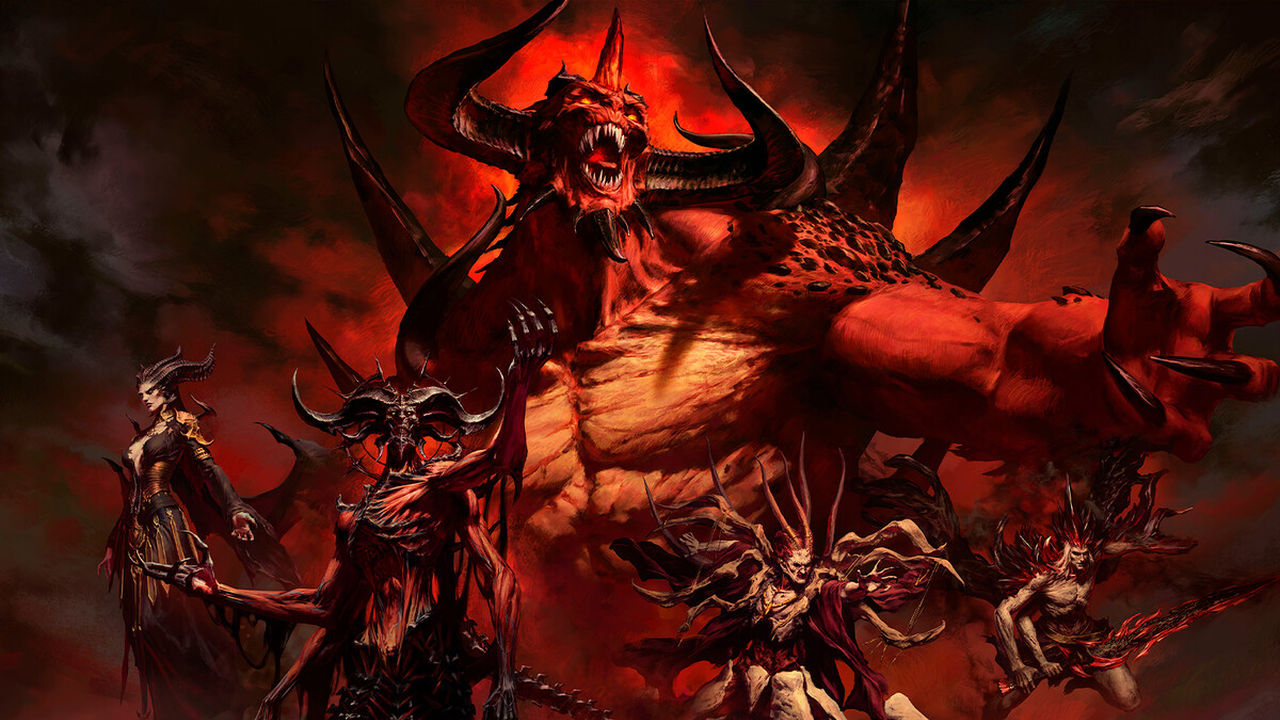
Blizzard says the announcement of Diablo V does not mean Diablo IV is about to be pushed aside. Game director Brent Gibson and senior game designer Bjorn Mickelson discussed the franchise’s past, the new Amazon class, Diablo’s return, the Nintendo Switch 2 version, and the long-term future of the series.
Although much of the attention is now focused on Diablo V, Blizzard continues to remind players that the franchise’s other games still have plenty of life ahead of them. During a group discussion, game director Brent Gibson and senior game designer Bjorn Mickelson answered numerous questions about the future of Diablo. Blizzard made it clear that Legacy of Hell, the new season of Diablo IV, is both a conscious look back at the series’ history and part of a long-term plan to keep building and supporting the game.

A Conscious Tribute to Diablo’s Past
Explaining the nostalgic direction of the season, Gibson said the team revisited previous Diablo games and had “very honest conversations” about what still fascinated them as fans. That process led to the return of the Dark Wanderers, another appearance by Deckard Cain, and the decision that the story ultimately needed to lead toward the three Prime Evils. Speaking about Deckard, Gibson admitted, “It didn’t feel right without his voice.” There was also one question Blizzard had been hearing from players for a very long time: “Where’s Diablo?”
The answer arrives through a nightmare, giving the developers a versatile and fitting way to bring classic elements back into the game. Gibson describes the concept as a “living nightmare” that makes it possible to revisit familiar ideas following the events involving Mephisto. The goal was not to scatter random fanservice throughout the season. Instead, Blizzard first identified what it considered the essential elements and built everything else around them.
In that respect, Legacy of Hell is a massive love letter to Diablo’s past without simply copying the older games. When discussing boss and encounter design, Gibson pointed to Diablo himself in the original game. Mechanically, that battle was obviously far simpler than a modern boss fight, but the memory of the encounter remains incredibly powerful. “There’s a feeling you had when you fought them. Let’s make sure we recapture that feeling,” he explained. The team then added everything necessary to turn that memory into an encounter that works as a legitimate Diablo IV battle today.
That philosophy informs many of the season’s creative choices: preserve the spirit of the original games without reproducing them exactly. Blizzard’s developers revisited the older titles, relived memories from decades ago, and then had to communicate that same emotional connection to colleagues who may have barely been born when some of those games originally launched. Gibson says the process involves going back, playing the classics, and trying to recreate the memory players have carried with them for decades before returning to the modern game as fans. Some elements, however, were simply non-negotiable. “If we didn’t go back to Tristram, people would be like, ‘What the heck?'” Gibson joked. The team knew roughly how much content should fit into a season, but ultimately exceeded that limit because certain things simply had to be there.
One of the most significant returning characters is, of course, Deckard Cain. Gibson describes his comeback as “super nostalgic,” but Cain is not returning merely for a cameo. He has unfinished business, regrets, and a certain amount of guilt. “When you experience it, it will make sense,” Gibson said. The goal is for players to feel as though they are helping one of Diablo’s most important characters finally find closure.
The team’s attachment to Cain also played a role during development. Gibson said that simply hearing his voice made him want the character to stay around longer. Cain was not even part of the original demo, but Gibson requested at least one poem from him to establish the mood and foreshadow what was coming. “It’s been wonderful to play with Deckard as a character and bring him back in a way that I think does him justice,” he explained. Cain can eventually resolve his unfinished business before returning once again to the world of the dead.
The Amazon Returns
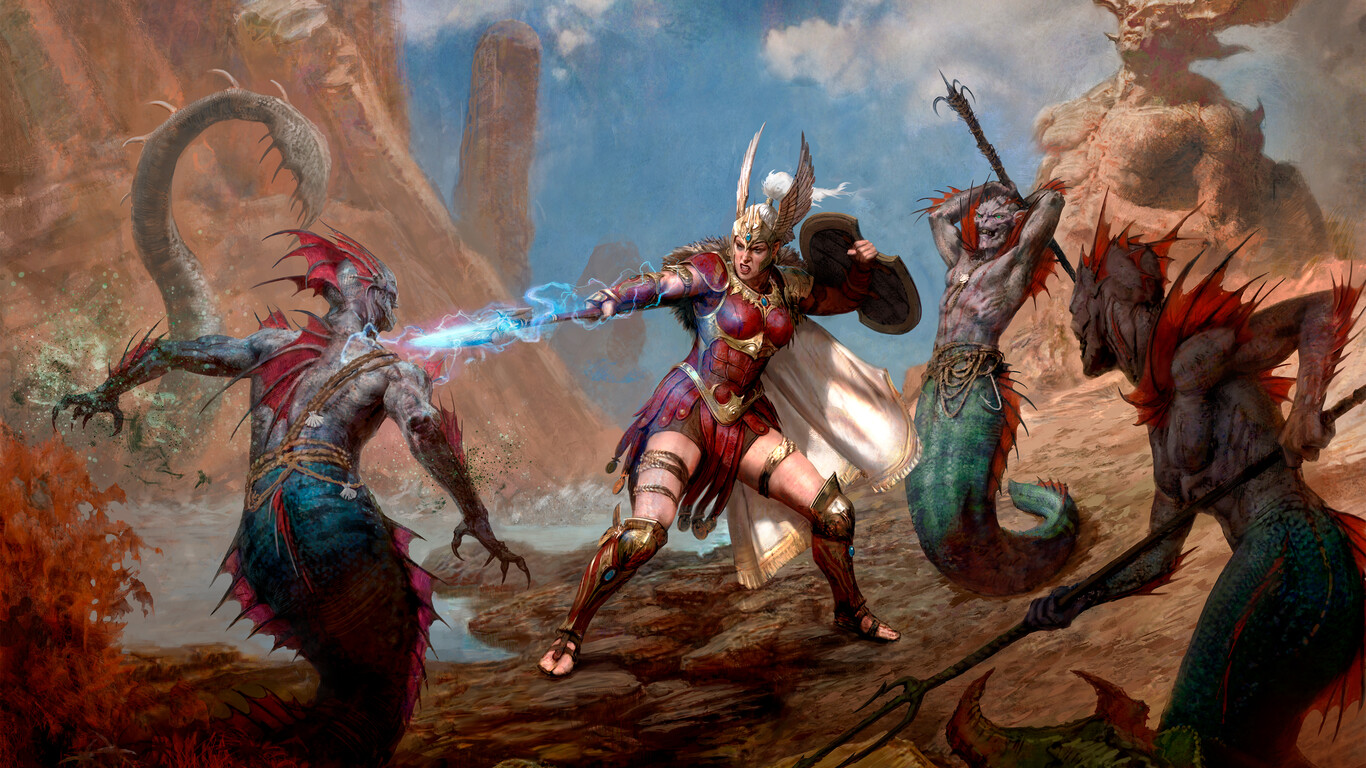
The other major addition is the return of the Amazon, which Gibson says came directly from the team’s close attention to player feedback. Following the Paladin, and while the Amazon was already beginning to take shape during development of Lord of Hatred, Diablo’s 30th anniversary provided the perfect opportunity to introduce the class. As Gibson summarized it, “Everything clicked.”
For Mickelson, the most important goal was making sure the Amazon did not feel like another variation of an existing class. He defines her around three main pillars: a skilled soldier, an athlete with unparalleled physical ability, and a wielder of mythical magic. She is not simply someone who fights well, but a disciplined and highly trained warrior whose movement and precision differ sharply from the Barbarian or Rogue. Describing her physical capabilities, Mickelson compared her to “all the Olympic athletes concentrated in one person.”
That identity directly shapes how the class feels to control. Mickelson draws a clear distinction between the Amazon and the Rogue: while the latter fights more ruthlessly, darting in and out of close range and sometimes firing arrows almost point-blank, the Amazon plays more like a long-range sniper combined with heavy artillery. That is only one side of the class, however, because the javelin is equally important. Blizzard wants bows and javelins to be more than cosmetically interchangeable weapons, giving each one its own identity capable of transforming abilities and entire playstyles.
Mickelson connects that philosophy back to the Amazon from Diablo II, one of the earliest defining classes of modern action RPGs. The developers want to recapture the feeling of abilities themselves evolving over time. Arrows can begin by freezing enemies, then shatter or explode later, passive abilities can transform the way attacks function, and projectiles can change as the character progresses. Mickelson almost compares this to a “Pokémon evolution” of abilities. The goal is for that progression to fully shine in the endgame, with the Amazon potentially reaching the top of the leaderboards. “I can’t wait to see the Amazon at the top of the leaderboards,” he said with a smile.
The Lord of Terror Returns
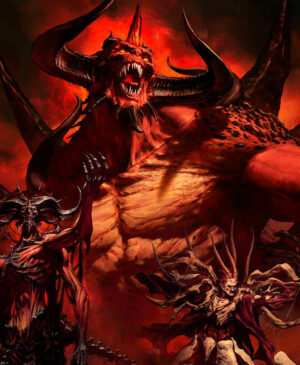
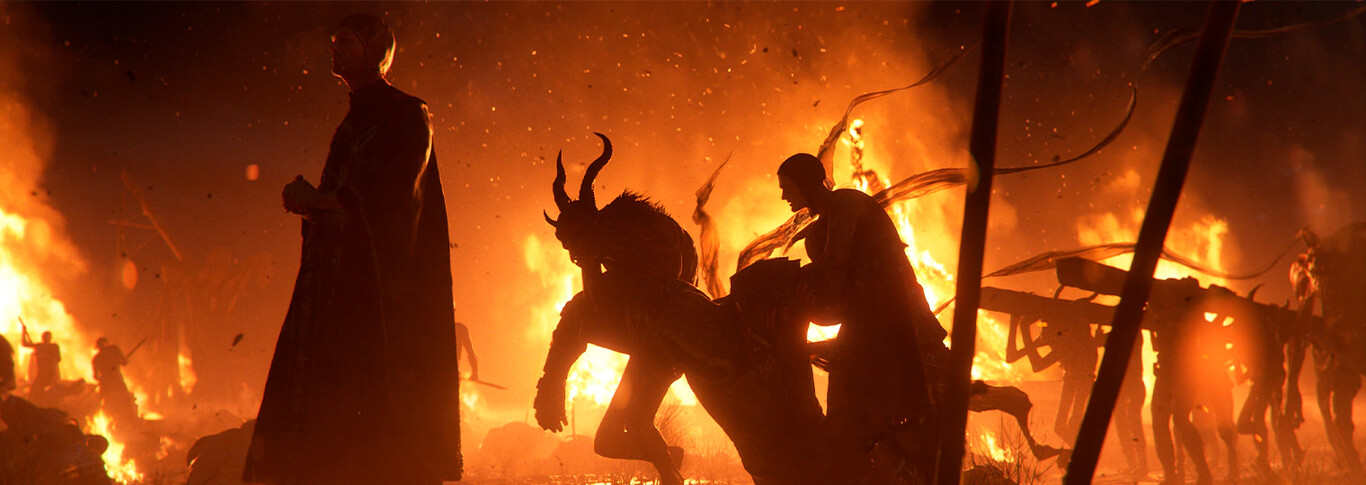
Diablo’s return also carries obvious symbolic weight. Gibson said that when the team first saw the new model, even that alone immediately generated a positive reaction. The developers had been focused on telling the story of hatred, on Lilith, and on her relationship with her father, but they also wanted to bring Diablo himself back. The 30th anniversary provided the perfect excuse to do it.
The new season does not aim to radically transform the traditional dungeon structure of Diablo IV. The new Awakened Nightmares are designed to tell specific nostalgic stories, and each one works somewhat differently depending on what it needs to evoke. In broad terms, however, they still fit within the familiar flow of a Diablo IV dungeon, culminating in battles against the Prime Evils that Gibson says must live up to what those demons represent.
What has changed considerably over the years is the development team itself and the way it works. Gibson says that after several years on the game, producing this kind of content has become much more natural. Designers are more comfortable with their tools, second-guess themselves less, and have a much clearer understanding of what works in Diablo IV. Nostalgia also provides a creative advantage: the developers do not have to invent the desired feeling from scratch because a shared memory already exists. That lets them focus directly on the emotion they want to recapture while also including a wide range of bosses.
Blizzard is also well aware that Diablo IV has become a massive game that can easily overwhelm newcomers. Gibson acknowledged that complexity can become a genuine problem. Whenever the team adds a new mechanic, it has to make room for it and ensure that players, particularly new ones, are not buried under too many systems at once. The studio also wants to continue responding to community feedback. Changes to Mythic systems illustrate that process: Blizzard tests ideas, gathers feedback, reverses course when necessary, and adjusts the mechanics. Gibson says the endgame needed to give players more meaningful control and agency, which is where systems such as War Plans come in. In Legacy of Hell, Soul Fragments will affect not only character power but also those War Plans.
The same attention applies to onboarding new players. When Gibson was told that joining Diablo IV in a later season can be confusing, he acknowledged that there is simply a huge amount of game to absorb. His advice is for newcomers to be patient and start Diablo IV from the beginning so that its systems are introduced at the moments when the game was designed to teach them. With a touch of humor, he added that if an experienced friend keeps pressuring a newcomer to rush ahead, that friend should be told to sit back and wait.
Blizzard nevertheless understands the problem. The developers have tried to introduce important systems during the campaign to make them easier to understand, but Gibson admits that a live-service game of this size inevitably accumulates a substantial amount of content. Even so, he says Blizzard continues to improve the onboarding experience with every major release. The goal is to make the growing number of systems easier for new players to digest gradually.
Diablo IV on Nintendo Switch 2
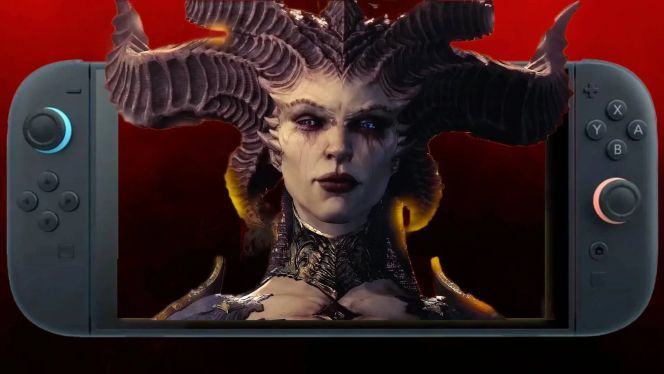
Another major topic was the Nintendo Switch 2 version of Diablo IV. “It was about time,” Gibson joked, revealing that the team had wanted to bring the game to the console for a long time, even though there were periods when its sheer size made the project seem almost impossible. The game director ultimately considers the result impressive: the necessary compromises are barely noticeable, the game feels smooth and readable, and it looks particularly good on the system’s screen. In his view, the wait was worthwhile.
3DJuegos was able to try the Nintendo Switch 2 version in a dungeon at BlizzCon, and the publication says Gibson was not exaggerating. Handheld mode shows the compromises more clearly, especially in terms of lighting, but the docked version looks and plays surprisingly well. From a technical standpoint, the port therefore appears considerably more viable than many might have expected given the scale of the game.
The conversation inevitably turned to Diablo V. Gibson confirmed that the next game’s events will take place 100 years after Diablo IV, giving Blizzard an enormous amount of creative room to tell stories between the two eras. According to Gibson, the Lord of Terror is learning from what happened with the Lord of Hatred, opening up many new possibilities. “We know where we want to go with the story,” he said, while also acknowledging that three years leave plenty of room to play, experiment, and even listen to fan theories.
One journalist in the room then addressed the concern directly: the announcement of Diablo V has made part of the community uneasy, as though it signals the beginning of the end for Diablo IV. Gibson rejected that interpretation firmly, although with an analogy he admitted the PR team might not love. He compared those fans to someone standing in Times Square holding a sign that says the end is near. “The end is not near,” Gibson said. Blizzard still has plenty of content ahead, including the Amazon, and the train is not going to stop. “We’re not a series of games. We’re a universe,” he added.
That is arguably one of the most important messages from the interview. Blizzard wants players to stop seeing Diablo IV as a temporary release caught between two major numbered entries. The franchise already functions as an ecosystem where different communities, still-active older games, and new content can coexist. Gibson says Blizzard will continue supporting seasons for as long as the community keeps returning to Diablo IV, much as it did with Diablo II and Diablo III. “As long as there are players, we’ll keep making content,” he summarized.
That does not mean every seasonal feature will remain in the game forever. Some items and systems will evolve, others will be retired, and some may need to be modified before they can function properly in the Eternal Realm. Gibson did not offer a fixed roadmap, but he made it clear that everything created for a season becomes material the development team can potentially reuse later.
Seasons themselves will also become increasingly important, and the developers admit they are dedicating more and more time to them. There will be a greater focus on new builds, additional quality-of-life improvements, and features aimed at players who participate in many seasons or maintain several alternate characters. Rebirth is one example. For some players, it may seem like a minor convenience, while for others it could represent a major change.
The interview leaves a clear impression that the Diablo team has highly ambitious plans to keep many different parts of the franchise alive simultaneously, even as Diablo V draws attention toward the 2029 horizon. At the same time, Legacy of Hell suggests Blizzard is not revisiting the series’ history merely for nostalgia’s sake. The developers are using key moments from Diablo’s past as a foundation on which to build future content.
The crucial question will be whether that ambition can successfully balance its two impulses: looking back without becoming trapped in the past, and moving forward without making the community feel that Diablo IV is already losing its importance. If Legacy of Hell delivers on its promises, Diablo’s 30th anniversary could successfully shift that balance toward excitement about what comes next. Blizzard’s message, in any case, is clear: the announcement of Diablo V does not mean the end of Diablo IV is approaching.
Source: 3DJuegos