
TECH ANALYSIS – For a long time, the robot vacuum looked more like a flashy convenience gadget than a genuinely useful household helper. Today, however, more serious models no longer promise only to run around the home from time to time, but to take the dullest and most time-consuming part of everyday cleaning off our shoulders. The question is no longer whether a robot vacuum can vacuum and mop, but how much time, energy, and attention it can give back to the user during an average week.
Cleaning is a strange thing: we rarely add up how much time it takes, but we always feel it when we do not have time for it. A quick vacuuming in the living room, clearing crumbs from the kitchen, dealing with dust brought in on shoes in the hallway, hair and pet fur settling into the carpet, and then the kind of half-hour that starts with “since I already took it out, I might as well mop quickly too” can easily break up a day. What makes it tiring is not simply that cleaning has to be done once, but that the condition of the floor keeps deteriorating: today just a few specks of dust, tomorrow a few crumbs, and by Friday it is already obvious that something has to be done about it.
This is where the real value of a robot vacuum begins. It does not fully replace deep cleaning, and it does not promise that we will never have to touch anything by hand again. A good robot vacuum changes the rhythm of cleaning instead. It prevents everyday dirt from building up to the point where the home starts looking more tired, dustier, and less orderly after just a few days. If it is set up properly, cleaning stops being a campaign-style job, because there is a constant layer of basic maintenance running in the background, making it less necessary to suddenly tackle the whole apartment.
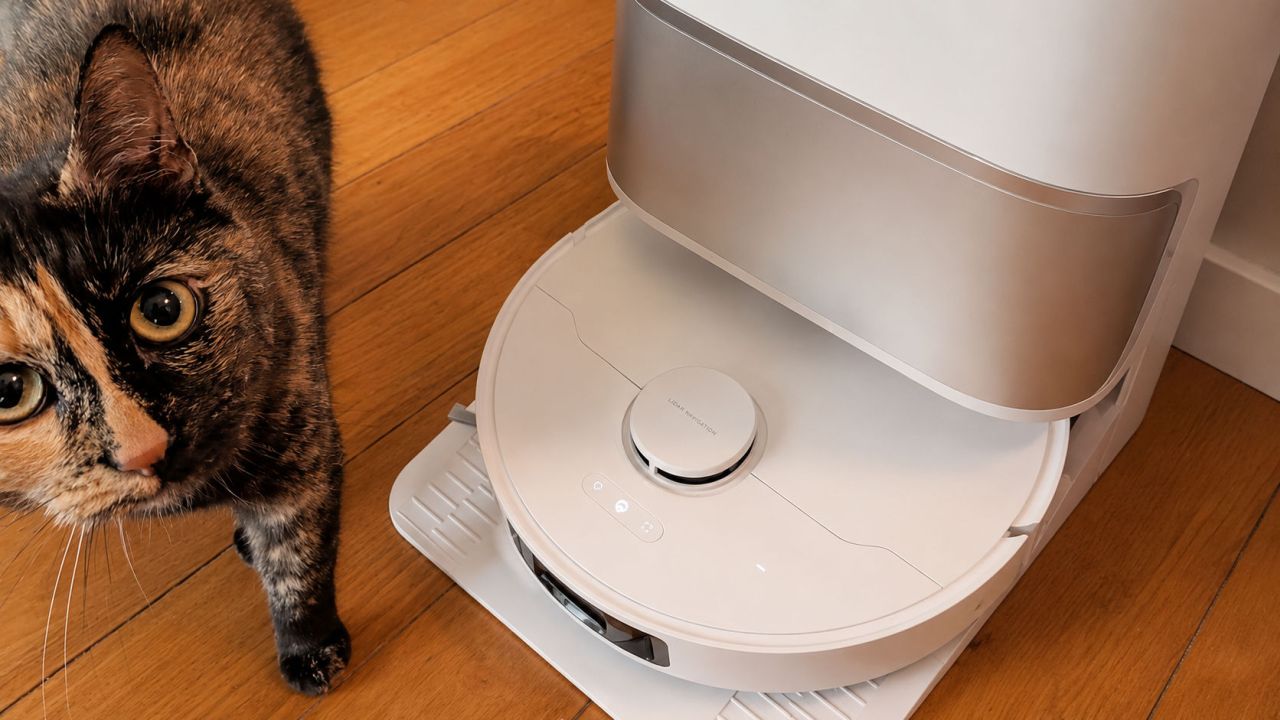
This is exactly why the robot vacuum has become a more interesting technology product in recent years than it first appeared to be. The question is no longer “how strong is the motor”, but how well the device can work together with the home, the daily schedule, and the user’s patience. In this category, the Dreame L10s Ultra Gen 3 is a good example of where the market has moved: 25,000 Pa suction power, LiDAR navigation, 3DAdapt obstacle recognition, automatic dust emptying, mop washing, warm-air drying, and detergent dispensing are no longer separate tricks, but parts of a system designed so that the user has to think about the floor as rarely as possible.

The Time Gain Does Not Begin With One Faster Cleaning Session
Many people go wrong when they try to compare a robot vacuum directly with a traditional vacuum cleaner. With a powerful handheld vacuum, a person can go through the home quickly and deliberately. That is true. But the real time loss is not always in the vacuuming itself, but in the preparation, the interruption, and the repetition. You have to get up, take out the device, go through the rooms, work around the furniture, then empty it, put it away, and a few days later the whole thing starts again.
A robot vacuum works with a different logic. It does not speed up the user’s time, but works from its own. It runs when the home is empty, when the user is working, when nobody is at home, or even when a specific room is not being used. At first this difference may seem small, but over the course of a week it becomes much more visible. If a household would otherwise need a quick vacuuming three or four times a week, and the robot handles this reliably, the gain is not just a few saved minutes, but fewer occasions when something else has to be interrupted.
Modern models are therefore not one-off cleaning tools, but automated routines. In the case of the Dreame L10s Ultra Gen 3, for example, it is not only important that the robot can move through the home on its own, but also how much follow-up work the docking station takes over. Automatic dust emptying means the dustbin does not need to be emptied after every single cleaning session. Mop washing and warm-air drying mean the mopping function is not dependent entirely on manual maintenance. Detergent dispensing also helps the system do more than collect dust, giving it a role in the regular refreshing of hard floors.
Individually, these functions may not sound revolutionary, but together they address exactly the problem that caused many earlier robot vacuums to end up in a corner after a while. With older or simpler models, the robot often did some of the work, but left the user with too many small tasks afterward: emptying, wiping, changing the mop, handling tanks, starting it manually, or rescuing it from obstacles. If there are too many of these, convenience becomes an illusion. The value of a more serious system with a docking station is precisely that it reduces not only the cleaning itself, but also the fuss around cleaning.

Regularity Is Worth More Than One Sudden Burst of Energy
Floor cleanliness does not work like a flashy technology demo. A home does not become more livable because it is perfectly cleaned once a month, but because everyday dirt does not have enough time to accumulate. This is especially true in homes with many hard floors, a frequently opened balcony door, pets, or an open-plan kitchen and living room. In such places, there does not have to be major mess for the home to quickly start looking “used”.
One of the most important advantages of a robot vacuum is regularity. A person tends to postpone: not today, someone is coming tomorrow anyway, I will do it at the weekend. A robot, if properly configured, does not postpone. The point of scheduling is not that it gives us a spectacular technology extra, but that cleaning is removed from daily decision-making. There is no need to decide every time that now we should start cleaning. The system starts at the set time, cleans the selected rooms, and returns to the dock.
This is where mapping and app control gain real meaning. LiDAR-based navigation is important not because the robot “looks smart” in the home, but because it can work in a structured way. It recognizes rooms, plans a route, does not wander around randomly, and lets the user define more precisely where and when it should clean. A hallway, for example, can be cleaned more often than a rarely used guest room. The kitchen and living room can run every other day, the bedroom less frequently, and carpets can receive separate settings.
In this sense, the Dreame L10s Ultra Gen 3 is not simply a stronger vacuum cleaner, but a household automation system capable of changing cleaning habits. The 25,000 Pa suction power is an impressive number and genuinely important on carpets and dustier areas, but on its own it would not solve the everyday time loss. The point is that this power is placed into a schedulable, mappable, dock-supported system. This means it does not work only when the floor is already annoyingly dirty, but when it is just about to become that way.

The Docking Station Is the Real Comfort Turning Point
In the evolution of robot vacuums, the docking station has been at least as important a step as improved navigation. With early robots, it often felt as if we had received a semi-autonomous device that did the vacuuming for us, only to immediately give us work afterward. With the arrival of self-emptying, mop-washing, and drying docks, the emphasis shifted: it is no longer only about what the robot does on the floor, but also about how well it can keep itself ready for use.
This difference matters much more in everyday life than specification lists first suggest. If the dustbin has to be removed after every cleaning session, the mop washed, the pad hung out or replaced, then the user remains part of the process. But if the robot returns to the dock, empties itself, and the system washes and dries the mop pads, then cleaning stays in the background. Maintenance does not disappear completely, but it becomes less frequent and less disruptive.
The dock of the Dreame L10s Ultra Gen 3 aims precisely at this level of comfort. The 3.2-liter dust bag, the 4.5-liter clean-water tank, the 4-liter dirty-water tank, automatic dust emptying, mop washing, warm-air drying, and detergent dispensing are not interesting for their own sake, but because they reduce the number of user interventions. With a cleaning robot, this is one of the most important questions: how much time does the device save, and how much time does it ask back for maintenance?
Naturally, even a system like this never becomes completely invisible. The water tanks have to be filled and emptied, the dust bag has to be replaced from time to time, and the brushes, filters, and sensors have to be checked. A robot vacuum is not household magic, but an automated device. The difference is that a good system does not ask for attention every day, but periodically. The user does not work after it after every cleaning session, but deals with it less often and in a more predictable way.
This kind of predictability is what creates real comfort. A robot vacuum is not useful because it once runs through the home impressively, but because cleaning becomes a system. A system in which the floor remains acceptable day by day, mopping is not a separate program, carpets do not remain a completely separate task, and the user does not have to keep remembering when it might be time to take out the vacuum again.
Not Laziness, but Better Time Management
A strange prejudice still surrounds robot vacuums: as if such a device were only for people who do not want to clean. That point of view has become outdated rather quickly. In modern households, the question is not whether someone wants to clean, but what they want to use their own time for. If a machine can take over a repetitive, low-value task, the freed-up time is not a luxury, but a rational decision.
This is especially true when the home is at once a home, a workplace, a place of rest, and a family center. Since the spread of home office work, many homes have been used much more intensively than before. More meals happen at home, more dust is generated, and more shoe marks, crumbs, hair, and lint appear in everyday life. In such an environment, cleaning is not one big weekly event, but an ongoing maintenance issue.
The robot vacuum is not the enemy of deep cleaning here, but its load reducer. If it regularly collects most of the daily dust, crumbs, and hair, then manual cleaning less often becomes urgent firefighting. The user does not notice the problem only when the floor is already visibly dirty, but starts from a cleaner baseline. This matters psychologically as well: a tidier home suggests fewer urgent tasks and creates less of the feeling that “everything has to be put back in order again”.
Devices such as the Dreame L10s Ultra Gen 3 are therefore interesting not only from a technological angle, but also from a lifestyle perspective. Suction power, mop lifting, MopExtend, obstacle recognition, the LiDAR map, and the docking station all point in the same direction: cleaning should not be a separate, constantly recurring burden, but a background process that can be configured. Once someone sets it up properly, the robot vacuum does not necessarily remain a spectacular novelty, but becomes quiet household infrastructure.
The real time gain, then, is not measured in a single hour. It is not only about not having to vacuum on a particular Saturday. It is much more about making fewer decisions, having fewer small cleaning interruptions break up the day, and less often having to rescue the state of the home afterward. A good robot vacuum is not useful because it solves everything for us, but because it separates floor maintenance from everyday attention.
This is the point where the robot vacuum truly steps out of the gadget category. Not because it has become more exciting to watch while it works, but because we increasingly do not have to watch it. If the system maps well, can be scheduled properly, is strong enough, reliably returns to the dock, and handles part of its own maintenance, then it completes its most important task: it does not add another device to the daily to-do list, but removes one recurring, tiring line from it.
-theGeek-










![PlayStation’s Digital-Only Future Is Financially Unavoidable, Says God of War Creator [VIDEO]](https://thegeek.games/wp-content/uploads/2026/07/thegeek-David-Jaffe-300x365.jpg)