MOVIE REVIEW – At the end of Spider-Man: No Way Home, Peter Parker was erased from the memories of everyone who had ever mattered to him. Four years later, he truly exists only as Spider-Man: New York celebrates its hero while the man beneath the mask is slowly disappearing. Destin Daniel Cretton brings the web-slinger back to the city streets and surrounds Tom Holland’s most mature performance yet with spectacular, physically convincing action, an intensely personal drama, and a surprisingly excellent Spider-Man-Punisher partnership. We watched the film at Cinema City Arena Plaza, and after the MCU’s uneven run in recent years, it felt especially good to walk out of a Marvel production that finally remembers the mask only matters as long as Peter Parker is still underneath it.
Spider-Man: No Way Home did more than close out Tom Holland’s first trilogy. It swept away practically everything that had once given Peter a sense of security. There is no more Stark technology, no Happy Hogan, no sorcerer whose badly misfired spell can further complicate his life, and no Ned or MJ waiting for him after another night of patrols. Peter lives in a cramped, oppressive New York apartment, listens in on police radio, repairs his own gear, and worries more about the next emergency call than the unpaid bills piling up around him. As Spider-Man, he is more successful than ever; as Peter Parker, he has almost ceased to exist.
The story jumps forward four years, but even that much time has failed to heal his losses. Peter watches MJ and Ned from a distance while stubbornly refusing to tell them about the life they once shared. He keeps insisting that his silence protects them, yet every day he sees them building new lives, forming new relationships, and moving toward a future in which he has no place. His isolation initially looks like simple exhaustion, but it eventually begins affecting his body, senses, and abilities. In typical Peter Parker fashion, he tries to fix every symptom separately so he never has to confront the real cause.
In taking over from Jon Watts, Destin Daniel Cretton does not simply occupy the director’s chair. He immediately turns the series in a different direction. Spider-Man: Brand New Day is darker, more urban, and far more personal than the earlier films, yet it never mistakes relentless misery for maturity. Peter once again talks his way through every fight, annoys his opponents with terrible jokes, and often seems more entertained by his own wisecracks than anyone else. Cretton also allows the silences to linger, so behind every burst of chatter we can still feel the man who talks so much because there is nobody waiting to hear his voice when he gets home.

Peter Parker Is Slowly Disappearing Behind the Mask
Tom Holland has always worked well as Spider-Man, but this time he is finally asked to do more than play an enthusiastic kid, an awkward romantic, and a rookie trying to prove himself beside bigger heroes. Peter has grown up, become stronger, and learned exactly how to catch a fleeing criminal or save a falling civilian, but he remains incapable of processing everything he has lost. Holland plays these scenes with considerably more restraint than the emotional climaxes of No Way Home. A glance toward MJ, a sentence left unfinished, or the simple act of returning to an empty apartment tells us more about Peter than any extended monologue could.
The central conflict begins with a disturbing transformation in Peter’s abilities, which the film wisely refuses to treat as another flashy upgrade. His senses overload with increasing frequency, his instincts become less predictable, and his body undergoes changes he can no longer fully control. In several scenes, Cretton presents this evolution with imagery that borders on body horror; elsewhere, Peter’s uncertainty becomes the foundation of a psychological thriller. He can sense something in the city that nobody else can, while becoming increasingly unsure where the responsible hero ends and the cornered predator begins.
One of the screenplay’s strongest ideas is that the new threat emerges at precisely the moment Peter’s identity starts coming apart. His spider-sense tells him something is wrong, but proving that the danger actually exists is far more difficult. He finds himself in a classic Peter Parker predicament: he has to save everyone while the people around him see only a man becoming more agitated, unpredictable, and dangerous. The idea behind the antagonist ultimately proves more compelling than the fully developed character, but the threat remains closely tied to Peter’s condition. This time, he is fighting a form of pain that nobody else can see.
Zendaya’s return is not merely a romantic subplot checked off a franchise list. MJ does not remember Peter, yet an immediate and difficult-to-define closeness forms between them, something neither can simply dismiss. Holland and Zendaya’s scenes balance attraction, loss, and awkward humor without using a convenient flash of recognition to erase the ending of No Way Home. The less said about Sadie Sink’s role, the better, but it is safe to reveal that she is here for far more than setting up another Marvel movie. In several scenes, she even manages to pull the spotlight away from Holland.

New York Is Finally More Than a Digital Playground
Tom Holland’s previous Spider-Man movies sent their hero to Washington, Europe, outer space, and alternate universes, gradually losing sight of the city without which this character has never truly worked. Spider-Man: Brand New Day finally gives New York back to him. Peter moves through corner stores, subway entrances, apartment buildings, alleys, and crowded streets, while the city’s residents are more than faceless extras waiting for the next wave of digital destruction. They know Spider-Man, yell at him, record him, criticize him, ask for his help, and occasionally get furious because he has blocked off the entire street again.
For the first time in years, the movie restores the feeling of a genuinely friendly neighborhood Spider-Man. Peter is not heading toward an Avengers mission or attempting to stitch together another tear in the multiverse. He lives in a city whose people love him, rely on him, and blame him in equal measure. The ordinary locations also strengthen the personal drama, because every rooftop, small restaurant, and cramped apartment reminds him that he could have been just another New Yorker. The problem is that Peter Parker no longer has a real place among them.
Cretton also stages the action with far more physical clarity than the MCU has generally offered in recent years. Shang-Chi and the Legend of the Ten Rings already proved that he understands the rhythm of close-quarters combat and how bodies move through space. Here, he combines Spider-Man’s agility with the momentum of wuxia cinema, video game-inspired level design, and bold comic-book compositions. One sequence tears across rooftops, stairwells, and confined interiors while Peter constantly adjusts his movements to the environment. The camera never shakes merely to manufacture excitement, the geography remains clear, and the blows finally carry real weight.
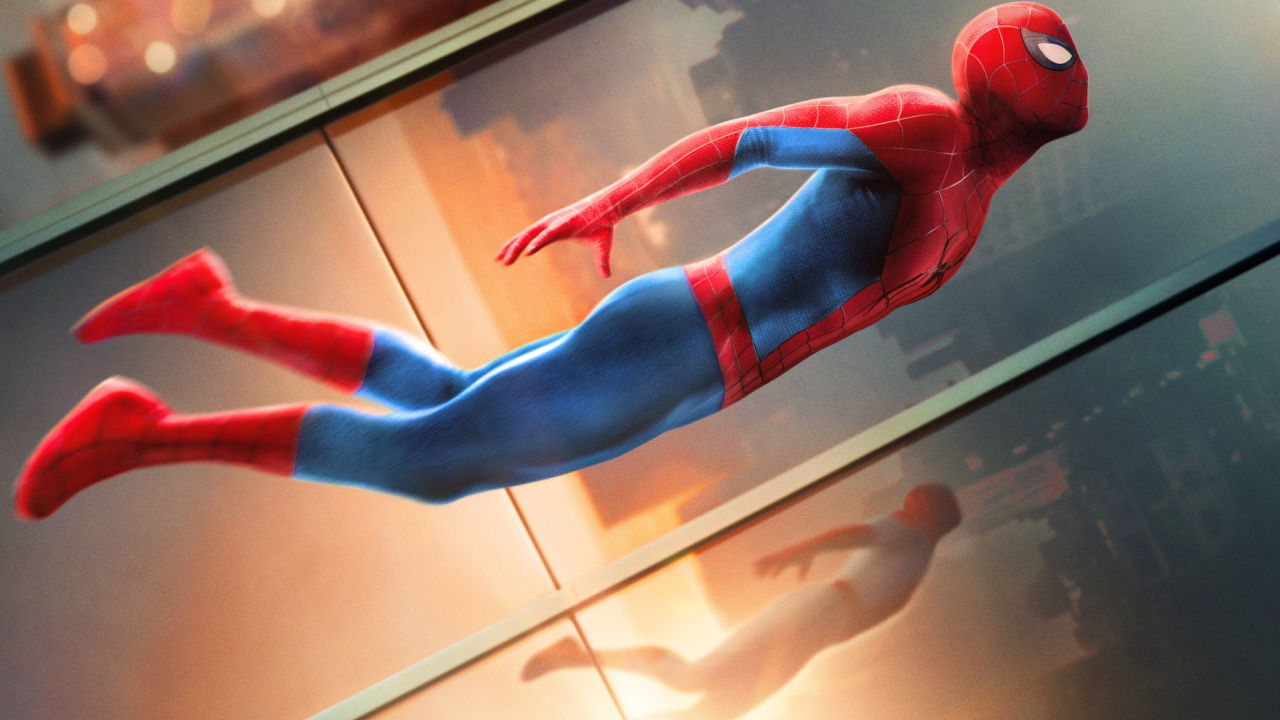
The movie’s visual identity is also more distinctive than the recent MCU average. The new suit’s more traditional red-and-blue colors stand out vividly against the daytime city, while wet pavement, neon signs, and glowing apartment windows give the night scenes depth. A few digital effects are less convincing, particularly when too many characters and too much destruction are compressed into the same shot, but these moments pass quickly. The sound mix was especially effective in the Cinema City Arena auditorium: the snap of the webs, the blunt force of the punches, the traffic, and New York’s constant rumble surrounded the audience almost without interruption.
A running time of two hours and twenty-five minutes may sound excessive for a standalone Spider-Man movie, but the story rarely feels genuinely overstuffed. Chris McKenna and Erik Sommers juggle a large cast, several emotional conflicts, multiple action threads, and the obligatory Marvel connections while keeping Peter at the center. There is a brief slowdown in the middle, when the explanation of the mystery, the arrival of additional characters, and the preparation for the next major confrontation deliver too much information at once. The film quickly finds its way back to Peter, making the long running time feel substantial rather than exhausting.

The Punisher and Hulk Are Here for More Than the Poster
In recent years, Marvel has often tossed guest characters into its movies as though a familiar name could replace actual dramatic purpose. Spider-Man: Brand New Day, by contrast, gives Frank Castle and Bruce Banner genuine roles in Peter’s story. Jon Bernthal’s Punisher is not a mentor, a babysitter, or a cameo designed solely to sell tickets. He represents one possible future for Peter. Both men are isolated, both hunt criminals, and both consider New York’s safety a personal responsibility, but Frank stopped believing that everyone could be saved a long time ago.
Holland and Bernthal work from their very first scene together. Peter tries to defuse every situation by talking incessantly, while Frank looks at him as though he were an exceptionally irritating but grudgingly respectable problem. The rating naturally restrains the Punisher’s customary brutality, but that limitation benefits the character by forcing the film to reveal more of his thinking, his dry humor, and the way he views a much younger hero. Bernthal remains dangerous throughout, yet he can be funny without turning Frank Castle into a clown for even a second.
Mark Ruffalo’s Bruce Banner is less overtly amusing, but at least as important to the drama. Bruce knows exactly what it means to fear that his own body, anger, and instincts may one day take control, creating a natural connection between him and Peter’s transformation. Hulk also receives several major moments and, for the first time in years, feels like an unpredictable and frightening force rather than an agreeable green supporting character. Neither guest storyline is stretched beyond its purpose, so Frank and Bruce deepen Peter’s conflict instead of pushing him out of his own movie.
The Marvel machine has not disappeared entirely, of course. There are carefully placed references, lines pointing toward future productions, and characters whose entrances immediately suggest they were not created solely for this story. Those moments remain brief, while the more substantial connections work the way they should in a comic book: somebody steps into Peter’s life for a few pages, helps him or causes trouble, and then moves on. Spider-Man: Brand New Day remains part of the MCU, but it rarely behaves like a two-and-a-half-hour commercial for the next Avengers movie.

The Biggest Explosion Does Not Win the Final Battle
The movie makes its best decision in the third act. Cretton naturally delivers the large-scale action, destruction, and spectacle expected from a Spider-Man finale, but he does not entrust the real resolution to another beam of energy shooting into the sky. The emotional climax is a conversation between two wounded people who must decide what to do with their losses before those losses consume everything else. The scene does not slow the movie down; it finally puts into words what the previous two hours have actually been about.
Peter’s problem cannot be solved by knocking out a villain. The world still does not remember him, Aunt May is not coming back, and MJ cannot magically recover everything she has lost. Peter has to understand that complete isolation is not the same thing as protecting other people, and that endless self-sacrifice eventually stops being heroic and becomes another form of escape. This realization gives the movie genuine maturity without throwing Spider-Man’s essential optimism out the window.
Not every detail works with the same confidence. The new threat has a strong visual and psychological foundation, but the antagonist is less memorable than the personal conflicts involving Peter, MJ, Frank, or Bruce. The screenplay spends too long setting up several developments only to resolve them surprisingly quickly, while certain choices made by Sadie Sink’s character are clearly being saved for fuller explanations in a later story. These weaknesses never destroy the movie’s central human thread, and once the ending arrives, the first thing on our minds is not which reference was advertising which future production.
Spider-Man: Brand New Day works so well because Peter Parker is finally more important than the Marvel universe built around him. Destin Daniel Cretton has made a more spectacular, mature, and cinematic adventure than Jon Watts’ previous installments, while Tom Holland proves that an adult Peter Parker suits him every bit as naturally as the enthusiastic high school student once did. The story occasionally tries to resolve too many things at once, and its villain is unlikely to join Spider-Man’s greatest enemies, but the movie has its own voice, its own New York, and genuine emotional stakes. After five years away, this truly feels like the beginning of a new day, not merely another date circled on Marvel’s release calendar.
-Gergely Herpai “BadSector”-
Spider-Man: Brand New Day
Direction - 8.6
Actors - 8.8
Story - 8.1
Visuals/Music/Sounds - 8.5
Ambience - 8
8.4
EXCELLENT
Spider-Man: Brand New Day brings Tom Holland’s hero back to the streets of New York while placing Peter Parker’s isolation and emotional collapse at the center of the story. Destin Daniel Cretton delivers clear, physical action, strong performances, and guest appearances that actually serve the main character instead of overshadowing him. The antagonist is less memorable than the personal drama, but this remains a mature, entertaining, and confidently distinctive new chapter for Spider-Man.