

RETRO – If Fable (aka: Project “Ego”) were a person and not a game, it would be the most selfish character in the world. It would think that the world revolves around it, that personal growth and success are the only things that matter, and it would only be capable of seeing everything through its own lens. It would undoubtedly be an annoying guy. However, since Fable is a game, we are totally obsessed with it. This year marks the 20th anniversary of Fable, and we are taking this opportunity to look back on this franchise-starting classic.
Just as with famous historical figures, where it becomes shrouded in mystery what is true about their claims, it’s hard to unravel what came true from the gradual retraction of promises by the grand “storyteller” Peter Molyneux regarding the original Fable. The famous star designer undeniably promised far more features to excited players (which I’ve detailed in my preview), but only a portion of those features made it into the final game.
Nevertheless, we need to clarify right from the start that while Fable revolves around character progression like any other RPG, it is not nearly as open or free to explore as Bethesda’s monumental Morrowind—it could perhaps be better compared to a non-linear action-adventure game heavily infused with RPG elements.
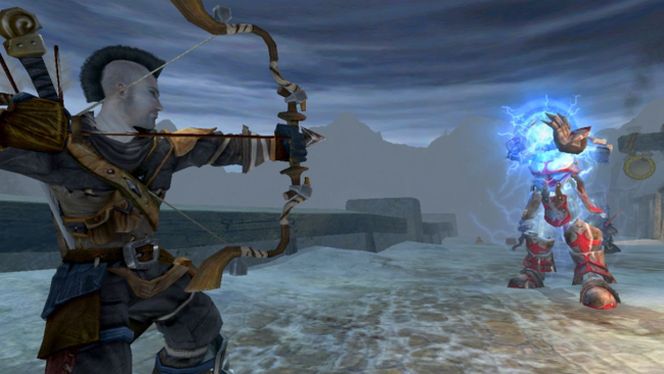
On PC, we had not encountered anything quite like this before, except perhaps fans of *Black and White* might find the evolving nature of the protagonist’s character and appearance familiar. On consoles, it can be compared to Nintendo’s Zelda series, and if Microsoft has any sense, they should invest a little more money into Fable so that, through sequels, it can develop into a similar brand.
The funny thing is that the ones who missed out on the promised but omitted features were mostly those who followed the development closely and read every overly ambitious statement Molyneux made. Meanwhile, those who approach the game with fresh eyes will be absolutely captivated. That’s the mindset I’ll take in this review as well: rather than lamenting the “what ifs,” I’ll focus on what actually made it into Fable. So, let’s get started…
Bedtime story with a pinch of humor
One of the most essential elements of RPGs is an epic story—without it, a role-playing game is like bean soup without ham hocks. The most detailed stories so far can be found in the two Knights of the Old Republic games, and I think it’ll be a while before anything surpasses them.
The story of Fable is well-crafted, but despite the atmospheric fresco-style cutscenes and the narrator’s mesmerizing voice, it doesn’t quite match the emotional depth and intricate atmosphere that we’ve come to expect from the two *KotOR* titles. Our hero’s journey is one of revenge after bandits raid his village during his childhood, slaughter his father, and torture and abduct his mother and sister.
Our task is to avenge our father and discover the whereabouts of our mother and sister. Although there are some surprising twists along the way, the events mostly follow a familiar path and don’t feature as many incredible turns as, for example, the ones found in KotOR.
The reason I still enjoyed the story of Fable far more than, for example, the supposedly epic but ultimately dull plot of *Dungeon Siege 2* from last month’s issue, is the game’s hilarious humor. It permeates all the dialogues, and thanks to the excellent voice acting, there were moments when I laughed almost as much as I did while playing the recently released *Bard’s Tale*.
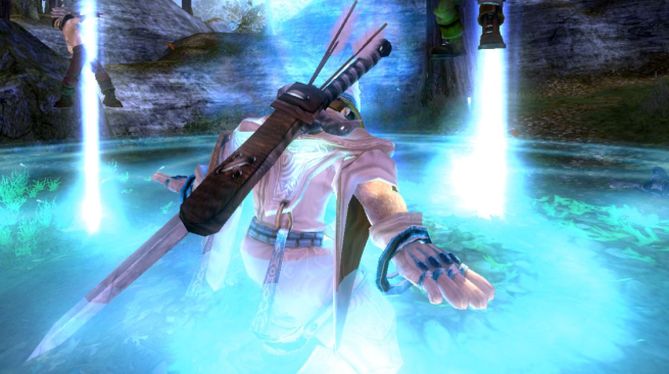
Despite its constraints, Fable is a relatively open game with fixed story elements where we often have to make decisions that gradually shape our evolving hero’s fate. After we complete our training at the Heroes’ Guild (which can take hours if we complete all the side quests), the world is completely open to us.
We could immediately wander into most parts of Albion, but we’d quickly bite the dust as tougher monsters would soon be on our tail.
Follow your path!
When we step out of towns or villages, we must follow predetermined paths, as Albion is not as freely explorable as the world of Morrowind. Most of the time, of course, there’s a path leading everywhere, but initially, this limitation may seem strange compared to traditional PC RPGs.
True, both Sudeki (another Xbox conversion) and *Dungeon Siege* use this solution on PC, so it seems like this is becoming a trend (at least until *Elder Scrolls: Oblivion*). On the other hand, who cares about linear locations when the environment is so dazzlingly beautiful?
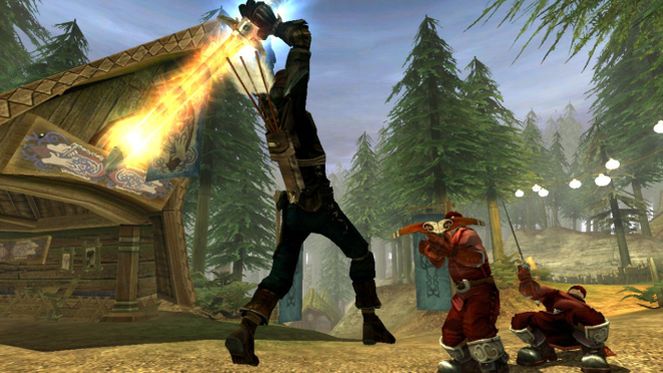
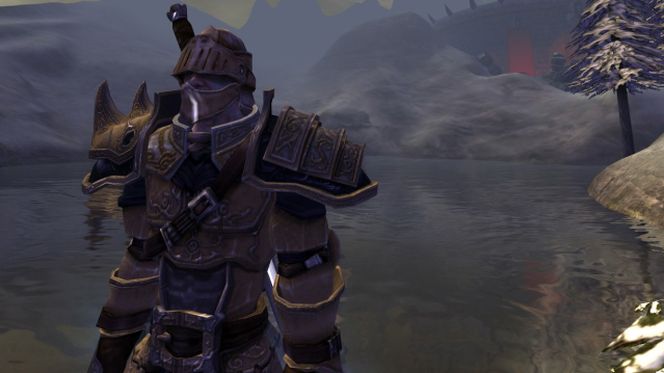
Whether we’re wandering through the Greatwood Forest, among swaying wheat fields and lush trees, or within the walls of some enormous fortress, we’ll constantly notice the sound of our jaw dropping. There hasn’t been another PC RPG where the environment has been crafted with such meticulous care—there were places where I didn’t progress for several minutes simply because I was admiring the world around me. The graphics of Fable already captivated me on Xbox, but thanks to sharper textures and higher resolution on PC, it far surpasses its earlier console version.
Alongside *Sudeki*, this is the second console conversion that has truly blossomed on PC—clearly, it’s easier to port games from this platform than from PS2, where the PC versions often have graphical bugs and rarely see visual improvements.
“We care about the details”
Despite its lavish, sometimes fairy-tale-like graphics (which faintly evoke Japanese RPGs), one might think the world of Fable is simplified. However, its history is deeply intricate. Nearly every item has its own backstory, whether it’s legendary swords or simple clothing, and if we click on them, we even get a description of simple tattoos, explaining who typically wears them and why.
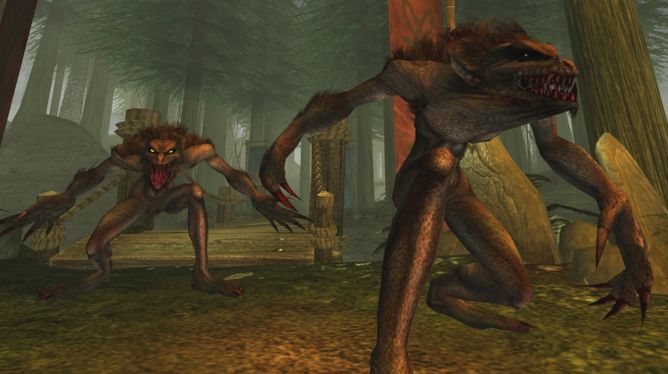
Moreover, there are countless books to be found on shelves in cottages, in chests, or simply lying on the ground, detailing the history of Albion, famous dragons, mythical locations, and heroes. We’ll also be amazed by how densely detailed the world of Albion is. There isn’t a single patch of land where something isn’t happening, where we don’t have to fight something or talk to someone.
What truly earns Fable its praise, though, is the multi-layered gameplay. If you rush through the game, completing the main and side quests quickly, it will take around 20–25 hours. However, those who want the full experience, who want to Fable properly, will read the books and letters they find, understanding the significance of certain events, engage with NPCs, woo the ladies walking the streets, and perhaps even find themselves in a heated moment with them.
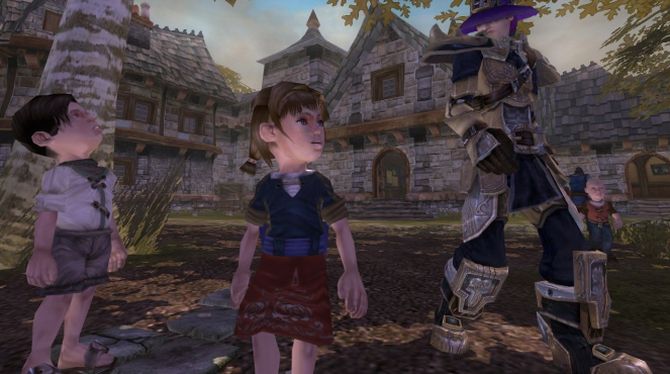
You can even buy your own house, where you can return to rest after adventures. If you’re so inclined, you can trade, or if you prefer to play as a big, bad antihero, you can wipe out entire towns. You can play with kids, scare them, head to taverns, get drunk, and cap it all off with a nice bout of vomiting. You’ll even encounter talking doors guarding caves that will only open if you complete specific tasks for them.
One of the most extreme doors, for instance, asked me to get as fat as a pig, but I wasn’t willing to go that far, though apparently, if you eat enough, your hero can gain weight, much like CJ in GTA: San Andreas. The doors usually reward you with some neat weapons, so it’s worth completing their tasks. The fantastic thing about Fable is that both casual and hardcore players will enjoy it equally—there’s something for everyone, which is rare in today’s games, most of which are either too complex or too simple.
The clothes make the hero
Another strength of Fable is its freedom: you can shape your hero in any way you like. At the start of the game, everyone looks the same: a cute, messy-haired kid. But after completing the tutorial, your hero will change in appearance based on your gameplay choices and several other factors.
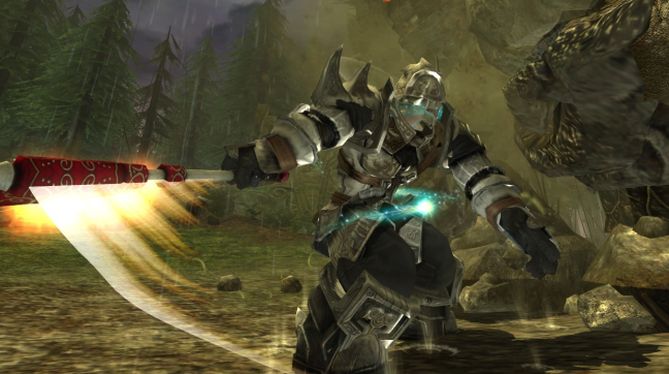
It’s standard in RPGs to be able to equip various outfits (gloves, boots, shirts, pants, helmets, hats). You can mix and match these however you like; there are no mage/warrior restrictions. Some armor may require a certain level of strength, but that’s about it.
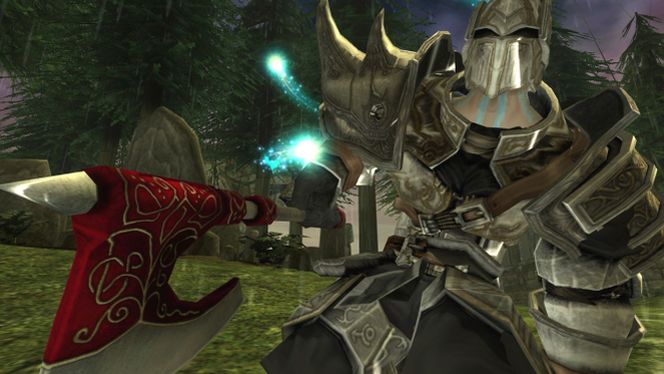
However, your outfit affects how others perceive you: if you wear the leather armor of killers, good citizens won’t see you as a stand-up guy, but rather, they’ll fear you. On the other hand, if you parade around in shining steel armor, people will assume you’re a noble knight (“Nice armor, nice horse” – Süsü), and women will be more attracted to you.
You can also change your appearance in other ways: stop by the barber in Bowerstone (for the record, Fable beat GTA: San Andreas to this feature on console), or ask a wandering hairdresser to trim your hair.
Your hairstyle, naturally, affects how attractive you are to women or how intimidating you appear. (The two don’t necessarily influence each other, but if a woman is scared of you, you’re unlikely to seduce her.) Another appearance-altering feature borrowed from GTA is tattoos, which can increase either fear or attractiveness. Each tattoo has a backstory, and it’s worth checking them out.
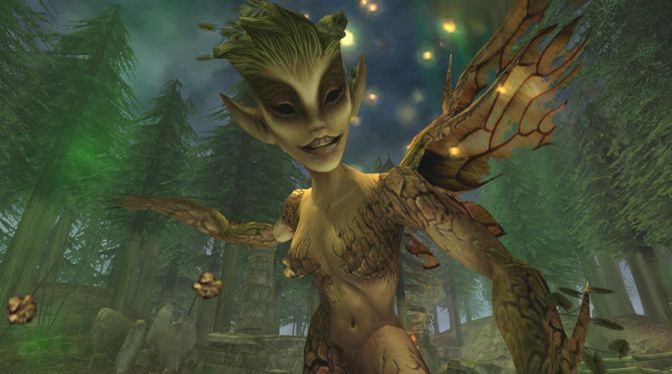
He was a handsome fellow, but now he’s scarred
Some changes to your appearance, however, are beyond your control. For example, scars earned during battle are impossible to avoid. When an enemy lands a hard hit, it will undoubtedly leave an ugly scar that will take a long time to fade as you age. While armor provides some protection, it doesn’t entirely prevent a few serious hits from marring your body.
This includes your poor hero’s face, which will accumulate a variety of injuries. The scar patterns are somewhat random, so if you play through the game multiple times, your hero will get scarred in different ways. Although scars will fade over time, new ones will inevitably form, so don’t expect to reach the end of the game with a baby face—by the time you finish, your hero will look like a true war veteran (and you can proudly show off to the ladies, like Mel Gibson in Lethal Weapon – Csonti).
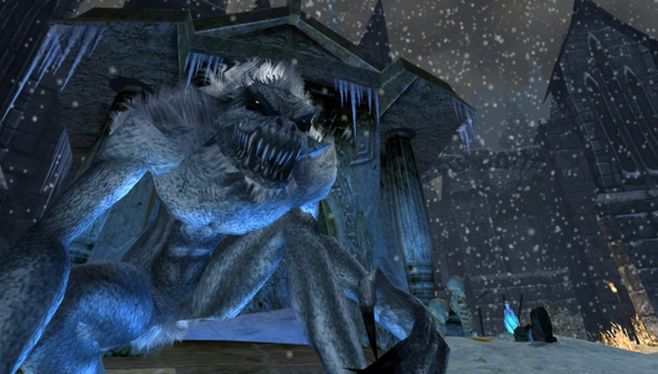
Speaking of aging, we can’t ignore the game’s internal clock. Supposedly, one in-game day equals 48 minutes, but using magic significantly ages your hero—perhaps a bit too much. After about 20 in-game days, you’ll reach the maximum age of 65, meaning the final showdown with Jack of Blades will be fought as an old man.
If you want to stay young, you don’t have to use magic, or you can opt for a darker method: sacrifice children at a dark temple to regain your youth…
In Fable, not everything is sunshine and rainbows if you want to taste the darker side. Along with aging, you can gain weight if you sit around too much and stuff your face, washing it down with beer—though it takes some effort to get to that point. You’ll also tan if you spend a lot of time outdoors, though think of it less like a stylish tan and more like what happens when you go to the beach after spending too much time in front of your computer.
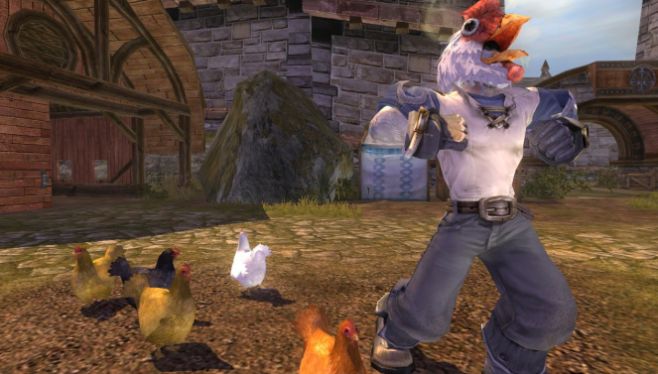
Buff hero or not: That is the question
Naturally, your hero will also bulk up in the game, though surprisingly, this isn’t determined by how much you fight but by how many strength points you allocate at the leveling machine in the Heroes’ Guild.
Given how the other physical changes happen in response to in-game events, I’m not sure why this wasn’t handled the same way. You’ll need to plan your hero’s development carefully—focusing too much on magic will age your hero significantly, and certain spells influence your alignment. Over-enthusiastically learning life-draining spells will steer you toward the dark side, while healing magic is seen as positive, which didn’t thrill me since I wanted my hero to lean toward evil on PC.
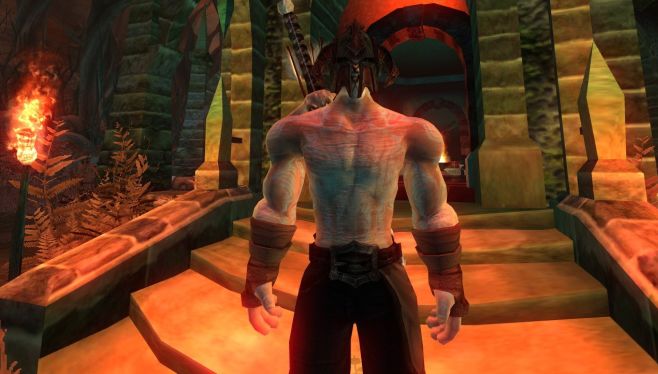
Like in Dungeon Siege, there are no class restrictions—you develop your hero’s skills in any direction you choose. However, it’s advisable to stick to a certain path as the game’s enemies become much tougher toward the end. I would recommend investing some points in strength, even if you’re aiming to become a powerful mage, as you can run out of mana, and simple defense won’t help against ranged magic attacks.
I’m the good prince
The game’s greatest idea is that your appearance also changes based on how you play (something later adopted by KotOR II, which was released much later than Fable on consoles). Your hero’s moral transformation is reflected in your choices during quests—whether you behave like a hero or a villain.
Some quests have an evil alternative: in one, you can save the town from bandits, while in another, you can help the bandits and slaughter the guards. Unfortunately, I must note my first criticism here: there are annoyingly few “evil” quests, and the “evil” choices during quests don’t penalize you enough.
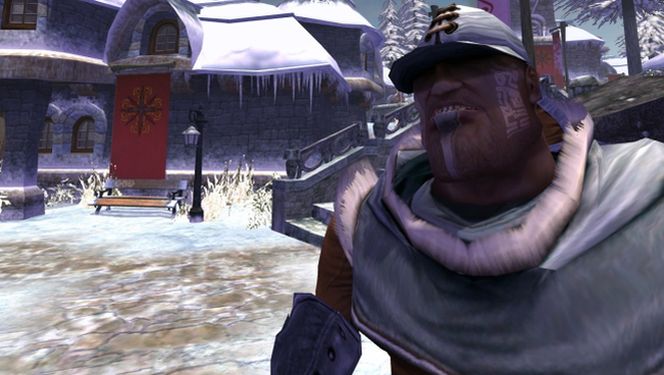
To increase your evilness, you can sacrifice innocents at the aforementioned temple, but it’s a long walk to get there. Another frustrating moment was when, after a long duel with a boss (who wasn’t that much of a villain himself), I chose to kill him (since I was aiming for the dark side on PC), only for the game to reward me with good points when I executed him! I almost headbutted my monitor… But let’s get back to the changes in appearance.
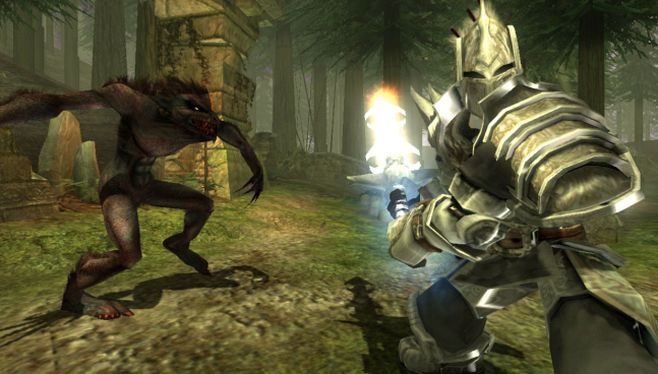
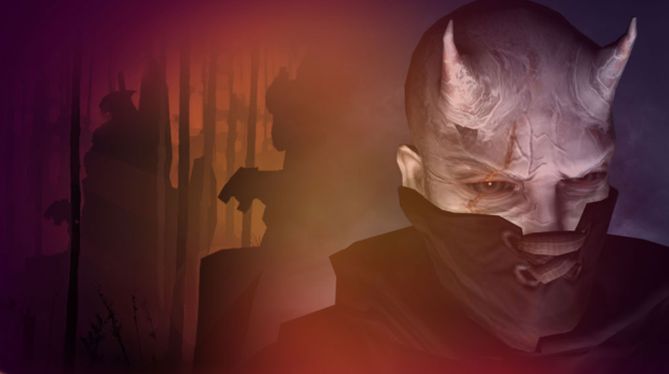
Good guys (especially with beards) take on a Christ-like visage, a halo forms above their heads, butterflies flutter around them, and they glow with white light. Meanwhile, bad guys sprout horns, their eyes turn red, and flies buzz around them as if they hadn’t seen water and soap in a week.
On Xbox, I easily achieved the good version, but on PC, where I aimed for evil, I didn’t realize that rescuing merchants in the forest (which to me meant bandits attacking a trader, and after his companion attacked me, I joined the fray) counted as a good deed in Fable, so my slightly evil hero temporarily reverted to average.
Career Story
Throughout the game, your actions are constantly commented on by the townsfolk you encounter: when they see you, they won’t talk about their own lives, but rather they’ll initially make snide remarks, and later either respectful or fear-filled comments about you. Of all the various stats, the most important is fame, which determines how much people notice you. One odd design choice is that you can actually purchase the title by which you’re known.
At first, everyone calls you “chicken chaser” (grrrr…), but if you’ve got enough cash, you can change this embarrassing name to something else… anything, really. Honestly, though, I didn’t see much value in this feature as implemented. Fame also impacts gameplay: the more famous you are, the more women will swoon over you, even if you aren’t particularly attractive.
Once you’ve maxed out your attractiveness, as long as you haven’t caused too much trouble, and you walk into town while also being famous, all the women will instantly fall in love with you, and you won’t even have to do anything. Interestingly, towns will remember your behavior, so some places might fear you, even if you’re generally a good person but caused a bit of mischief at the local tavern.
Whether they fear you or adore you, you’ll always be the center of attention: if you strut down the street, everyone will immediately focus on you. While the NPCs’ reactions can become a bit repetitive, you can still trigger some hilariously human responses from them.
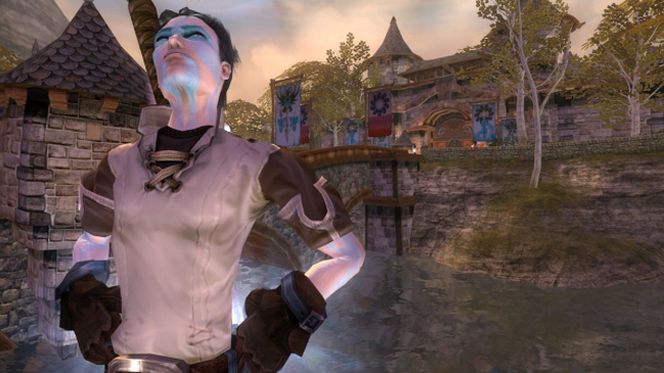
For example, in one village, I began flirting with a woman who seemed quite fond of my hero. Then a man walked up and politely commented, “Ahem… that’s my wife…” Of course, I ignored him, so he started getting angrier, saying things like, “Dude, that’s my woman!” and “Hey, back off!” Eventually, he couldn’t take it anymore and attacked me, forcing me to kill him while I was laughing uncontrollably at the absurdity of the situation.
Another hilarious moment occurred when I already had a wife, and we walked into a tavern together, where I began flirting with the barmaid. My wife instantly got furious and started berating the poor girl, eventually storming off in a depressed huff. (Of course, I comforted her at home later.)
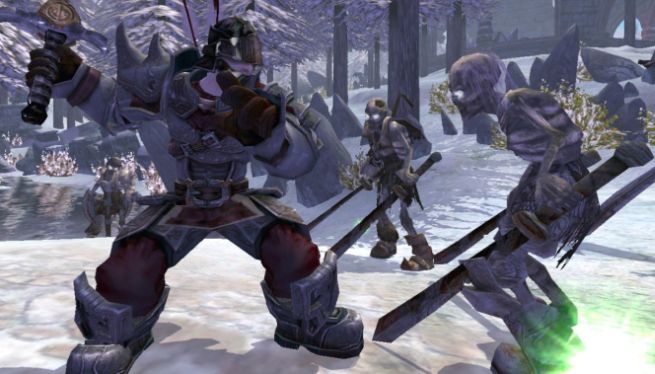
Off on an Adventure!
Fable would be a simple *Sims* clone if the game were only about these amusing life moments, but it’s not: the core of the game lies in the story mode and the quests. You can pick these up from a large map table (which reminded me of one of my old favorites, Dungeon Keeper 2).
There are essentially two types of quests: those tied to the main story that push the narrative forward, and smaller side quests that allow you to earn money, fame, and experience. Unfortunately, there are relatively few quests overall, and this hasn’t changed much in the expanded PC version.
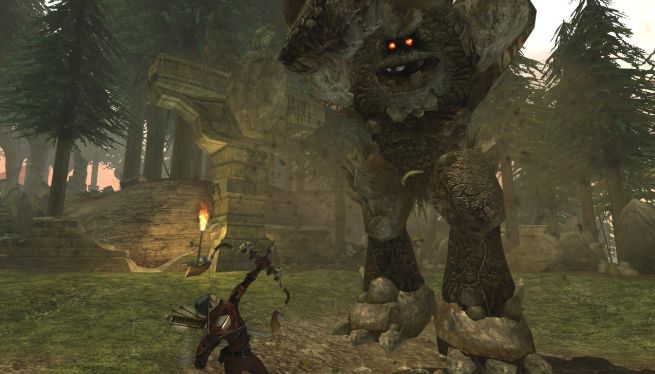
The game was relatively easy on Xbox, but on PC, it feels like they might have ramped up the difficulty a bit. You can also increase the challenge yourself by accepting extra “boasts” before missions, such as defeating enemies barehanded or ensuring all your allies survive. I found the former pointless, and the latter I attempted several times with mixed success.
Toward the end of the game, when you’re loaded with powerful armor, weapons, and healing/revival potions, the missions become almost too easy: at this point, it’s nearly impossible to die. However, keeping others alive is much harder—unless you’ve aggressively developed your healing abilities.
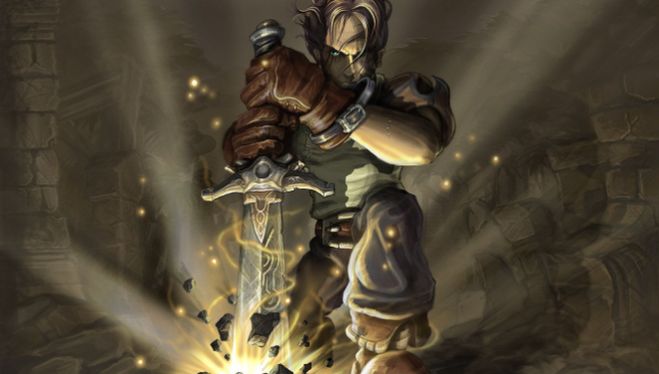
Combat
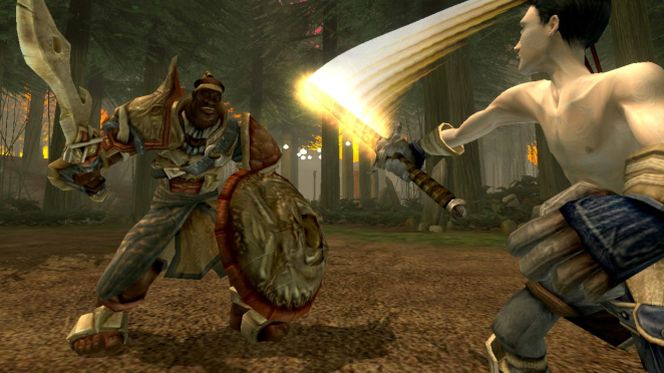
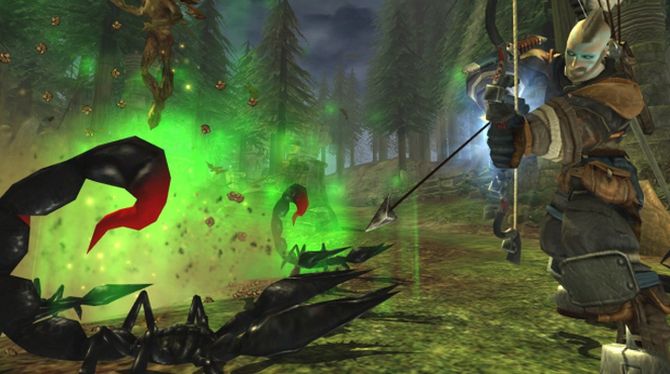
Fable’s combat system is, in my opinion, perfect—it’s not only incredibly responsive but also offers a wide variety of combat maneuvers. Personally, I initially relied on blocking and fireball combinations, and when I was surrounded, I would unleash the visually stunning and destructive *infernal wrath* area magic, raining fire on my enemies. Later, I mastered and fully developed the life-draining spell and often used time-slowing magic against tougher opponents.
A brilliant addition is the XP multiplier: if you manage to hit enemies without getting hurt, a small counter gradually increases, allowing you to earn multiple times the usual experience points. While you can make it through Fable without being a combat master, the game rewards those who are particularly adept at fighting. My only gripe with the combat is that selecting targets among multiple enemies can be tricky—perhaps it would’ve been better to have a key to cycle through them, similar to World of Warcraft, rather than relying on the automatic targeting.
This becomes especially frustrating when there are good guys standing among the bad guys, and you accidentally target and start hitting them in the heat of battle. Though to be fair, I didn’t use this function much during the second half of the game, as I managed just fine without it.
All the hacking and slashing does get a bit repetitive at times, especially when you have to wander through areas where identical waves of enemies keep swarming you. Fortunately, the locations themselves aren’t overly repetitive, so the combat doesn’t become as dull as it did in Dungeon Siege 2.
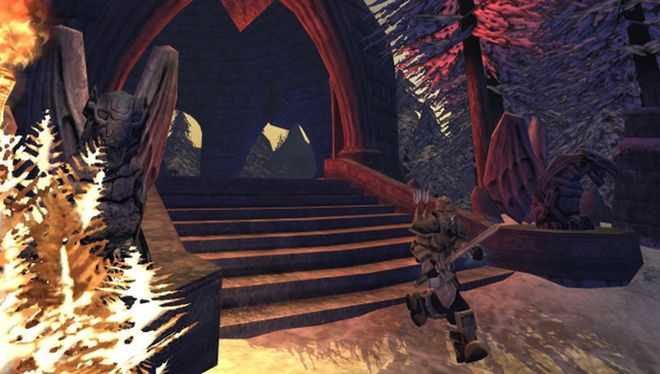
Pure Delight
While there’s constant debate nowadays about which FPS engine is capable of what, with this engine doing this, and that one doing that, Fable is simply… gorgeous. The graphics were already among the best on Xbox, but Albion’s realm becomes truly breathtaking on PC, thanks to the higher resolution and new graphical effects. Alongside Sudeki, this is the second recently released RPG that uses bright, vibrant colors, and thanks to Lionhead’s artists, these colors are not garish but instead provide a stunning experience.
The game has improved somewhat since its Xbox version in terms of NPC appearance. While they still tend to look somewhat repetitive, their facial features are a bit more detailed—something that’s especially noticeable when the camera zooms in on them. However, it’s your hero, constantly evolving and changing, who looks the most impressive. On PC, the deepening wrinkles, scars, and graying hair have been rendered with incredible quality. While on the subject of graphics, we must also mention the sound effects.
As you roam around, you’ll mostly hear birds chirping and the wind blowing—though a few more sound effects wouldn’t have hurt. In towns, people are constantly chatting, but unfortunately, the conversations tend to repeat, which becomes a bit irritating after a while, even though they’re amusing at first.
Where Fable truly excels in comparison to other RPGs is in its music, composed by none other than Hollywood composer Danny Elfman (who also composed the music for the first Batman movie). While Jeremy Soule’s atmospheric music tends to become dull after a while, Elfman gave his all in Fable, and the result is a stunning score, even by his usual standards.
A One-Man Rescue Mission
After the thin RPG pickings of recent months, and the not-quite-perfect KotOR II, Fable has finally saved the PC RPG world. Sure, Peter Molyneux left a lot of untapped potential, even in this enhanced version, but with the sheer number of creative ideas and opportunities that were successfully crammed into the game, it easily surpasses any RPG released in recent years. In fact, now that I think about it, this level of originality hasn’t been seen in any other genre lately either—except for the GTA series.
Since GTA came up, I have to admit that I enjoyed Fable a bit more than San Andreas, because while the latter offered more in terms of gameplay options, Fable didn’t have any of those frustrating moments where you have to replay sections repeatedly. Plus, the PC controls in Fable are miles better, not to mention the vastly superior graphics.
Lionhead’s game feels like it was truly designed for PC, despite being released first on Xbox in a slightly toned-down version due to market conditions. So, kudos to Mr. Molyneux—Fable is a masterpiece, and we can’t wait to see what you come up with in Black and White 2 next month!
-BadSector-
Pros:
+ A brilliant mix of ideas
+ A living, breathing world
+ Tons of things to do, yet coherent
Cons:
– Bugs
– Some inconsistencies
– Frustrating tasks
Publisher: Microsoft Game Studios
Developer: Big Blue Box, Lionhead Studios
Genre: Action-RPG
Release Date: 2004 September 14
Fable
Gameplay - 9.8
Graphics (2004) - 9.8
Story - 9
Music/Audio - 9.5
Ambiance - 9
9.4
AWESOME
Lionhead's game feels like more than just a simple port; it’s truly made for PC. The only reason the slightly downgraded version was released on Xbox first was due to market conditions. So, big kudos to Mister Molyneux—Fable turned out to be a true masterpiece.
![Vampire - The Masquerade Redemption – Love Song for a Vampire [RETRO – 2000]](https://thegeek.games/wp-content/uploads/2020/03/theGeek-Vampire-the-Masquerade-302x180.jpg)





Leave a Reply