
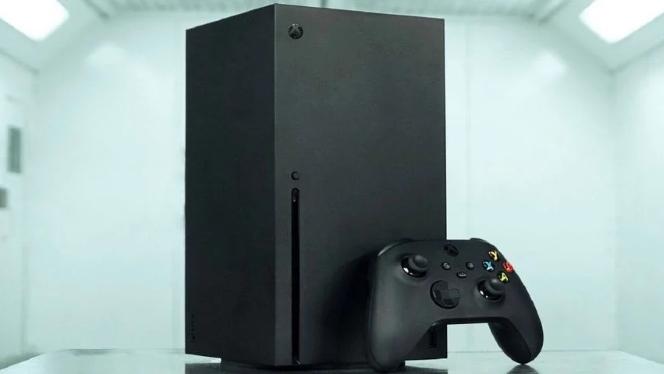
The Xbox Games Showcase 2026 made it clear that Microsoft is trying to reshape its Xbox strategy: exclusives are returning, but the company is not fully abandoning its broader multiplatform publishing model. Matthew Ball, Xbox’s new head of strategy, says Microsoft must reward Xbox Series X/S owners, handle Project Helix’s pricing challenge, and define how Xbox can remain a strong platform while still operating everywhere at once.
The Xbox Games Showcase 2026 was not just about new game announcements. It was also Microsoft’s attempt to bring some order to one of the biggest strategic uncertainties surrounding Xbox. In recent years, Xbox has increasingly behaved like a multiplatform publisher, while its own console audience has had every reason to ask the obvious question: why buy an Xbox if the most important games eventually show up elsewhere? The new message is clearly meant to answer that vacuum. Microsoft is talking about exclusives again, and not as a one-off gesture, but as a longer-term promise of regular content.
The first major names in this newly outlined direction include Gears of War: E-Day and Clockwork Revolution, but the company says these will not be isolated exceptions. In an interview at Summer Game Fest, Matthew Ball, Microsoft’s new chief strategy officer, discussed the need to clarify the future of Xbox Series X/S, the upcoming Project Helix, and the balance between building a platform and operating a major publishing business. This is not a theoretical problem. If Xbox lets too many games go to PlayStation and Nintendo, the meaning of its own hardware weakens; if it locks too many games down, revenue and audience reach may suffer.
Xbox Promises a “Steady Stream” of Exclusive Games
After the Xbox Games Showcase 2026, Xbox content chief Matt Booty appeared on Gamertag Radio to clarify part of Microsoft’s exclusivity strategy. The basic idea is that people should once again have a reason to join Xbox, buy the console, or remain fans of the brand, while multiplayer and service-based games can remain cross-platform. Just as importantly, previously promised PS5 and Nintendo versions will not be cancelled. In other words, Microsoft is not presenting a full reversal, but a more selective, case-by-case strategy.
Ball carried the same idea forward in his latest interview with GameSpot. He said that “everyone in the industry understands that exclusives are important,” and Microsoft is no exception. According to the strategy chief, Xbox players can expect, beyond Gears of War: E-Day and Clockwork Revolution, a “steady stream” of console exclusives that will “validate their historical investment” in the platform and give them reasons to remain inside the Xbox ecosystem. This is not quite a return to the old model of aggressively closed exclusivity. It sounds more like a cautious, commercially calculated version that finally takes the console audience seriously again.
Microsoft also appears to understand that its communication has not been clear enough. Ball said the company still has work to do in keeping users informed about its business plans and how decisions are made around individual games. That is not a small detail, because Xbox community trust was not damaged only by some titles moving to other platforms. It was damaged by the sense that the rules were impossible to follow. If players cannot tell whether a first-party Xbox game will remain meaningfully tied to Xbox, then both the emotional and practical reasons to commit to the hardware become weaker.
The console business is unavoidable in that discussion. Although recent data suggests Xbox Series X/S is not enjoying its strongest sales period, Ball insists Microsoft will not abandon its devices. “We’re investing in our platform, the console platform, which will be strengthened by these exclusive titles,” he said. At the same time, he knows that reducing the flow of releases on PlayStation and Nintendo could hurt individual game sales, but Microsoft seems to treat that as a short-term cost. The company believes the changes announced around the showcase can help its console business grow in the future.
According to Ball, Redmond is already seeing early signs. Demand for Xbox consoles is reportedly exceeding available supply, and the limitation is not lack of interest. “We’re producing them as quickly as possible. There’s a significant limitation on how fast we can do it, but it’s not a matter of appetite,” he said. He added: “It’s a privilege as a company. For us, finding the solution is a challenge.” That is a very different tone from the more defensive Xbox messaging of recent years, though the real test will still be whether Microsoft follows these statements with a strong enough content pipeline.
Project Helix Already Has a Pricing Problem to Solve
The other major part of the interview focused on Project Helix, Microsoft’s next major Xbox hardware initiative. Player concern is understandable: RAM, storage, and other component prices are rising, supply pressure in the technology sector has not eased, and a new console in that environment could easily become frighteningly expensive. Ball did not provide figures, but he acknowledged that the market is facing an unprecedented crisis and believes that “the crisis is far from over.” That alone is a clear warning for anyone expecting the next Xbox to automatically remain in the traditional console price range.
According to Ball, the window in which Microsoft and others will need to operate is lengthening, and that will limit the category. The company is already working to rethink Helix so it does not become an inaccessible luxury device. “We’re working hard to rethink everything we can about Helix, which is a console we’re committed to delivering,” Ball said. “We’re very aware of the need we have as a company to make this change to ensure it’s affordable and flexible.”
Microsoft is not thinking of the new console model as an exclusive alternative, but as a complementary one. Ball said the company is trying to find a way through the crisis that works for everyone, does not ask too much of players, and does not damage the other investments Microsoft needs to make. “We are working hard to discover the best way to navigate this problem, a way that works for everyone, that doesn’t ask too much of gamers, but also doesn’t harm the other investments we need to make as a country,” he said. The statement is about hardware design, business models, and the wider pressure created by AI-driven demand across the technology market.
Xbox’s new chapter is therefore both a promise and a forced march. Microsoft has to prove that Xbox Series X/S owners did not back the wrong platform, while building Project Helix in a way that does not collapse under pricing pressure before it even launches. On top of that sits the renewed exclusivity policy, which must become regular and meaningful rather than a temporary PR correction. The company says it has an obligation to meet the expectations of players who spent money on Xbox Series X/S and want to feel rewarded by the platform they chose. That is the big promise now. The next few years will show whether it becomes a strategy, or just another carefully packaged reset.
Source: 3DJuegos













Leave a Reply