
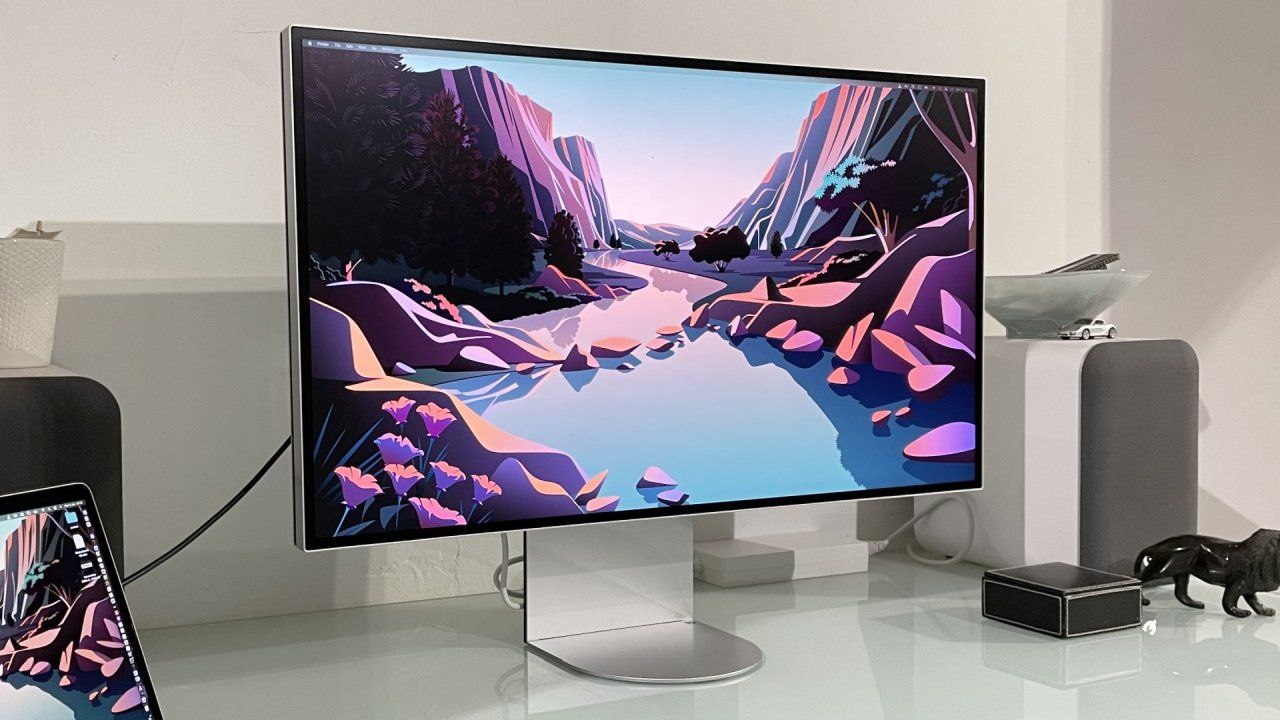
TECH REVIEW – The LG UltraFine 6K Evo 32U990A looks, at first glance, like the kind of monitor that makes a creative professional lean forward immediately: 32 inches, native 6K resolution, 224 PPI pixel density, a Nano IPS Black panel, Thunderbolt 5, and a serious connectivity package. Reality is more complicated. This display is brutally sharp and a serious tool for work, but its 60 Hz refresh rate, limited HDR, and weaker contrast compared with OLED make it feel oddly old-fashioned in the current age of high-end displays.
The LG UltraFine 6K Evo 32U990A is not a gaming monitor, and it does not try to look like one. It is a professional high-DPI display aimed primarily at photo editors, video editors, graphic designers, publishing workflows, developers, and people working in a Mac-leaning environment. Its native 6144 x 3456 resolution means more than 21 million pixels, which is a huge jump over a standard 4K panel. A 4K display gives you roughly 8.3 million pixels; here, you get more than two and a half times that number, while the physical size remains around 32 inches. This is not about a physically larger screen. It is about a much denser, much finer image.
The 224 PPI pixel density is the monitor’s strongest weapon. A 32-inch 4K panel sits around 140 PPI, which already looks good, but the LG UltraFine 6K Evo 32U990A plays in a different class. Text is razor-sharp, interface elements look clean, thin lines are precise, and high-resolution photos, illustrations, 4K videos, and complex editing layouts all have more room to breathe. The clever part is that you can view or edit 4K content at full native resolution while still having space left for timelines, toolbars, color panels, a browser, or notes.
This is where the monitor truly justifies its existence. If you spend your working day with text, images, video, UI elements, or multi-window workflows, 6K resolution is not just a visual luxury; it is a productivity tool. The real question is whether that extreme sharpness is enough to forgive the display’s less modern side: the 60 Hz refresh rate, the 5 ms GtG response time, the restrained HDR implementation, and the fact that OLED displays have now reset expectations around black levels, contrast, and speed.

Minimalist Design With a Mac-Friendly Attitude
The LG UltraFine 6K Evo 32U990A clearly targets the clean, premium workstation aesthetic. Its slim bezels, minimalist silver-gray body, restrained shape, and stand design all speak to users looking for a high-resolution display next to a Mac mini, Mac Studio, or MacBook Pro. It is not a gaming display, not flashy, not an RGB monster, but a monitor designed for studios, offices, editorial desks, and creative workstations.
Aesthetically, the overall look works, but the materials do not reach the level of an Apple Studio Display or Apple Pro Display XDR. The mix of plastic and metal is decent, but it lacks the cold, dense, luxurious feel of Apple’s own displays. The external power brick is also less elegant, especially in a price category where every detail should feel studio-grade and properly integrated.
The practical side is strong, though. The stand offers useful adjustment, with height, tilt, and swivel all available for everyday work, and the 100 x 100 mm VESA support means it can also be mounted on an arm. That matters on a display like this, because in a professional workspace the exact monitor position can be just as important as the panel itself. The 32-inch size remains manageable and does not dominate the desk like a 45-inch ultrawide, but thanks to 6K, it still feels like a much larger workspace.

Thunderbolt 5 and Connectivity: No Shame Here
Connectivity is one of the LG UltraFine 6K Evo 32U990A’s biggest strengths. The two Thunderbolt 5 ports with 96 watts of power delivery are not just impressive on the spec sheet; they are genuinely useful. A compatible laptop can be connected with a single cable carrying display, data, and charging at once, while the monitor can function as a central dock. That is exactly the kind of simplicity a professional desktop setup benefits from.
DisplayPort 2.1, HDMI 2.1, and several USB-C ports are also available. Thunderbolt 5 is particularly important for users who work with multi-display, high-resolution chains or fast external storage. In 6K workflows, bandwidth is not a theoretical luxury. If you work with high-resolution assets, external drives, several devices, and a laptop workstation, this connectivity package can save real time and frustration.
In this respect, the monitor really does feel modern. It is a shame that other parts of the panel do not feel quite as current. Thunderbolt 5, 6K, and 10-bit color suggest a 2026 flagship workstation display, while 60 Hz refresh and IPS black levels feel closer to a previous era. It remains an excellent productivity screen, but the full package is not as flawless as the specification sheet might initially suggest.

6K Sharpness: The Monitor’s Main Weapon
The 6144 x 3456 resolution is the main reason the LG UltraFine 6K Evo 32U990A exists. The image is incredibly sharp, text is beautifully legible, photo detail is clean, and thin graphical elements are rendered with precision. This is not the kind of flashy technological advantage that makes everyone gasp when a game loads. It is more of a quiet luxury that you begin to appreciate after eight hours of daily work.
6K becomes especially useful when your workflow actually benefits from it. In video editing, 4K footage can be displayed at full resolution while the timeline and tools remain comfortably visible. In photography, you can see more detail at once. In graphic work, there is more precise canvas space. In development, huge amounts of code, documentation, and preview windows can fit on one panel. This is not just a sharper image; it is a denser information workspace.
That said, not everyone will feel the jump from 4K to 6K as dramatically. A 32-inch 4K monitor is already quite sharp, and if you are not actually working with high-resolution visual material, the difference may feel like a fine premium touch rather than a revolution. If you are sensitive to text clarity, want a macOS-style HiDPI experience, or simply want the cleanest possible 32-inch work image, this panel makes a very strong case for itself.

IPS Black Panel: Better Than Regular IPS, but Not OLED
The LG UltraFine 6K Evo 32U990A uses a Nano IPS Black panel with a 2000:1 contrast ratio. By IPS standards, that is good, and compared with conventional IPS monitors, it offers noticeably deeper blacks and better shadow separation. With 98 percent DCI-P3 coverage, 99.5 percent Adobe RGB coverage, and true 10-bit color, the monitor is well suited to creative work, photography, video, and more color-sensitive tasks when used in a properly calibrated environment.
The problem is that in the OLED era, the advantages of IPS Black do not always feel strong enough. Black is not truly black, contrast is not controlled per pixel, and dark scenes do not have the depth we now take for granted on a good OLED panel. The image is accurate, clean, and professional, but with dark content it looks flatter, lighter, and less dramatic than what modern high-end OLED monitors can deliver.
That is not necessarily a disaster, because this display is not primarily designed for cinematic HDR or gaming. For office and creative work, the stability, sharpness, color range, and burn-in-free nature of IPS Black may matter more than OLED contrast. But if you expect OLED-like blacks and a modern high-refresh experience alongside 6K resolution, you will be disappointed. This monitor is more of a precision tool than a visual fireworks show.

HDR and Motion: Where the Compromises Show
The VESA DisplayHDR 600 certification looks good in the specification list, but it should not be misunderstood. This is not a true high-end HDR display. The 600-nit HDR peak brightness and edge-lit backlighting, most likely with a limited number of zones, cannot do what a mini-LED or OLED panel can. HDR content is supported, and the brightness may be enough for certain creative checks, but the image will not have the same depth, drama, and contrast as a display truly built around HDR.
At this price, that hurts. The monitor performs well in SDR, has strong color, and looks excellent in terms of sharpness, but HDR feels more like a box ticked than a core strength. The real tension between bright highlights and dark detail is missing, and black levels cannot compete with OLED. For watching HDR movies, gaming, or visually dramatic media consumption, this will not be the first choice.
The 60 Hz refresh rate is also divisive. For professional work it remains acceptable, and at 6K it is technically understandable, but in 2026, 60 Hz feels slow. Even in normal desktop use, scrolling, moving windows, and general system responsiveness benefit significantly from 120 Hz or more. The 5 ms GtG response time is not terrible, but it is not modern premium performance either, especially when OLED monitors deliver near-instant response and much higher refresh rates.

Price and Hungarian Market Position
In Hungary, the LG UltraFine 6K Evo 32U990A is clearly a premium monitor. At the time of writing, the more official Hungarian price is around HUF 699,990, while some retailers may occasionally list it closer to the HUF 500,000 range. With this model, however, the sticker price is not the only thing that matters. Warranty, exact model number, shipping terms, return policy, and confirmation that it is indeed the 32U990A-S 6K Thunderbolt 5 model are all crucial.
This price bracket is brutally competitive. For this kind of money, you can find excellent 4K OLED monitors, high-refresh gaming displays, color-accurate professional panels, and multi-monitor-friendly alternatives. The LG UltraFine 6K Evo 32U990A only makes full sense if 6K resolution and Thunderbolt 5 are genuinely essential. If you simply want a beautiful, fast, high-contrast premium monitor, a 4K OLED may easily deliver a better experience for less money.
If, however, you specifically need a brutally sharp display for high-resolution creative work, a Mac-friendly studio desk, 4K video timelines, photography, or graphic work, the price begins to look different. It is not cheap. In fact, it is very expensive. But compared with the world of the Apple Pro Display XDR, it is still much more accessible. You just have to remember that in some areas, it is not playing in the same league: HDR, materials, and prestige are not on the same level.

Who Is It For, and Who Is It Not For?
The LG UltraFine 6K Evo 32U990A is for people who know exactly why they need 6K. If you spend your day working with text, images, video, creative software, and multi-window workflows, and if razor-sharp rendering matters, this monitor can be a very strong companion. Thunderbolt 5, 96 W power delivery, plenty of USB-C options, and the huge resolution together create an excellent modern workstation foundation.
It is not built for people who mainly want to play games, watch HDR movies, or enjoy OLED-like contrast. Because of its 60 Hz refresh, 5 ms response time, DisplayHDR 600-level HDR, and IPS black levels, this monitor is only a secondary option for gamers and movie lovers. A fast OLED gaming monitor will feel much more modern in motion, contrast, and visual impact, even if it comes nowhere near this level of productivity sharpness.
This is therefore a very strong display for a narrow target audience. It is not a universal miracle monitor, but a specialized high-resolution work tool. If that is what you expect from it, it can give you a lot. If you assume that the high price automatically means flagship performance in every area, the compromises will become obvious quickly.
Verdict: A Razor-Sharp Work Tool, Not a Modern All-Rounder
The LG UltraFine 6K Evo 32U990A is both impressive and slightly frustrating. Its 6K resolution, 224 PPI pixel density, excellent text clarity, strong color handling, and Thunderbolt 5 connectivity make it a serious professional display. For creative work, high-resolution content creation, and precise text and visual tasks, it can be a genuinely strong choice.
At the same time, the 60 Hz refresh, limited HDR, weaker contrast compared with OLED, not-quite-premium material quality, and high price make it difficult to love without reservations. This is not the monitor that will win everyone over instantly. It is the kind of display that can be almost perfect for one very specific user, while being too expensive, too slow, or simply too specialized for everyone else.
If your work truly benefits from 6K resolution, and if a Thunderbolt 5 single-cable professional setup matters more than 120 Hz, OLED contrast, or spectacular HDR, then the LG UltraFine 6K Evo 32U990A makes sense. If, however, you want the most visually exciting, fastest, most modern display experience for your money, 4K OLED alternatives are extremely tempting.
-Gergely Herpai “BadSector”-
Pros:
+ Astonishingly sharp 6K image and 224 PPI pixel density
+ Excellent Thunderbolt 5 and USB-C connectivity
+ True 10-bit color handling, strong for creative work
Cons:
– 60 Hz and 5 ms response feel slow in 2026
– HDR and contrast cannot compete with OLED
– Very expensive for such a specialized display
Manufacturer: LG
Model: UltraFine 6K Evo 32U990A-S
Category: 32-inch 6K professional monitor
Release: 2025/2026
LG UltraFine 6K Evo 32U990A
Design - 8.4
Display - 9
For Gamers - 7.2
For Productivity - 9.2
Price/value - 7.6
8.3
EXCELLENT
The LG UltraFine 6K Evo 32U990A can be a fantastic work tool for those who genuinely benefit from 6144 x 3456 resolution, 224 PPI sharpness, and Thunderbolt 5 connectivity. The image is extremely clean, text looks beautiful, and the workspace is huge, but the 60 Hz refresh rate, limited HDR, and weaker contrast compared with OLED prevent it from being a modern all-rounder. It is a very good monitor, but only for users who specifically need this type of 6K professional display.











Leave a Reply