
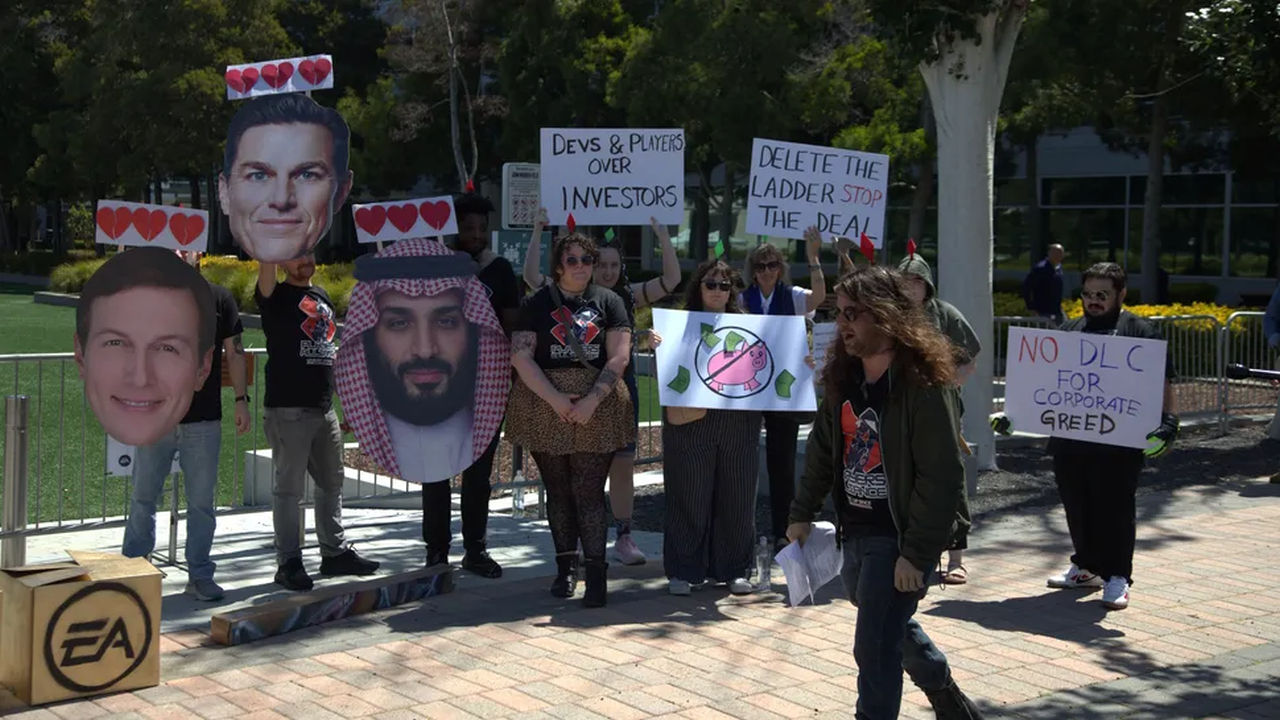
Several Electronic Arts employees fear that Saudi control could bring layoffs, tighter content expectations, and less creative freedom. The publisher’s leadership previously insisted that its values and creative independence would remain intact.
Electronic Arts completed its $55 billion move into private ownership in early August. The consortium is led by Saudi Arabia’s Public Investment Fund, whose 93.4% stake effectively gives it control of the publisher, while Silver Lake and Affinity Partners hold the remaining minority shares.
EA has now left the Nasdaq and Andrew Wilson continues as chief executive. Those points of continuity have not calmed staff concerns, particularly because the deal saddled the company with substantial debt and has been followed by talk of cost reductions that could translate into further job losses.
Creative independence is part of the concern
The anonymous EA workers who spoke to PC Gamer are not only worried about employment. Some believe the Saudi state’s political and social priorities could eventually shape which projects receive approval and what kinds of stories can appear in series such as The Sims and Mass Effect.
“It is certainly hard to feel good about being bought out by a regime that is very much at odds with progressive society,” one employee said.
Another worker suggested that any influence may be quieter than direct censorship. Ideas could simply fail at the greenlight stage: “Projects just won’t get signed because they don’t align explicitly with what the Saudi government wants.”
EA has promised that its values will not change
Since the acquisition was announced, EA has repeatedly said its mission, cultural principles, and creative autonomy will continue. Some employees, however, argue that only future greenlight decisions, personnel changes, and possible restructuring will show how durable those promises really are.
The financing behind the buyout adds to the unease. EA took on considerable debt at a time when the games industry has already endured years of layoffs, leaving staff to fear both job cuts and a stronger preference for safer, less adventurous projects that promise predictable returns.
Source: PC Gamer






![The Alighieri Circle: Dante’s Bloodline: A Divine Drama Amid September’s Flood of Games [VIDEO]](https://thegeek.games/wp-content/uploads/2026/08/theGeek-Alighieri-Circle-1280x720-1-302x180.jpg)
![Clive Barker’s Hellraiser: Revival Is Already in the Works for the Nintendo Switch 2! [VIDEO]](https://thegeek.games/wp-content/uploads/2026/08/theGeek-Hellraiser-Revival-1280x720-1-302x180.jpg)
![Head to the Pondverse in The James Pond Legacy: The Pond Is Not Enough [VIDEO]](https://thegeek.games/wp-content/uploads/2026/08/theGeek-James-Pond-Legacy-1280x720-1-302x180.jpg)





Leave a Reply