
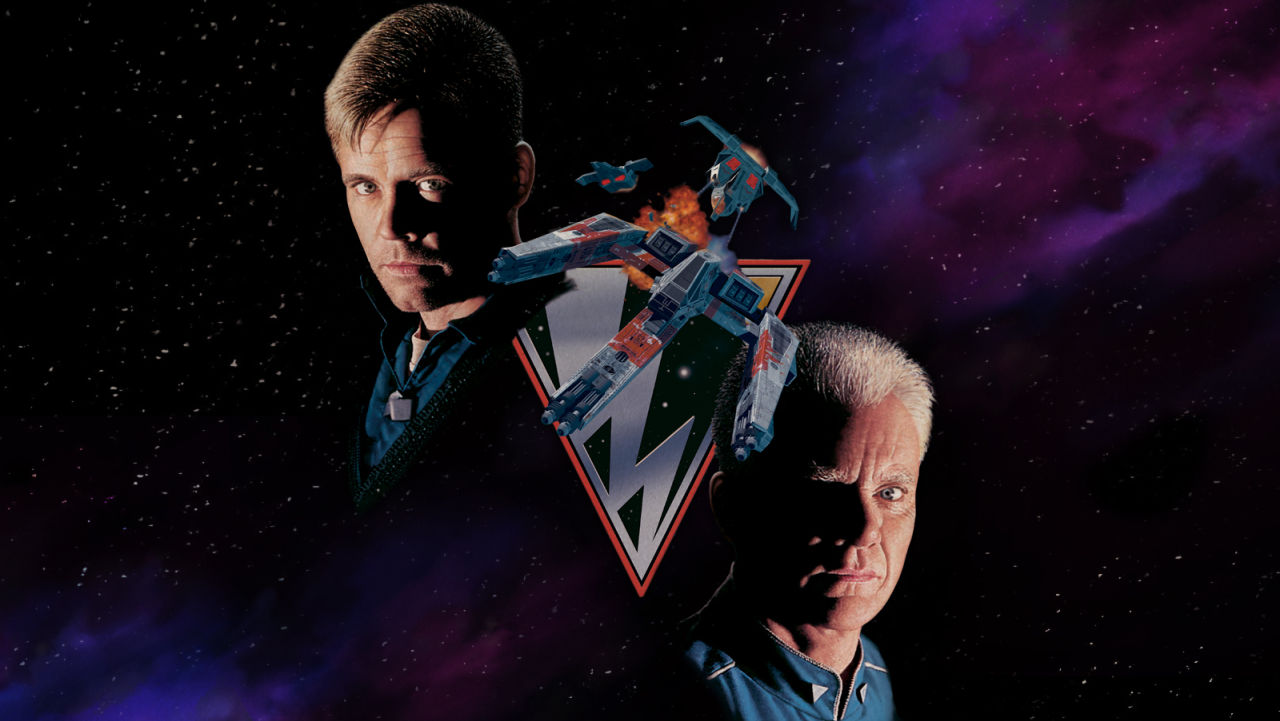
RETRO – Back in 1996, Wing Commander IV: The Price of Freedom arrived on PC with the confidence of a game that wanted to prove something big. Chris Roberts and Origin Systems were not just making another space shooter; they were trying to show that a video game could also be an interactive space opera, a full-blown sci-fi movie, a military drama, and a nerve-testing cockpit simulator all at once. The fourth main entry in the series moved away from the war against the Kilrathi and aimed at a messier question: what happens after the great victory, when peace does not bring relief, but suspicion, old scars, and a conflict where the enemy is no longer safely alien?
Wing Commander IV: The Price of Freedom feels almost unreal today as a snapshot of its time. It came spread across six CD-ROMs, was made on a budget of around 12 million dollars, and chased its Hollywood ambitions so seriously that its live-action scenes were filmed on real sets with 35 mm film. This was not the awkward side of the FMV era, where two actors stood blinking in front of a cheap backdrop before the game cut to a few ugly minutes of shooting. This was Mark Hamill, Malcolm McDowell, John Rhys-Davies, Tom Wilson, Jason Bernard, Mark Dacascos, Robert Rusler, and several other familiar faces acting in a space drama that clearly had money, ambition, and that very specific mid-1990s belief that the CD-ROM was not just storage, but a doorway to the future.
The story is set in 2673, four years after the Kilrathi War has ended. Christopher Blair, the former war hero, has stepped away from all of it and settled into farming, seemingly with no desire to be dragged back into history’s grinder. Of course, peace does not leave him alone for long. Tensions between the Terran Confederation and the Union of Border Worlds keep rising, civilian ships come under attack, mysterious fighters appear, and Blair soon finds himself aboard a carrier once again. The old order has collapsed, the new one has not yet taken shape, and soldiers, survivors, politicians, pirates, battered fleets, and leftover wartime instincts all start drifting toward disaster. Slowly, the game asks a question far more uncomfortable than any Kilrathi ambush: what is freedom really worth if we begin betraying it the moment peace arrives?

Six Discs, Real Sets, and an Era Obsessed With Going Cinematic
Wing Commander III: Heart of the Tiger had already made it clear that cinematic storytelling was not just decoration for the series. It was the main event. The fourth game took that idea and pushed it even harder, with almost industrial confidence. Development was still handled by Origin Systems, Electronic Arts published it, and Chris Roberts had become closely tied to the dream that a player sitting at a PC should not simply clear missions, but feel like they had been dropped into the middle of a science-fiction epic. Even at the time, the scale seemed excessive: six CD-ROMs, long live-action sequences, a recognizable cast, military briefings, carrier-deck conversations, and enough video material to be a technical spectacle on its own.
That excess, though, was a major part of the charm. Opening the box back then did not feel like buying an ordinary game. It felt more like unpacking a small industrial artifact, complete with sleeves, discs, manuals, and the sense that something unusually large was happening. The PC scene of the 1990s had a real taste for these massive productions. You installed the game, swapped discs, wrestled with sound cards, tweaked memory settings, and when everything finally worked, a world opened up on the monitor with a sense of scale that usually belonged to cinema or VHS tapes.
The later DVD-ROM edition deserves a special mention. Because the original scenes were shot on film, the video material held up better in later rereleases than many other FMV experiments from the same period, especially those trapped in poor digital quality. The DVD-quality version remains one of the most interesting ways to revisit this strange space theater. The actors’ faces, the sets, the costumes, the military chambers, and the carrier interiors suddenly feel less like pixelated memories and more like a lost season of an odd, overcommitted, but surprisingly lovable sci-fi series.
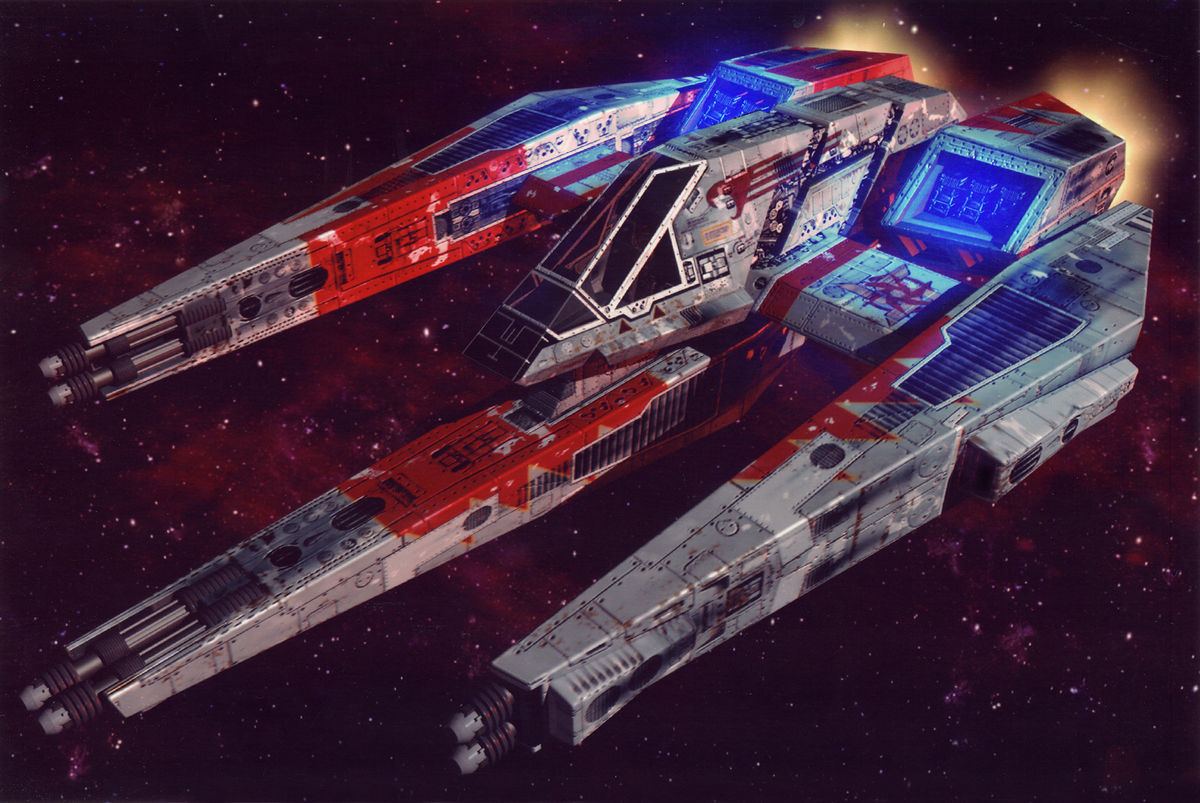
Blair Comes Back, Tolwyn Casts a Long Shadow, and the Border Worlds Ignite
The greatest strength of Wing Commander IV: The Price of Freedom is that it does not simply look for a bigger enemy after the third game. After the Kilrathi War, it would have been easy to pull another alien threat out of a drawer, add more space battles, and throw in a new wave of revenge-hungry monsters. Instead, the game takes a colder and more bitter route. This time, the conflict breaks out between humans. Some of the old heroes are worn down, others have learned the language of war far too well, and peace is not treated as a glorious reward. It is fragile, unstable, and already cracking.
Mark Hamill’s Christopher Blair is not presented as a flawless space hero who simply needs to climb back into a cockpit for everything to fall into place. He feels more like a veteran who has seen too much, lost too many people, and understands exactly how often noble ideals are driven by small, ugly, very human sins. Malcolm McDowell’s Admiral Geoffrey Tolwyn is the perfect opposite force. He is cold, authoritarian, elegant, and threatening, not because he acts like a ranting cartoon villain, but because he seems like the kind of man who has already justified every terrible choice to himself long before anyone else hears about it.
That is what makes the Border Worlds storyline work so well. The game is not simply asking you to shoot everything that flashes red in the targeting reticle. It keeps pushing you into uncomfortable positions. Who do you trust? How long do you obey? At what point does following orders become betrayal? Wing Commander IV is not a role-playing game, but the decisions between missions, the conversations, the choice of wingmen, and the branching mission structure make it feel far more personal than a straightforward space shooter. The player is not just destroying targets. They are taking a side, even when the game compresses that choice into a dialogue option or a split-second decision in flight.
When the Game Was Still a Game, but Wanted So Badly to Be a Movie
Looking at Wing Commander IV: The Price of Freedom today, one of its most fascinating contradictions is that the cinematic side has often aged more gracefully than the flying itself. The space combat still works, especially if you accept it on the terms of its era. The fighters can feel a little stiff, enemies can dance annoyingly around the reticle, missions can repeat their cruelty, and the visuals obviously no longer hit with the same force they had in 1996. Still, there is something here that many clean, overpolished modern spectacles often lack: weight. Taking off, choosing a loadout, bringing a wingman, and returning to the carrier all matter, because the next scene reminds you that you are not just a pilot. You are a character inside a larger drama.
That is why the game became more than a technical showcase. The join between missions and movie scenes sometimes creaks, but today that creaking is part of the appeal. Wing Commander IV feels like an expensive, overly serious, sometimes theatrical, but completely committed sci-fi miniseries that keeps getting interrupted by a space simulator. Or maybe it is the other way around: a space simulator so obsessed with cinema that it almost forgot where it started. Either way, that is exactly why it stayed memorable.
It is no surprise that the game still has a strong reputation among fans. It was well received on PC, and its awards and nominations showed that the industry understood something important was happening, even if this was not quite the future games would ultimately choose. The FMV craze faded, the magic of the CD-ROM wore off, and games moved in different directions. Yet Wing Commander IV: The Price of Freedom remained as one of the great strange monuments of its era: a game where the price of freedom was not a score, not loot, and not an achievement, but an afternoon spent swapping discs, surviving tense space battles, and feeling, surprisingly strongly, that the PC really did try to swallow Hollywood whole for a moment.
-Herpai Gergely „BadSector”-

![Driver: Parallel Lines – Repainted, Waxed and Souped Up [RETRO – 2006]](https://thegeek.games/wp-content/uploads/2026/07/theGeek-Driver-Parallel-Lines-302x180.jpg)


![Tomb Raider: Legend - Back on Top [RETRO-2006]](https://thegeek.games/wp-content/uploads/2026/04/theGeek-Tomb-Raider-302x180.jpg)




Leave a Reply