
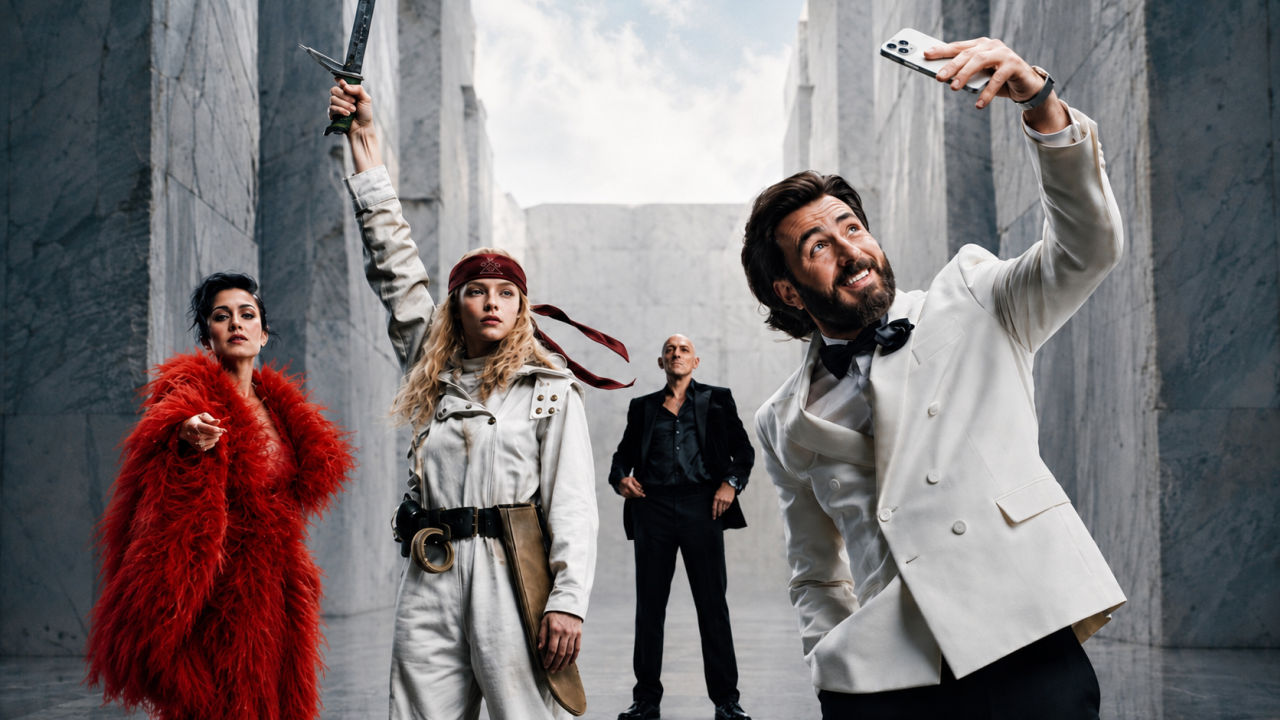
Sacrifice – VIP Access to the Apocalypse
MOVIE REVIEW – Chris Evans plays a slightly battered movie star trying to revive his career at a climate charity gala in Greece, only for Anya Taylor-Joy’s armed eco-prophet to announce that ritual human sacrifice has been added to the evening’s schedule. Romain Gavras uses Sacrifice to take swings at Hollywood, tech billionaires, elite climate guilt, radical activism and the very modern belief that any global crisis can be solved if everybody talks about it loudly enough. The movie is strongest when Gavras stops explaining and lets Matias Boucard’s images, GENER8ION’s score, Taylor-Joy’s fanatical calm and Evans’ increasingly uncertain face do the work. Unfortunately, he periodically decides that every social problem on Earth still needs his personal attention before somebody finally falls into the damn volcano.
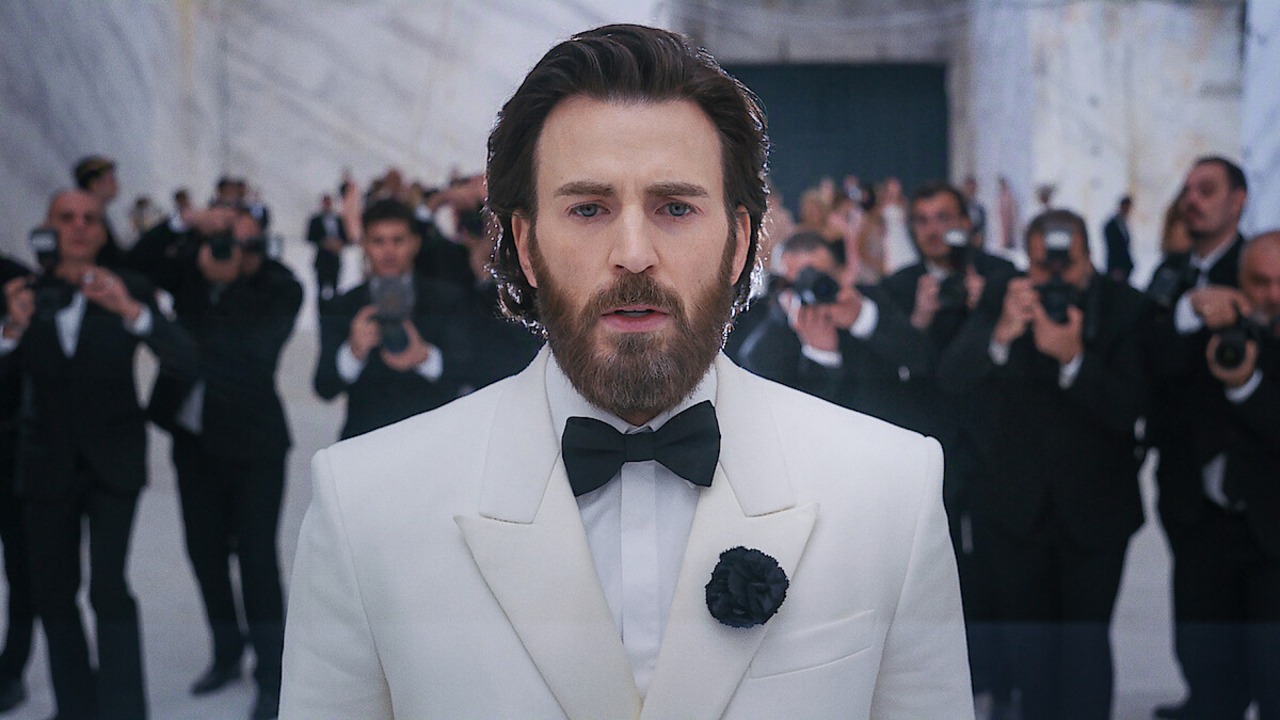
Mike Tyler used to be a genuine movie star, and his opening scenes make it clear that nobody considers this fact more important than Mike himself. After an embarrassing red-carpet meltdown, he arrives on a Greek island hoping to claw back the kind of fame that once made cameras automatically turn in his direction. Chris Evans clearly enjoys not having to play America’s moral compass, and he treats Mike’s vanity less as grand evil than a lifestyle that has hardened over years. The man has simply become accustomed to entering every room as the main character, which makes it especially unpleasant when the apocalypse casts him as just another name on a list.
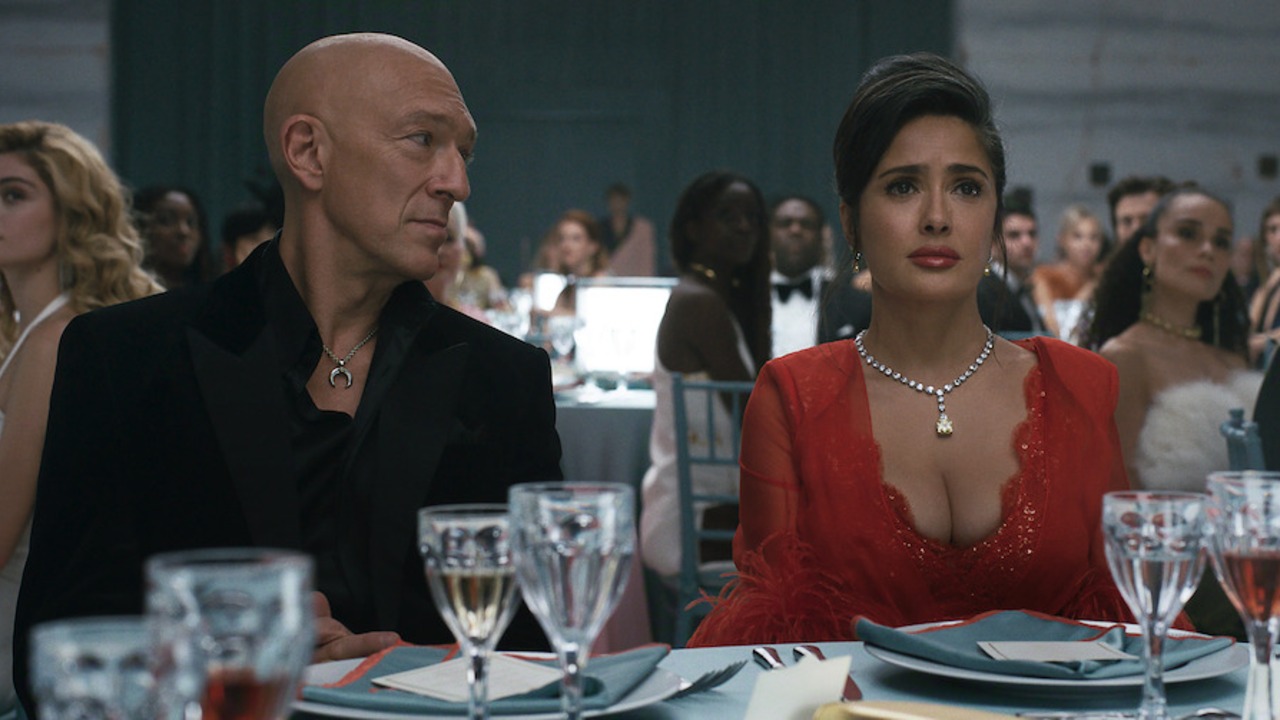
The climate gala is a perfect setting for that ego. Important people have gathered for an important cause, wearing expensive clothes inside surroundings whose carbon footprint probably has its own personal assistant. Gavras understands the natural comedy of this environment and, during the opening stretch, does not need to tell us that these people are hypocrites; listening to them discuss saving the planet while behaving as though nothing should disturb dinner already does the job. Vincent Cassel’s Ben slides into the room effortlessly, the sort of tech billionaire who could plausibly develop an app for climate change and then put oxygen behind a monthly subscription in version two.
Salma Hayek receives remarkably little to do as Ben’s wife. She is not bad, she simply has so little material that wasting an actress of her stature starts to look almost more extravagant than the gala itself. The cast is packed with famous names, but the script does not always find actual characters to go with them, something that becomes relevant again when John Malkovich arrives much later. Gavras occasionally appears to collect stars with the same enthusiasm that he collects social themes: if there is still room somewhere, add another.
Charity Is Lovely Until You’re the Donation
Joan and her armed followers turn the evening into something considerably less conventional. Taylor-Joy’s character does not demand money, transportation or political concessions; she calmly announces that a nearby volcano is about to erupt and catastrophe can only be prevented if several chosen people sacrifice themselves. Mike is naturally among them, giving his long-awaited Hollywood comeback a rather different definition. The scientific argument contains holes large enough for a tour bus, but Joan discusses the matter with the serene certainty of somebody describing the next course on the menu.
The first hostage scenes work because the elegant worldview of the gala guests disintegrates with impressive speed. Collective responsibility is a wonderful concept while “collective” means contributing alongside everybody else, preferably through a transfer with tax benefits. Once Joan’s version requires adding your own body to the contribution, individual rights suddenly receive a great deal more attention. Gavras can be genuinely nasty here, and he does not need to manufacture jokes because watching privileged people rapidly construct moral reasons for their own survival is funnier than anything a punchline could add.
Joan becomes particularly difficult because none of the usual bargaining tools apply to her. Mike comes from a world where celebrity, money, influence and contacts eventually solve something, whereas Joan accepts none of them as useful currency. She does not want a selfie, a payment or better media access; she wants Mike to walk up a mountain and become part of some ritual ecological fire-prevention scheme. It turns out that fame provides surprisingly poor protection against a person who does not care that you are famous.
Anya Taylor-Joy’s Stare Could Run a Cult by Itself
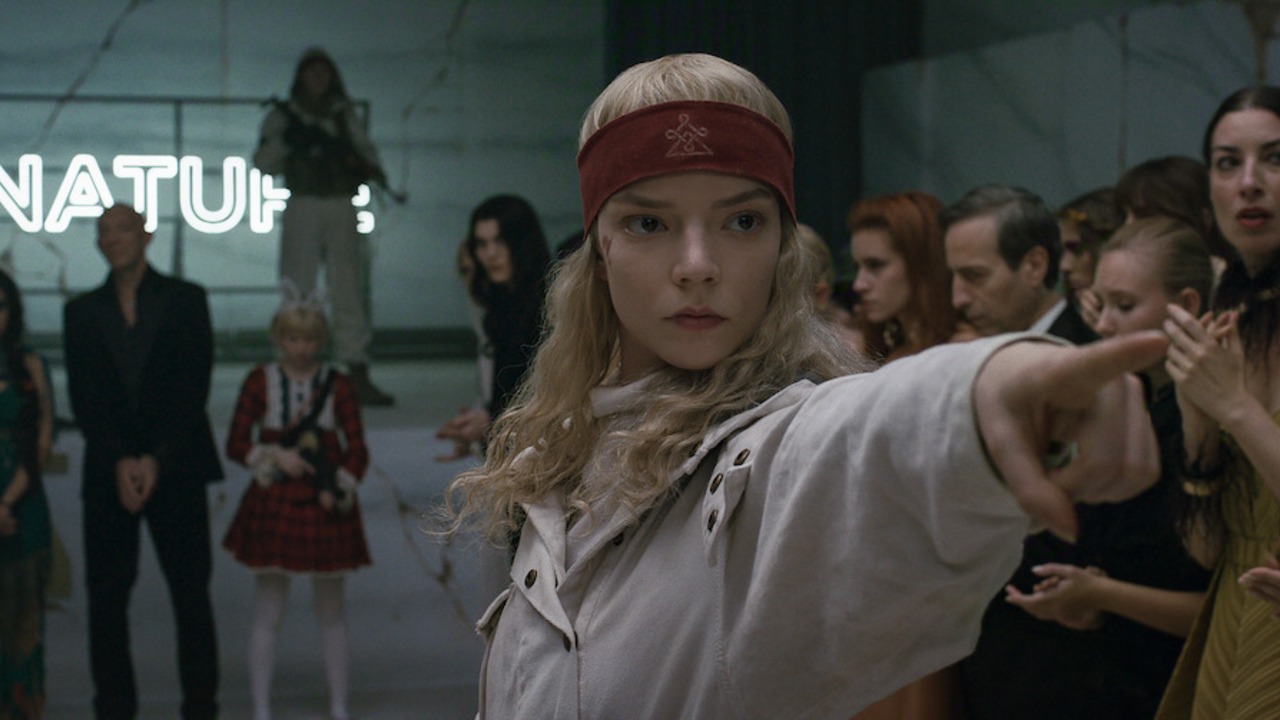
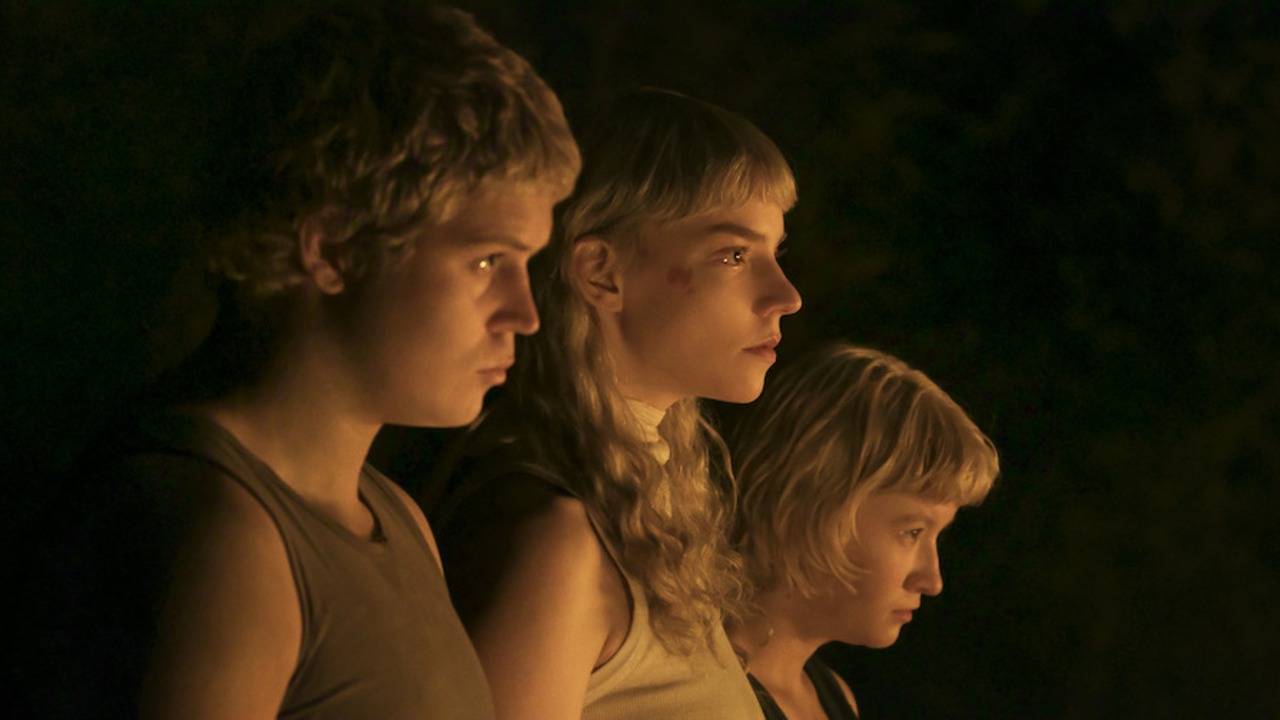
Taylor-Joy is one of the film’s strongest elements precisely because she refuses to reduce Joan to a lunatic. The woman has complete confidence in what she is doing, and inside her own logic every act of cruelty remains perfectly consistent. She is dangerous not because she is unpredictable, but because she knows exactly what she wants and stopped wondering whether she might be wrong a long time ago. Taylor-Joy plays every shade of that fanatical calm, and Gavras understandably keeps the camera on her face for long stretches.
Against the Greek landscape, Joan gradually begins to resemble a mythological figure. There is something of an ancient priestess, a modern cult leader and a TED Talk in which somebody accidentally replaced the presentation remote with an assault rifle. The problem does not come from Taylor-Joy but from Gavras gradually asking one character to represent practically everything the movie wants to discuss. Joan becomes climate anxiety, generational rage, religious fanaticism, anti-capitalist anger, personal trauma and the darkest possible version of modern activism while somehow carrying Greek mythology at the same time.
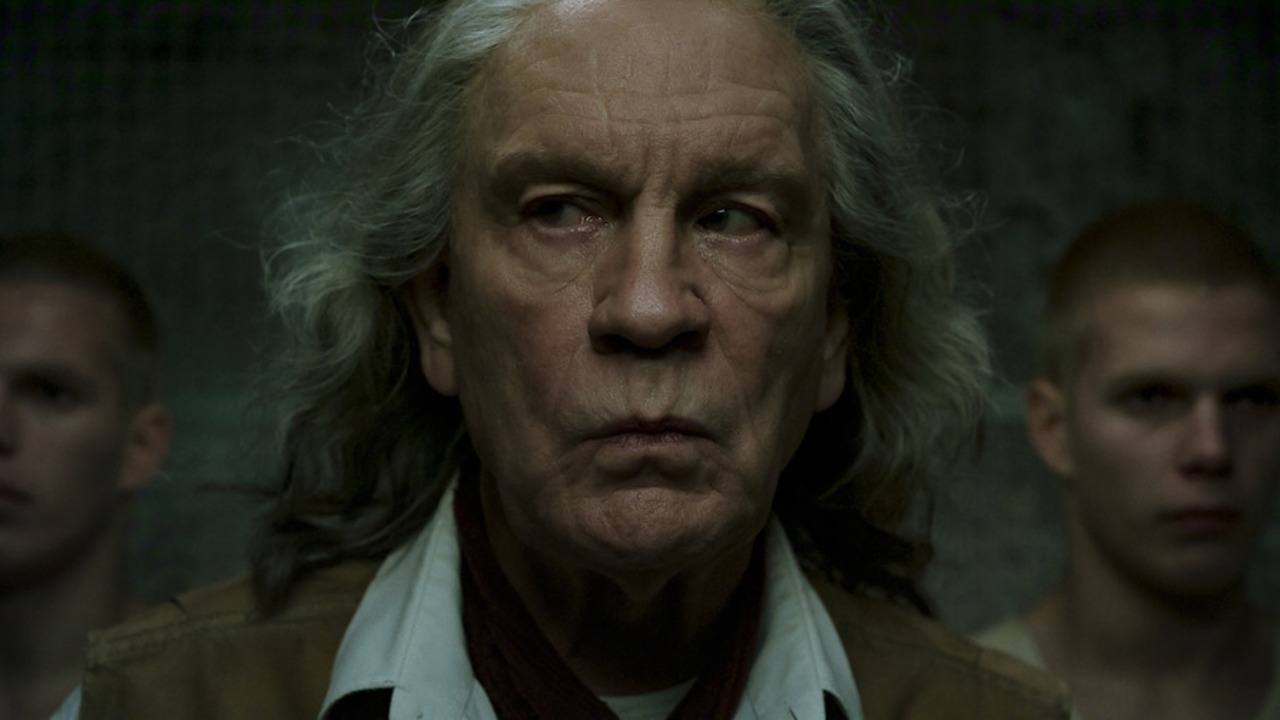
John Malkovich’s late appearance as Joan’s father is therefore interesting and problematic in equal measure. Malkovich can suggest with a single look that he knows more about the previous hour than everyone else combined, and the father-daughter relationship finally gives Joan’s obsession something personal. By that stage, however, so many explanations and symbols are already orbiting the character that the family angle adds another chair to an overcrowded table rather than organizing it. The film needs fewer themes at this point, not another good one.

Chris Evans Is Better When Nobody Needs Saving
Evans’ Mike begins as a target and gradually becomes something more interesting. Beneath the vanity sits a simple but effective fear: what happens to a man who built his life around his own importance when suddenly nobody cares who he is? Mike is used to his name opening doors, and now it merely determines where he appears on a sacrifice list. Evans understands this much better than the movie occasionally allows him to show.
The screenplay spends too long repeating that Mike is egotistical, insecure and terrified about his career. We understand that within the first twenty minutes, and Evans communicates far more through gestures than the direct satirical dialogue ever does. Once the movie begins removing words from him, Mike suddenly becomes much more human: no fresh celebrity joke is necessary when a frightened look already reveals that he has lost control of the story he used to tell about himself. Evans gives his best performance in the closing stretch almost without speaking.
That works particularly well opposite Joan. Taylor-Joy’s character appears increasingly certain with every step, while Mike understands less and less about what is happening to him. One holds on to belief so tightly that nothing else matters; the other gradually loses every familiar thing he once used for support. Gavras captures this contrast beautifully whenever he resists the urge to put another clever line between them.
The Rich, the Famous and Several Pre-Stuffed Targets
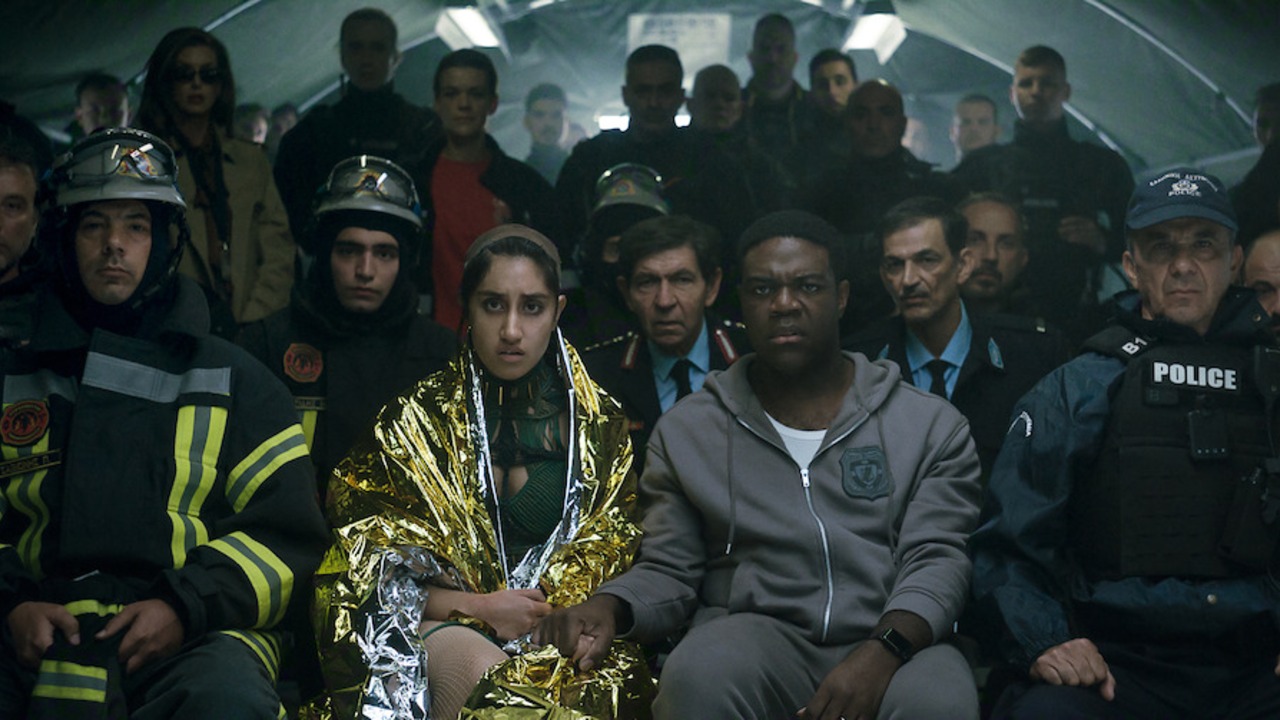
Sacrifice‘s social satire is considerably less consistent than its direction. Gavras chooses people whom audiences already arrive prepared to dislike: smug billionaires, vain celebrities, empty charity culture, radicalized activists. There are still sharp things to say about all of them, but it requires more than pointing out that wealthy people enjoy wealth and famous people enjoy themselves. At times the movie appears to be shooting at animals somebody already stuffed and positioned in front of the rifle.
It becomes far stronger whenever Gavras lets these people justify themselves. Ben does not merely want to survive because he is frightened; he genuinely believes his knowledge and power make his life more valuable than the average person’s. Mike cannot imagine who he would be without his fame, while Joan’s followers can commit increasingly brutal acts because every new cruelty fits neatly inside the story of the greater good. These moments move beyond caricature and into the much more uncomfortable human ability to build moral arguments around almost any selfishness or violence.
Gavras rarely stays with one of those ideas long enough. Just as a conflict begins becoming genuinely uncomfortable, another subject arrives and demands attention. Climate collapse brings economic inequality, which brings celebrity culture, then technological power, religion, mythology, and eventually a quick diagnosis of modern civilization itself. The problem is not that the ideas are bad; they keep interrupting one another.
The Camera Knows Exactly What It Wants
Matias Boucard’s cinematography holds the movie together with far greater confidence. The gala interiors are cold and clinically luxurious, so impersonal that they resemble a marriage between a private hospital and a contemporary art museum occupied by billionaires. After the takeover, those spaces gradually lose their reassuring elegance before the movie escapes them altogether. The Greek landscape opens up enormously, the characters shrink inside it, and the scale of the story finally stops being determined by speeches given by wealthy guests.
Gavras remains exceptional at staging movement and crowds. Nothing here matches the sheer technical bravura of Athena‘s famous eleven-minute opening shot, but he still knows exactly how to turn people, landscape and camera movement into a single rhythm. The long journey toward the volcano is not merely transportation; it gradually shifts the movie out of contemporary satire and into something more ritualistic, primitive and unsettling. This is also where the Greek mythological material finally begins to feel like more than decoration.
GENER8ION’s score contributes enormously to that effect. Electronic pulses, strings and choral voices collide with enough force that the music occasionally shoves the screenplay aside and takes control of the scene. When that sound meets Boucard’s images, Sacrifice suddenly feels far more coherent because nobody has to identify which social issue is currently under discussion. Something is deeply wrong, we can feel it, and that proves considerably more powerful than having somebody explain the same idea in three sentences.
Once the Explaining Stops, the Movie Gets Better
Toward the finale, Gavras gradually loosens the story’s grip on everyday logic. By then, the exact scientific details of Joan’s volcano theory have long ceased to matter, and the movie wisely stops behaving as though it merely needs better footnotes. The narrative transforms into something more surreal and instinctive, where Mike, Joan and the others become less like social types and more like figures in a contemporary Greek tragedy. The shift cannot retroactively solve every problem in the screenplay, but it finally pulls the movie in one direction.
Evans becomes almost silent here, and this is where he fully arrives at the character. His face carries fear, confusion, exhaustion and a late hint of self-awareness without requiring another joke about celebrity. Taylor-Joy, meanwhile, increasingly stops looking like an ordinary woman named Joan and starts resembling the physical embodiment of her own prophecy. Gavras finally trusts both performers and the environment rather than attaching commentary to every moment.
That may be the clearest glimpse of the film hiding inside Sacrifice all along. It is a strange, nasty modern myth about people desperately manufacturing meaning in a world they increasingly fail to understand. Mike does it through fame, Ben through power, Joan by constructing an entire religion around the crisis. Gavras never needed to install a separate explanatory sign beside each one.
Too Many Guests Invited to the Same Movie
Sacrifice is therefore neither dull nor remotely talentless, which makes it much more frustrating: the possibility of a better version remains visible almost constantly. There is a vicious chamber satire here about wealthy people who love discussing sacrifice until they become the sacrifice. There is a darker thriller about Joan’s fanaticism, a surprisingly effective Hollywood comedy built around Mike, and somewhere in the second half a surreal mythological movie begins pushing through the floorboards and occasionally looks more interesting than everything above it.
Gavras wants to keep all of them, and that is exactly why none gets enough room to fully develop. Taylor-Joy carries a slightly overloaded character brilliantly, while Evans is strongest once the screenplay stops trying to perform Mike on his behalf. Cassel creates a character from limited material, whereas Hayek and Malkovich mostly demonstrate how wasteful an all-star cast can become when the script does not have enough substance for everyone.
Still, dismissing the movie is difficult because Gavras’ visual power repeatedly drags it back. A composition, a procession, Taylor-Joy’s face or a sudden eruption in GENER8ION’s score can make us forget for several minutes how scattered the previous scene was. Then somebody begins explaining what is wrong with the modern world again, and the memory returns.
Sacrifice lands as an average film for me, but not the boring kind. It is the sort that leaves you irritated because it repeatedly showed exactly how good it could have been if Gavras had finished one thought before inviting four more to join it. The VIP access is real, the apocalypse looks terrific, but somebody should have organized the evening’s program a little better.
-Gergely Herpai „BadSector”-
Sacrifice
Direction - 6.8
Actors - 6.9
Story - 4.1
Visuals/music/sound - 8.3
Atmosphere - 6
6.4
FAIR
Sacrifice is visually striking, strange and occasionally extremely entertaining, with Anya Taylor-Joy and Chris Evans frequently finding more in their characters than the screenplay hands them outright. Gavras' imagery and GENER8ION's score can become almost hypnotic, but the social satire is far less precise, while the pileup of competing themes repeatedly steals oxygen from all of them. By the time the film finally shuts up and trusts its own images, it becomes obvious that it should have done so much earlier.

![Power, Intrigue and Execution: How the Tudors Lost Their Heads Comes to National Geographic [VIDEO]](https://thegeek.games/wp-content/uploads/2026/08/noguchi-tudorok-official-1280x720-1-302x180.jpg)





![Harry Potter Fame Did Not Pay the Bills – OnlyFans Saved Jessie Cave [VIDEO]](https://thegeek.games/wp-content/uploads/2026/08/theGeek-Jessie-Cave-OnlyFans-302x180.jpg)

![[GC 2026] 1001 Threads of Mizan: 1,001 Nights, a Co-op Fantasy Adventure [VIDEO]](https://thegeek.games/wp-content/uploads/2026/08/vnews-1001-threads-of-mizan_2026_08-25-26_001-300x365.jpg)
![[GC 2026] Metro 2039: The Renegade’s Moscow Adventure [VIDEO]](https://thegeek.games/wp-content/uploads/2026/08/vnews-metro-2039_2026_08-25-26_001-300x365.jpg)
![[GC 2026] Snoop Dogg Has Joined Hitman: World of Assassination! [VIDEO]](https://thegeek.games/wp-content/uploads/2026/08/vnews-hitman-snoop-dogg-300x365.jpg)
![[GC 2026] Aion 2 Will Be Slightly Delayed! [VIDEO]](https://thegeek.games/wp-content/uploads/2026/08/vnews-aion-2-300x365.jpg)