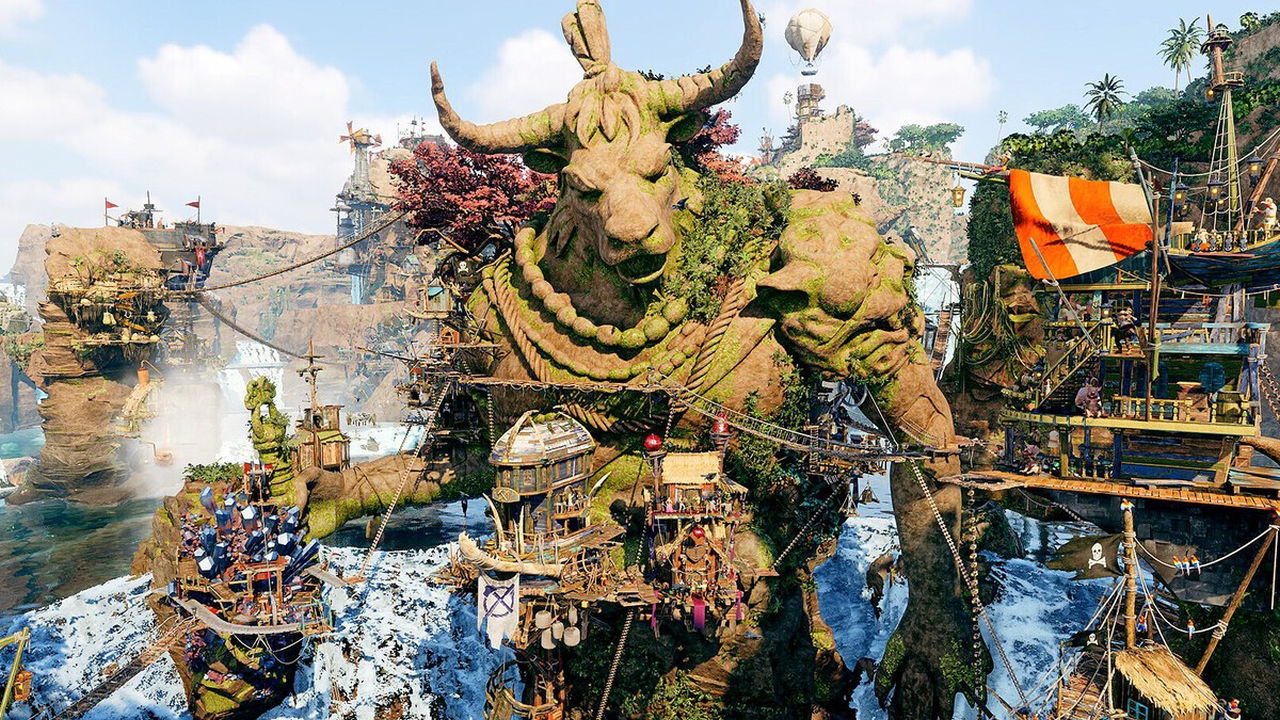
PREVIEW – Corsair Cove, the new strategy game backed by Hooded Horse, may look at first like a straightforward pirate city builder, but Limbic Entertainment’s project quickly shows that this is not another flat-map construction game. From the creators of Tropico 6 and Park Beyond, this new title combines free vertical building, naval exploration, and turn-based probability-driven ship combat in a way that pushes neatly beyond the genre’s usual comfort zone.
It is amusing to think that if 2022 was the year of the Wild West in games, 2026 may well be remembered as the year of pirates. Alongside Windrose, the upcoming Lovecraft-and-pirates blend The Mound: Omen of Cthulhu, and Assassin’s Creed IV: Black Flag Resynced, Corsair Cove has now entered the picture. The game is being published by Hooded Horse and developed by German studio Limbic Entertainment, a team whose name should sound familiar to strategy and management fans thanks to its work on Tropico 6 and Park Beyond.
Corsair Cove is not trying to reinvent the city builder, but it clearly understands where the formula can be bent. The setup is pure pirate fiction: the Spanish Empire sinks our ship, and the wreckage washes up on a forgotten island where the surviving crew must build a new Tortuga. From there, the familiar loop begins. You build homes for pirates, provide food and services, manage production chains, and keep the crew from turning against you. The difference is that the game does not treat the island as another flat grid waiting to be filled.
Breaking Down the Walls of Construction
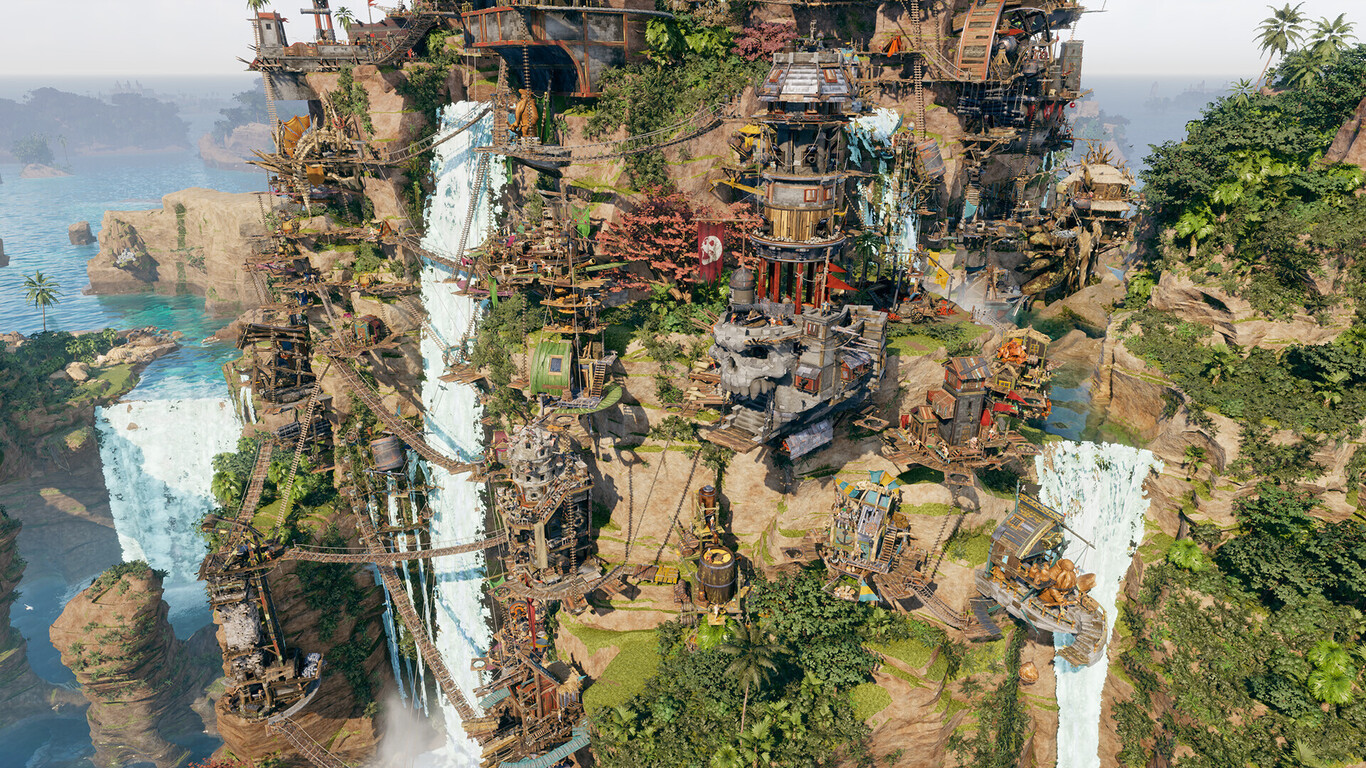
The strongest trick in Corsair Cove is its vertical freedom. Most city builders eventually push the player into walls, slopes, unusable terrain, or invisible limits, but here the islands are designed around wild elevation changes, steep cliffs, coves, mountainsides, and narrow building spaces that force creative solutions. The magic is not that you must terraform everything to make it usable. It is that the game lets you build on cliffs, throw suspension bridges between distant peaks, and create the kind of impossible pirate town that other strategy games would reject at the first click.
The islands change randomly in exploration mode, while the campaign mode uses one fixed island. That distinction matters, but the core idea remains the same: the terrain is not decoration, but both obstacle and opportunity. You are not merely placing huts and warehouses beside each other. You must adapt the entire transport and production system to the geography. Bridges, wooden stairs, improvised structures, and connecting paths are not just visual flavor; they become the backbone of the settlement because resources, workers, and finished goods all move through those routes.
The buildings are designed to fit naturally into whatever structure they are placed on, whether that means a cliffside, a ledge, or a high ridge. There are still rules. New buildings cannot be placed too far from the core camp, although new settlements can later be founded in other parts of the island, and important structures need to be connected by roads or wooden constructions. Resource buildings, such as woodcutting or stone extraction facilities, make warehouse placement and processing chains especially important, because a badly planned logistics network can slow the entire economy.
On paper, this is a simple concept, but in play it works because Corsair Cove does not create depth by burying the player in menus. Instead, the map itself becomes the strategic puzzle. That feels like a good direction for Limbic Entertainment. After the political and economic management of Tropico 6 and the construction fantasy of Park Beyond, the pirate theme fits the studio surprisingly well. In this world, it is not a problem if something looks slightly excessive, dangerous, or absurdly bolted together. For a pirate city, that is almost the point.
Our Island Is Our Home, but the World Is Much Bigger
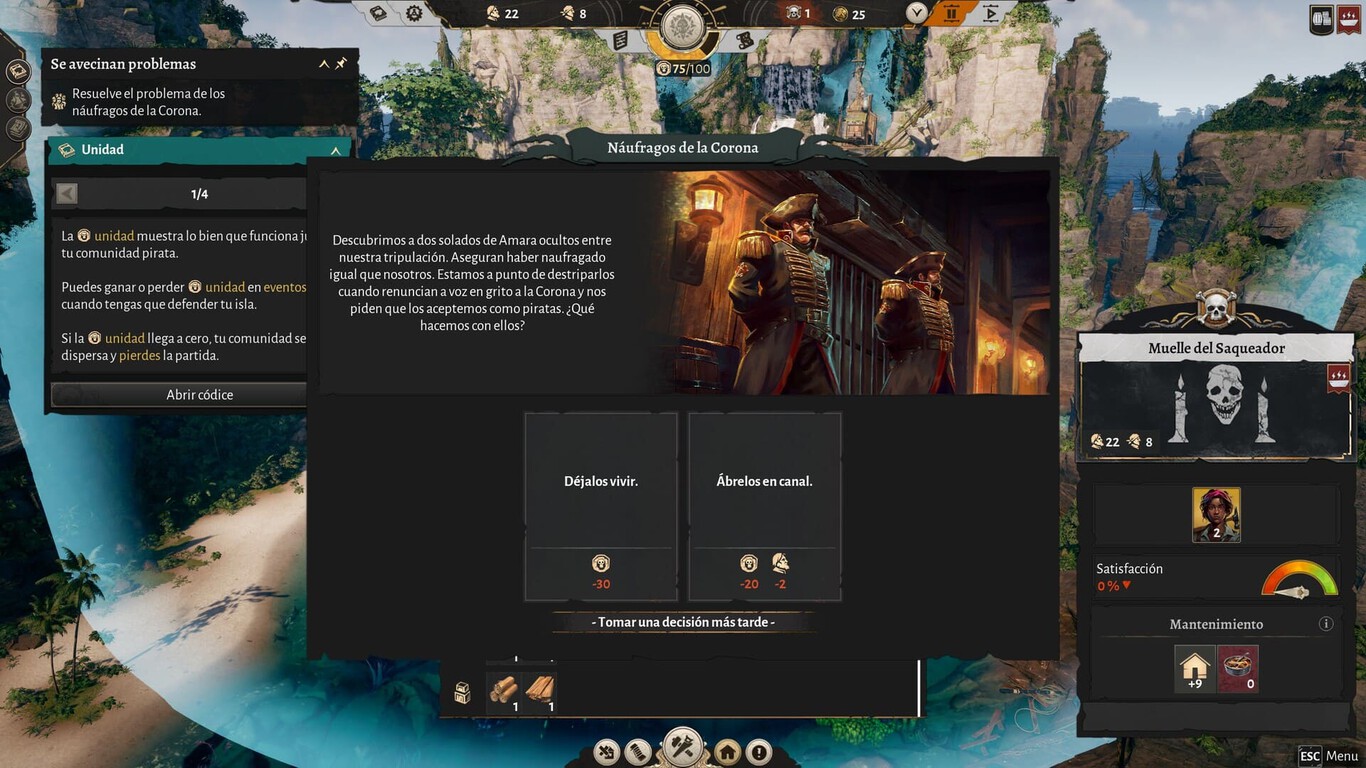
Another pleasant surprise in Corsair Cove is that Limbic does not limit the experience to managing a single settlement. The island is your home, but it is not the whole world. Other forces exist, your base can be attacked, and you can send ships out into the seas to find new locations, events, and opportunities. Exploration in its current form does not appear to be completely free movement. Instead, it seems tied to specific events and situations that gradually dispel the fog of war and unlock new points on the map.
This nautical expansion is not free. In campaign mode, the game guides the player through early shipbuilding, but in sandbox mode you need the right resources and key buildings before your first vessel can be launched. At first, you may have to make do with a small, battered ship that can later be improved, crewed more effectively, and eventually turned into a serious warship. That requires significant resources and many more hours of play, meaning naval power grows out of your land-based economy and logistics rather than appearing instantly.
This is where the game becomes a proper pirate strategy experience. Corsair Cove is not content with letting you build a pretty harbor. It also lets you defend what is yours, or spread fear across the high seas. During ship battles, the game shifts into a kind of pseudo-RPG with turn-based, probability-driven combat. The defending side chooses between attack or defense options, and actions do not come from cards or traditional skill trees. Instead, their values depend on your ship’s condition, upgrades, cargo, and crew.
Every maneuver has a cost, whether in hull condition, crew, or materials. If you mismanage your cargo, you can run out of firepower, but you can also risk boarding to steal materials from the enemy while exposing yourself to serious damage. Once the strategy is declared, the dice decide the outcome: the highest roll executes the maneuver, and if the attacker’s roll exceeds the defender’s, the difference becomes direct damage to the undefended ship. It is simple, but it adds just enough uncertainty to make naval battles feel like more than automatic exchanges.
Corsair Cove therefore feels like a rough diamond at this stage. It does not try to become bigger than the genre itself, but it has one strong idea and builds sensibly around it, connecting city building, production, exploration, and combat. The demo is set to arrive on Steam on May 28, while the full game does not yet have a confirmed release date. According to its official information, the game is coming to PC through Steam, the Epic Games Store, and the Microsoft Store, and it will also be available day one on PC Game Pass. If the demo lives up to the first impressions, Hooded Horse may have found another strong strategy title after Manor Lords.
-Gergely Herpai “BadSector”-
Source: 3DJuegos, Steam, Hooded Horse