
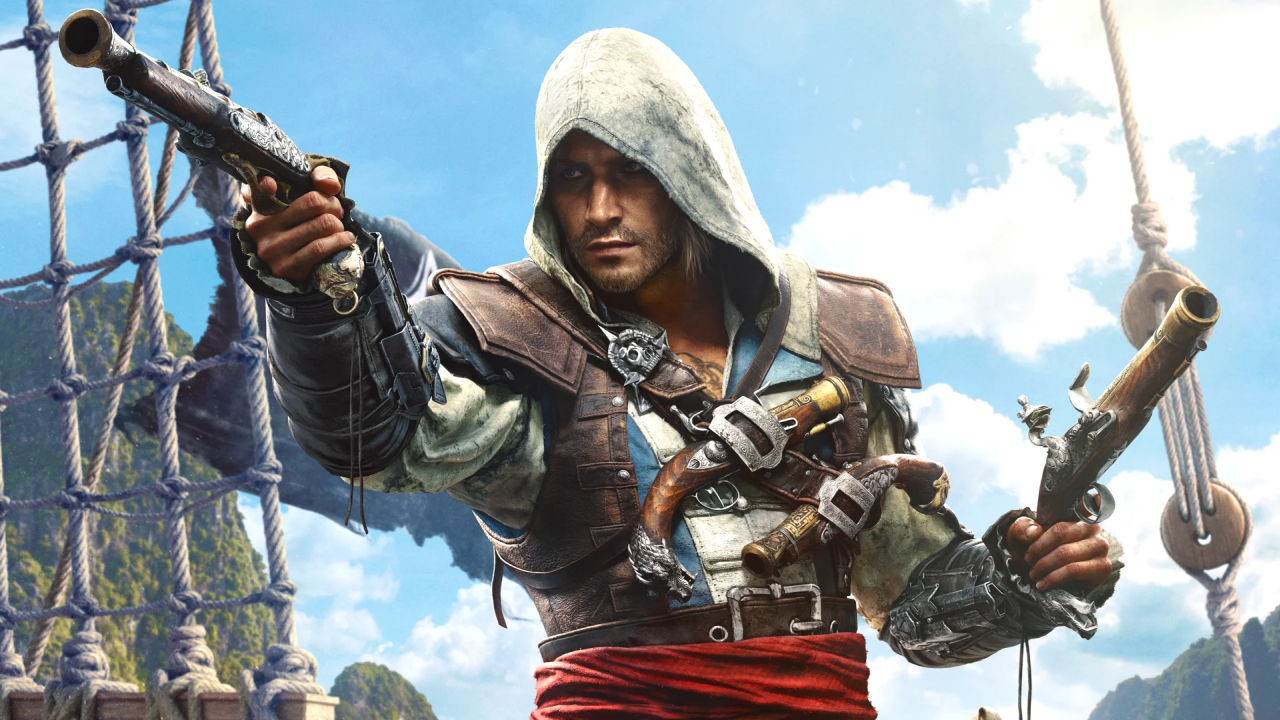
PREVIEW – It had been an open secret for quite a while that an Assassin’s Creed IV: Black Flag remake was in the works, but what many people may not have realized is that Assassin’s Creed Black Flag Resynced is far more than a simple visual touch-up, and definitely not another pivot toward RPG territory. Based on the behind-closed-doors presentation, Ubisoft hasn’t merely dusted off Edward Kenway’s pirate adventure — it has rebuilt it from the ground up, while being extremely careful about what absolutely should not be changed. From everything shown so far, Assassin’s Creed Black Flag Resynced looks genuinely promising.
Yes, the Assassin’s Creed IV: Black Flag remake is very real. By now, just about everyone had guessed as much, since a steady stream of small leaks turned it into one of Ubisoft’s worst-kept secrets of 2026. What fewer people knew, however, was that the French publisher invited the editorial staff of 3DJuegos, along with other members of the press, to a closed-door showcase a few days ago, where they offered a detailed look at what has been revamped, what has changed, and what has been removed from Assassin’s Creed Black Flag Resynced. And based on what was shown, this is clearly much more than a facelift — and certainly not a standard remaster.
Black Flag’s Remake Exists Because of Assassin’s Creed Shadows
Released 13 years ago, Black Flag was the Ubisoft game that made it very clear what kind of future the publisher envisioned for itself: large-scale open-world adventures set across historical locations, where movement and mechanics are shaped by the environment itself, while the narrative takes a slightly less central role. That direction has worked better at some times than others, but the ups and downs have only helped cement Assassin’s Creed IV as one of the strongest entries in the series. That is exactly why Ubisoft chose it as the franchise’s first remake, and also why the company had no intention of making drastic changes to the elements that made the original work so well.
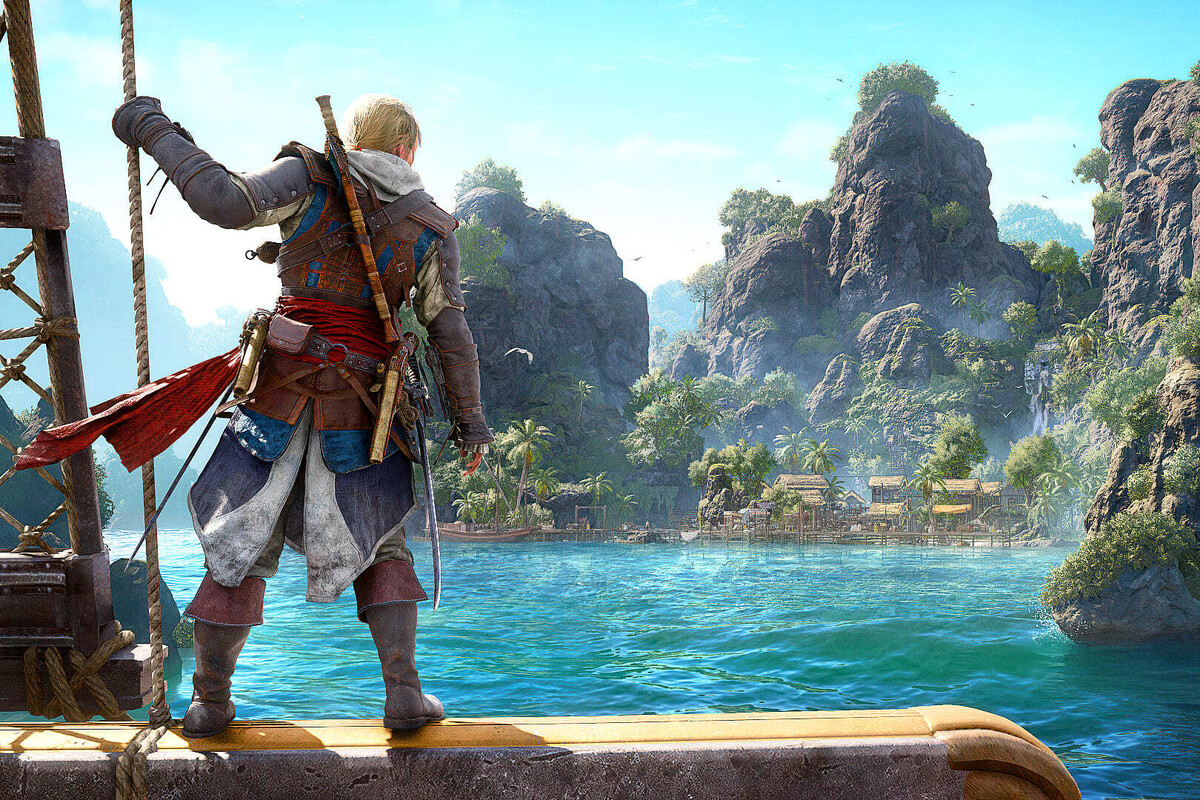
The story remains intact, Edward Kenway is still Edward Kenway, and Matt Ryan is returning to voice the character once again. The missions tied to the main storyline are not being changed either — at least not the parts that form the backbone of the narrative. What has changed is the world around them: everything is now being placed inside a more realistic, more detailed, and significantly more immersive game, and in that regard Assassin’s Creed Shadows plays a crucial role, because Ubisoft used the technology behind that game as the foundation for rebuilding Black Flag from the ground up.
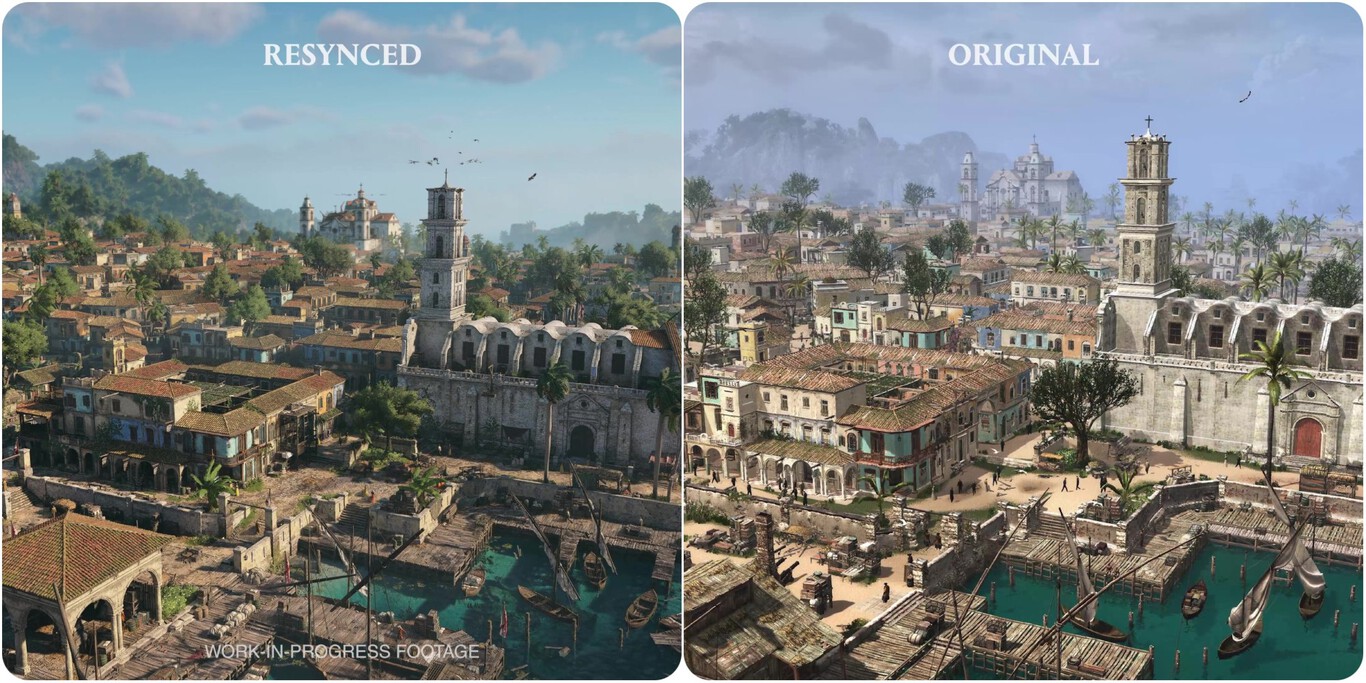
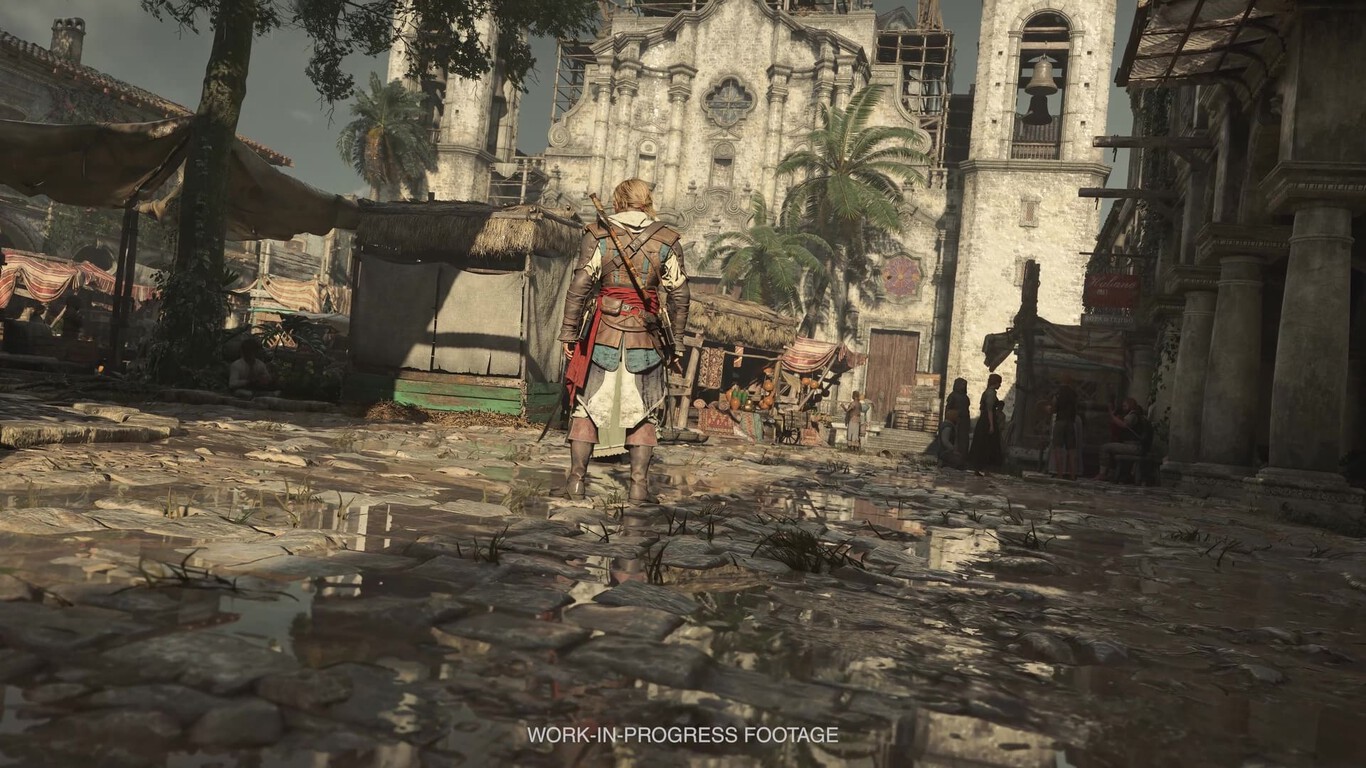
Although several original elements are being preserved — including some designs and audio — this is, technically speaking, a far more ambitious project than the fourth chronological Assassin’s Creed ever was in its original form. Using the latest version of the Anvil engine, the game adopts a new texture approach with higher resolution and richer detail, alongside a completely new lighting system built on techniques already seen in Shadows. On top of that, players can expect improved and more varied volumetric effects, denser vegetation, and remodeled buildings and structures with stronger architectural and thematic variety.
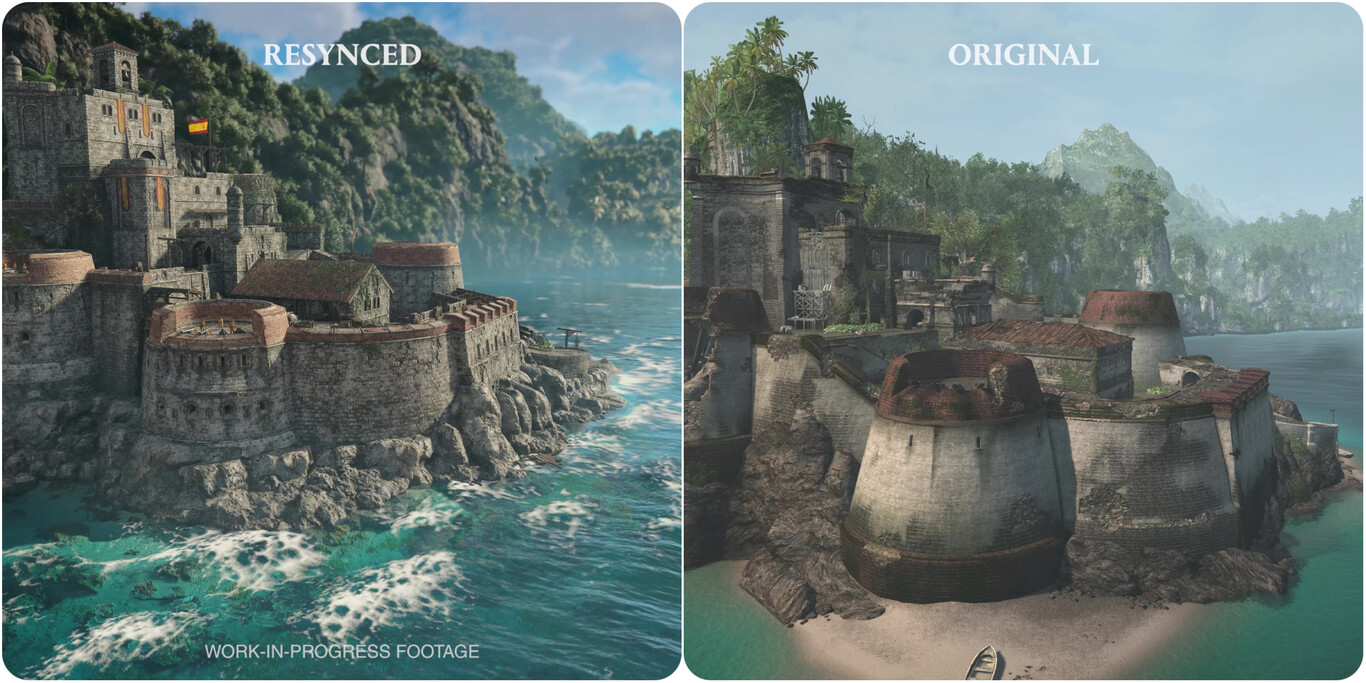
Ubisoft did not explicitly confirm it, but it seems highly likely that the game will also use RTGI — ray-traced global illumination. That could give the visuals a more polished, modern look, although, as we saw with Shadows on consoles and mid-range PCs, it may also come with a performance cost. According to Jean Guesdon, the original game’s creative director, Black Flag became so beloved in part because of its colorful, vibrant open world, and the new lighting changes that somewhat. The overall image is unquestionably prettier, but the color palette is more neutral now: the warm reddish tones of the original have been replaced by a brighter, cleaner, sharper visual style.
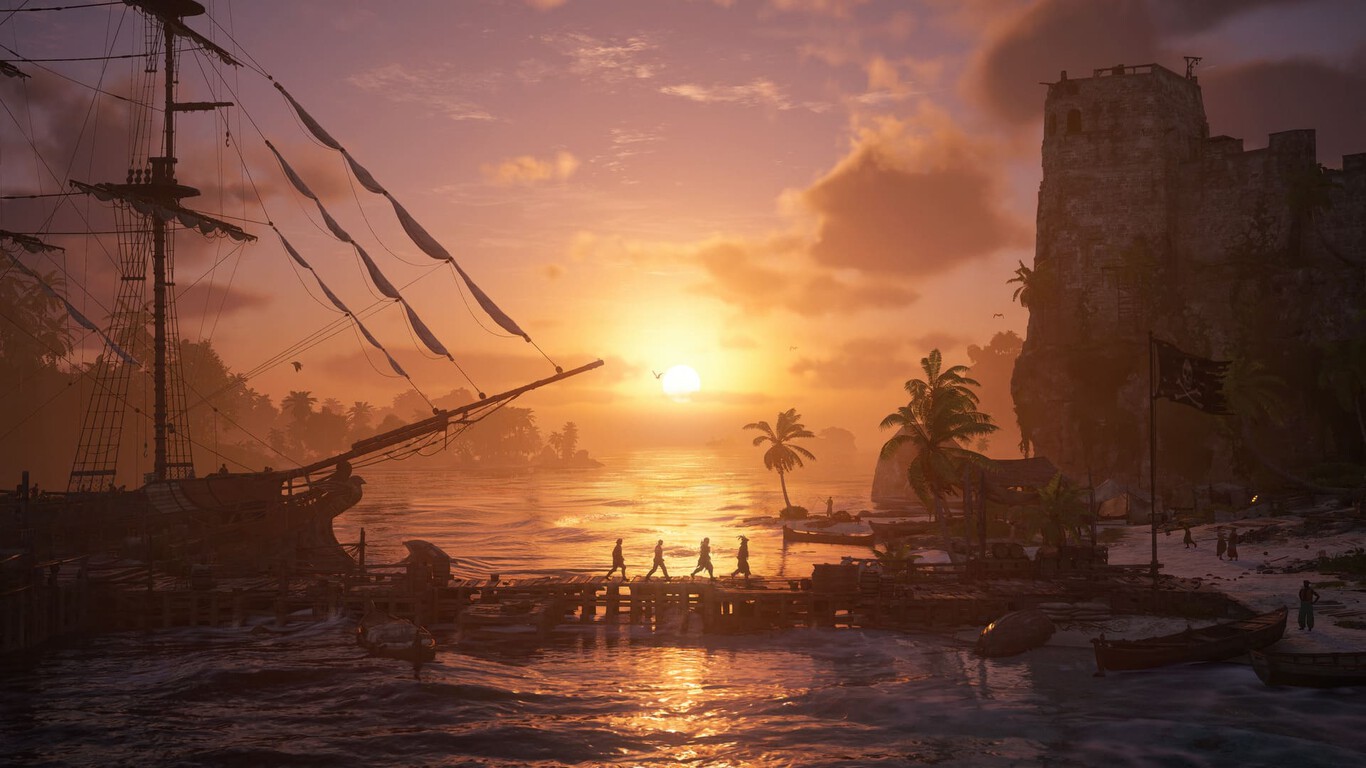
Among the most eye-catching technical improvements, the new weather system may be the most exciting. Shadows already hinted at this direction with its dynamic weather, but there the shifts between rainy and dry days — and even between seasons — were handled in a relatively straightforward way. Assassin’s Creed Black Flag Resynced wants to build a far livelier open world, with storms of varying intensity, showers, thunder, fog, wind, and torrential rain that are not just there for atmosphere, but will actively affect sailing itself. There will be whirlpools, waterspouts, and almost unreal-looking waves too, all tied into a new physics system that should make naval travel tougher, more realistic, and above all more entertaining.
Underwater exploration has also been left true to its original spirit, but meaningfully improved. While Shadows kept exploration largely on the surface, Assassin’s Creed Black Flag Resynced still lets players dive, search shipwrecks, and fight sharks, just as they could 13 years ago. At the same time, Ubisoft wants this part of the world to feel more alive, so it has reworked the vegetation, wildlife, NPC population, and even docking animations to give the remake more personality and a more distinctive identity.
Gameplay Changes in Assassin’s Creed Black Flag Resynced
Shadows did not just pave the way on a technical level — it also influenced the project from a gameplay perspective. The original Black Flag had already marked a turning point for Ubisoft, and that shift became even clearer later in Unity, where stealth evolved into something much closer to a core pillar of the experience. Bringing back Assassin’s Creed IV with its outdated stealth systems fully intact would have clashed badly with everything the series has built since then.
That said, players should not expect Naoe-style stealth, nor should they expect Edward to suddenly become a silent shadow. Ubisoft seems to have focused on preserving what makes its protagonist unique, while still modernizing the overall experience. As a result, crouching is now possible, making it easier to sneak into camps, and together with tall grass and the returning sleep dart from the original, it opens the door to more flexible approaches — whether you want to charge in yelling or quietly dismantle enemy lines from the shadows.
Parkour has also received some notable adjustments, and they fit nicely alongside the improved stealth options. The closest comparison might be Assassin’s Creed Syndicate, although the system here feels less stiff. Ubisoft says it has brought over several elements from Shadows, including better environmental awareness and the return of a jump button, but even then it does not deliver the same distinctiveness Naoe had, nor the level of finesse Arno showed in Unity. Instead, Assassin’s Creed Black Flag Resynced feels faster and more responsive, supports parallel jumps and backward evasions, and seems designed more around how movement feels in the hands than around sheer spectacle.
Assassin’s Creed Black Flag Resynced Is Not an RPG, and It Does Not Want to Copy Shadows
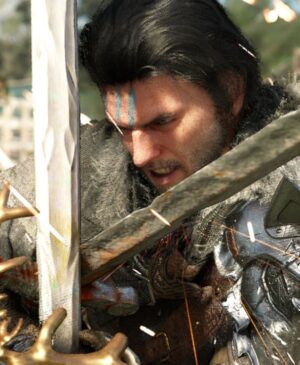
The most important change, however, affects combat. Ubisoft made a point of stressing this: Assassin’s Creed Black Flag Resynced is not an RPG, and it will not imitate the level-based, stamina-driven, shield-bar-focused combat logic of Shadows or any of the other newer entries. Instead, the team has built an interesting hybrid system that recalls the original while pushing it further. Combat is faster now, and the idea is to make every weapon feel more distinct, allowing players to switch between them more precisely and create more varied, more expressive combos.
Naturally, that comes with a new user interface as well. On the lower corners of the screen, there are panels tied to four buttons on each side, similar to what we saw in Shadows. On the left, there is space for the medkit, the main weapon, the guide button, and activating Animus vision. On the right are Edward’s “abilities” — or more accurately, his secondary attacks: the two pistols, the kick, the leg sweep, and the Rope Dart.
According to Ubisoft, the goal of the whole system is to keep combat flowing. Players should not constantly have to reposition or retreat just to recover space or stamina, as they often did during the series’ RPG era. Instead, the cycle of violence is meant to be fast, aggressive, and varied. Pistols, smoke bombs, axes, and the hidden blade are all still freely usable, but everything carries more weight now: parries hit harder, aiming feels better, and endless rolling has largely been replaced by dodges.
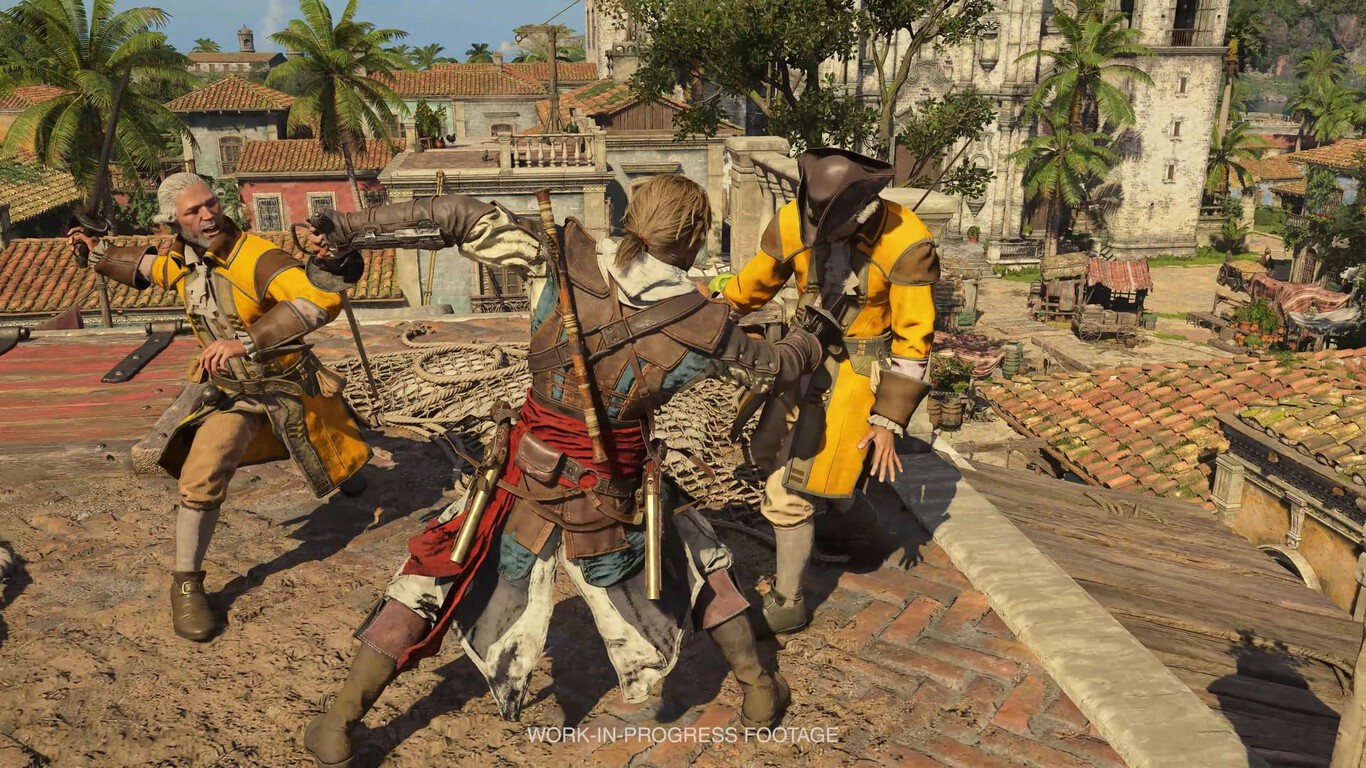
Finishers are back as well, and Ubisoft knows exactly how important that is for many players. If you pull off a perfect parry, you will not just be able to kill the enemy in front of you, but potentially four others too, with both classic and brand-new animations. The developers have also reportedly made sure the system works dynamically against enemies of different sizes and heights, letting you use foes as human shields, yank rooftop riflemen down with the Rope Dart, or escape the chaos with a smoke bomb. The whole thing feels much more intense and much more choreographed, while still staying firmly outside RPG territory.
The game’s looser structure also affects one change that may sound small at first, but is actually quite meaningful: tailing and eavesdropping missions. These are classic Assassin’s Creed staples, but after a while they became incredibly tiring, and Ubisoft is well aware that very few players actually enjoyed them. They are still there in the remake because they are part of the game’s DNA, but if you are spotted while tailing someone, the mission will no longer fail automatically. You can hide and try again once your target stops watching, or a secondary option may open up: defend yourself. The pursued target might call for guards or flee into a protected zone, forcing you to fight. The mission does not fail — you simply have to adapt to what is happening.
The Jackdaw has changed too, and that is a particularly interesting detail. While the original Black Flag still built in part on the naval systems of Assassin’s Creed III, Ubisoft has now very clearly looked at ideas from Skull and Bones and repurposed several of them for this remake. The ship gets new weapons and new upgrades, and naval combat becomes more flexible. Boarding and the raw feel of ship movement remain, but even greater emphasis is placed on cannons that can weaken sails, thin out enemies on deck, or set opposing ships ablaze. The interface has changed here as well, again taking cues from Shadows, and the upgrade menus are now cleaner and more direct. And yes, players can also keep a pet on board: a cat or a monkey can run around the deck.
What Has Been Renewed — and What Has Disappeared — in Assassin’s Creed Black Flag Resynced?
Alongside all the under-the-hood improvements, Ubisoft also had a few surprises in store, both good and bad. The good news is that while the story is officially unchanged, the game itself is bigger, more interconnected, and expanded with new characters. Edward’s journey therefore remains the same in essence, but it becomes broader in scope. Three new crew characters are being added to the game — Lucy Baldwin, Father, and “Deceased” Smith — each with their own missions, side-story relevance, and abilities that can be used in naval or land combat alike.
It almost feels like a brand-new DLC folded directly into the base game. Ubisoft has also reworked the stories of Blackbeard and Stede Bonnet, with new narrative arcs that will presumably lead to new missions as well. All of this is being supported by new dialogue and new cutscenes recorded with the original voice cast, giving these characters more weight in the overall story. In Matt Ryan’s words, “he’s still the same Edward, yes, but the new scenes are more dynamic and give greater weight to his journey as a character.”
It is not just the story that is expanding — the soundscape is too. The sea shanty selection will be broader, and one of the most interesting additions is that Woodkid, who had previously been associated with the series mostly through Assassin’s Creed trailers, is also composing part of the remake’s soundtrack. Brian Tyler’s original work remains in place, but it will now be complemented by a fresh musical layer.
Of course, not everything is an addition — there are cuts as well. The original Black Flag multiplayer mode is not returning, and neither are the game’s DLC expansions. Paul Fu, the director, explained the decision by saying, “we made a very clear choice: as much as possible, we wanted to focus on the story and on Edward’s adventure.” Because of that, neither Freedom Cry nor the Aveline storyline will be included in this package, although Ubisoft emphasized that the original game is not disappearing, so those pieces of content will still remain available there.
The modern-day storyline is also being substantially reworked. Back when the original Black Flag launched, it marked a turning point after Desmond’s departure, and for many players that was when the importance of the present-day framing began to fade. According to Jean Guesdon, this was something Ubisoft felt had to change for Assassin’s Creed Black Flag Resynced, which is why the team has completely removed the original modern-day sections. In their place, the focus shifts to the Rifts — the gateways that previously allowed players to leave the Animus — and these now concentrate on Edward’s internal struggle, on how he tries to survive in a world that is constantly trying to crush him.
Assassin’s Creed Black Flag Resynced has, in essence, now told us everything it wanted to say about itself at this stage. This is not a quick cosmetic update, but a full-scale remake rebuilt from the ground up — one that preserves the strongest qualities of the original game while finally addressing the areas that had long been crying out for improvement. The game launches on July 9, 2026 for PS5, Xbox Series X|S, and PC, and it will also be available on day one through Ubisoft Plus.
-Herpai Gergely “BadSector”-







Leave a Reply