
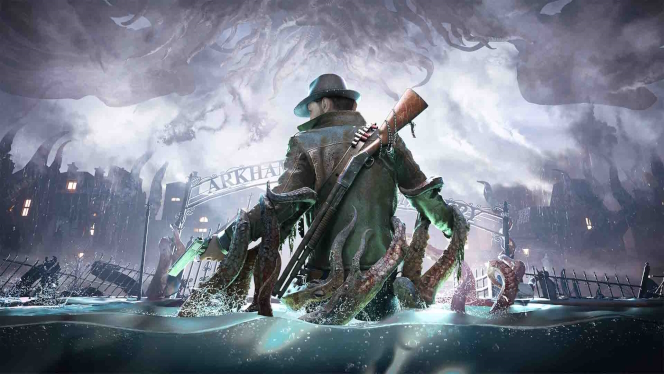
PREVIEW – The Sinking City 2 is not simply continuing Frogwares’ earlier Lovecraftian detective adventure. It is returning with a much sharper genre shift: instead of the RPG-flavored investigative foundations of the first game, the sequel moves toward a tighter, more cinematic survival horror approach, closer to the language of Resident Evil and Silent Hill. Oakmont gives way to Arkham, investigation remains present, but it no longer carries the whole structure on its back. Planned for summer 2026 on PC, PlayStation 5 and Xbox Series X/S, Frogwares’ sequel appears to be shedding precisely the excess weight that held the first game back.
Lovecraftian horror is hardly rare in video games, and at times the field can feel almost overcrowded with it. The reason is obvious enough: games are especially well suited to the unknown, to space, to madness, and to that persistent feeling that the player is circling something they probably should not understand. Lovecraft’s work is also available for broad creative use, which means developers can freely draw from the mythos, the mood and the bestiary. The Sinking City 2 tries to stand apart in that crowded field by refusing to follow the same detective-RPG path laid down by the first game.
This time, Frogwares is leaning much more decisively into survival horror. The first The Sinking City was not a bad game, but it clearly tried to do too much at once: open world, Lovecraftian atmosphere, investigation, role-playing elements, choices, branching dialogue, combat and a strange urban nightmare of its own. The sequel cuts away several of those layers. There are no prominent decision systems, no traditional skill tree, no role-playing structure built around branching conversations. In their place comes a more focused, cinematic horror experience shaped around tension, combat, route control and atmosphere.
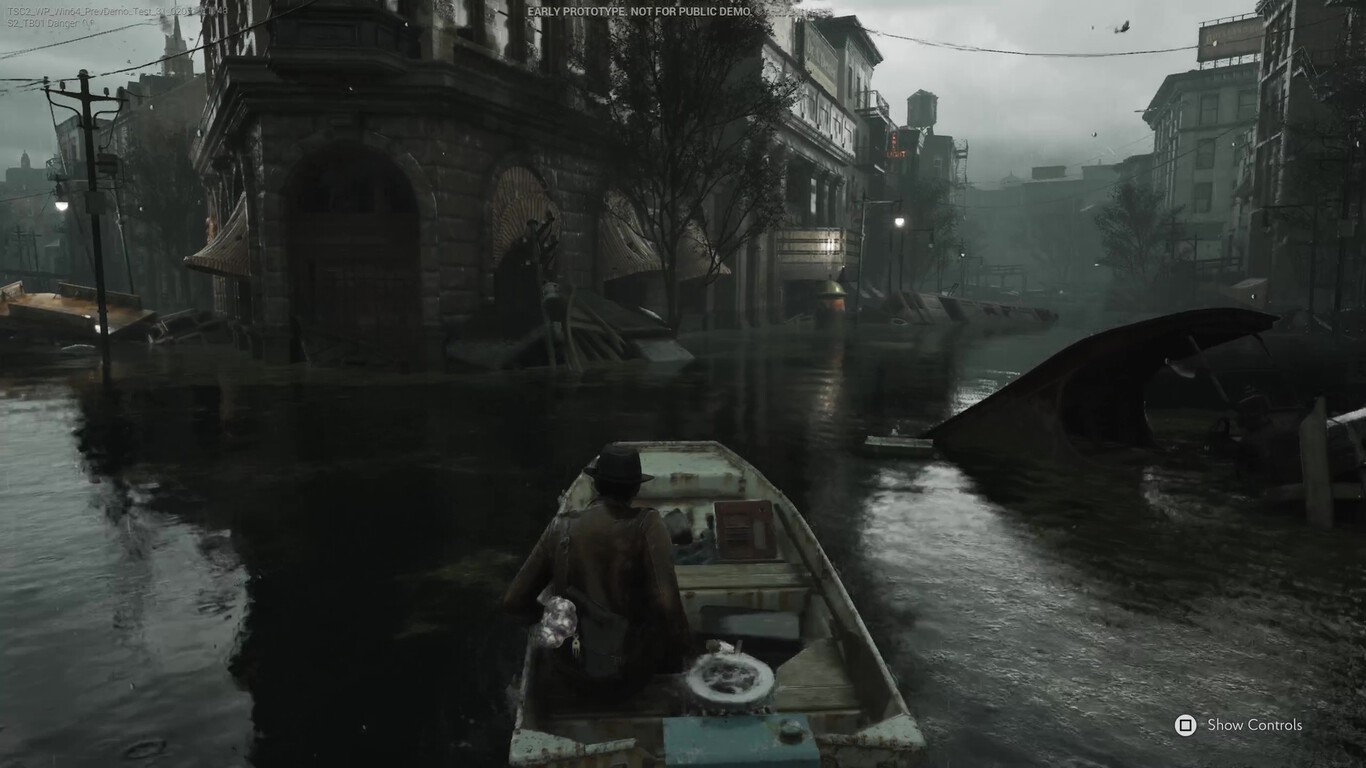
The setting also changes. Oakmont is replaced by Arkham, which in Lovecraft’s universe is far more than a recognizable name. The city is one of the mythos’ key locations, tied to Miskatonic University, buried secrets, unspoken horrors and that pervasive sense that even an ordinary street or library might be standing at the edge of something human reason was not built to hold. In The Sinking City 2, Arkham becomes a flooded, monster-infested, partly labyrinthine survival space, where the city is not just a backdrop, but one of the main sources of threat.
Welcome To Arkham’s Nightmare
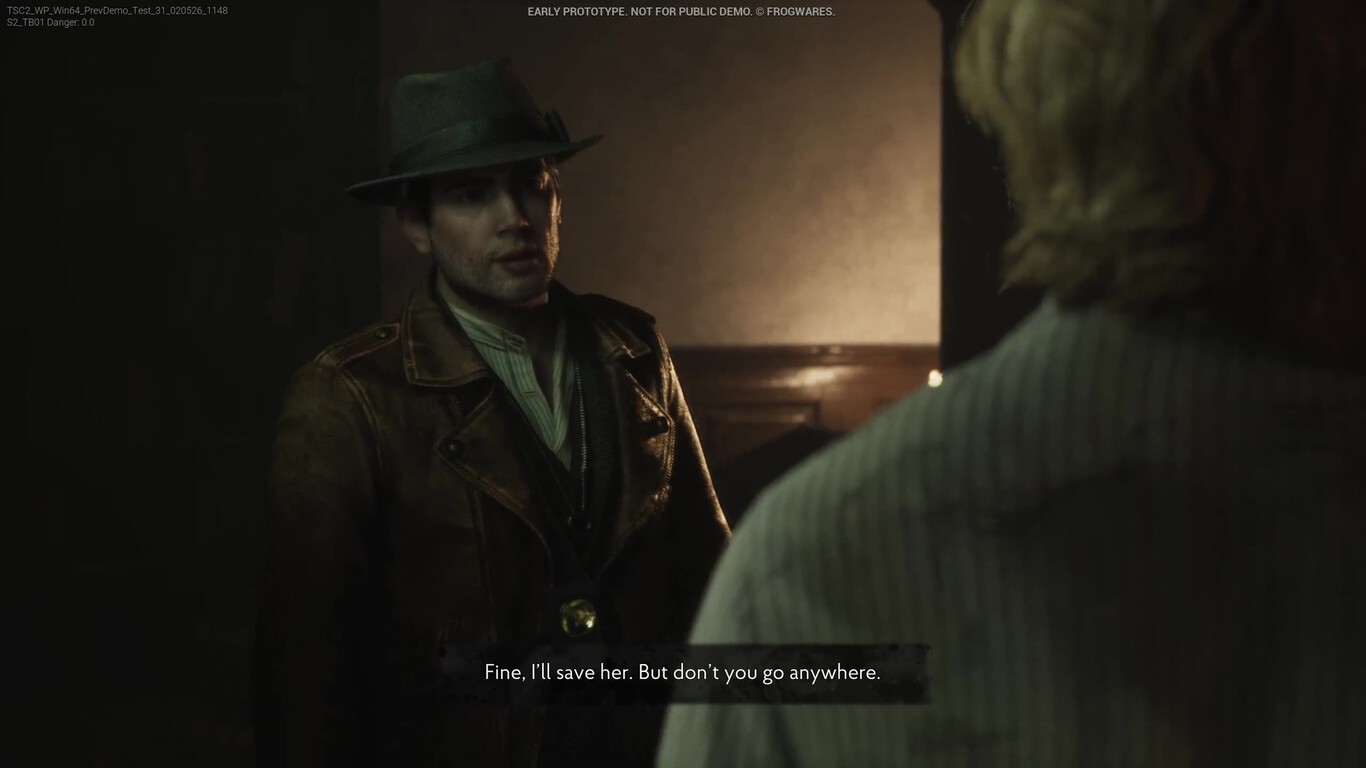
The story follows Calvin Rafferty, whose involvement in an ancient ritual sets the disaster in motion. The consequences quickly grow beyond private tragedy: his partner falls into a coma, Arkham is struck by a flood, strange creatures appear, and the city slides into a state where reality and Lovecraftian nightmare become increasingly hard to separate. The goal is both personal and cosmic: find the answer to the curse, while also searching for Rafferty’s missing partner, who seems to have vanished under impossible circumstances.
That premise openly recalls classic psychological horror, especially the structure of personal guilt, loss and urban nightmare associated with Silent Hill 2. Frogwares, however, is not merely copying familiar patterns. It is trying to soak them in its own Lovecraftian background. The player is not only facing a personal past here, but also creatures, forces and events so vast that private trauma may be only the first crack in the door.
One of the sequel’s most important changes is that the developers are not trying to make another Lovecraftian RPG. The Sinking City 2 is instead a survival horror game in which routing, tension, combat, resource management and gradual environmental unlocking carry more weight. Investigation has not disappeared, but it now seems to work more as a supporting layer: readable notes, accounts from Arkham residents, puzzle-related texts, objects and clues help reconstruct what has happened in the city during the months since the catastrophe.
Companions also reinforce the more cinematic direction. Temporary allies and stranger, less tangible presences may appear throughout the game, offering advice, dialogue and additional viewpoints inside the story. That device is not unusual in modern third-person adventures, but it can work especially well in Arkham, where silence may be just as threatening as any creature waiting at the end of a corridor.
A Bigger World With A Tighter Spine
Arkham is presented as an open world, but not as a conventional free-roaming playground. The city is divided into districts, with access opening as the story progresses, which allows Frogwares to control much more carefully when, where and in what condition the player sees each part of the city. That is a major difference from the first game, because the sequel relies less on scattered exploration and more on a targeted survival horror structure built around returning to earlier spaces.
Backtracking plays a larger role in The Sinking City 2. In this genre, that is not a flaw if used properly. A previously sealed door may open later with the right key, a puzzle may only make sense after new information is found, and a route that once seemed safe may later become far more dangerous. Good survival horror does not simply push the player forward. It teaches them the space, then changes the meaning of that space underneath them.
Exploring Arkham therefore seems more deliberate. Some doors require unique keys, obstacles can be overcome through puzzles, secrets reward careful searching, and safe rooms echo classic horror tradition. These locations allow the player to save, manage the inventory and improve the character’s abilities. Upgrades are rune-based and provide practical advantages such as faster shooting, quicker weapon switching or reduced enemy damage.
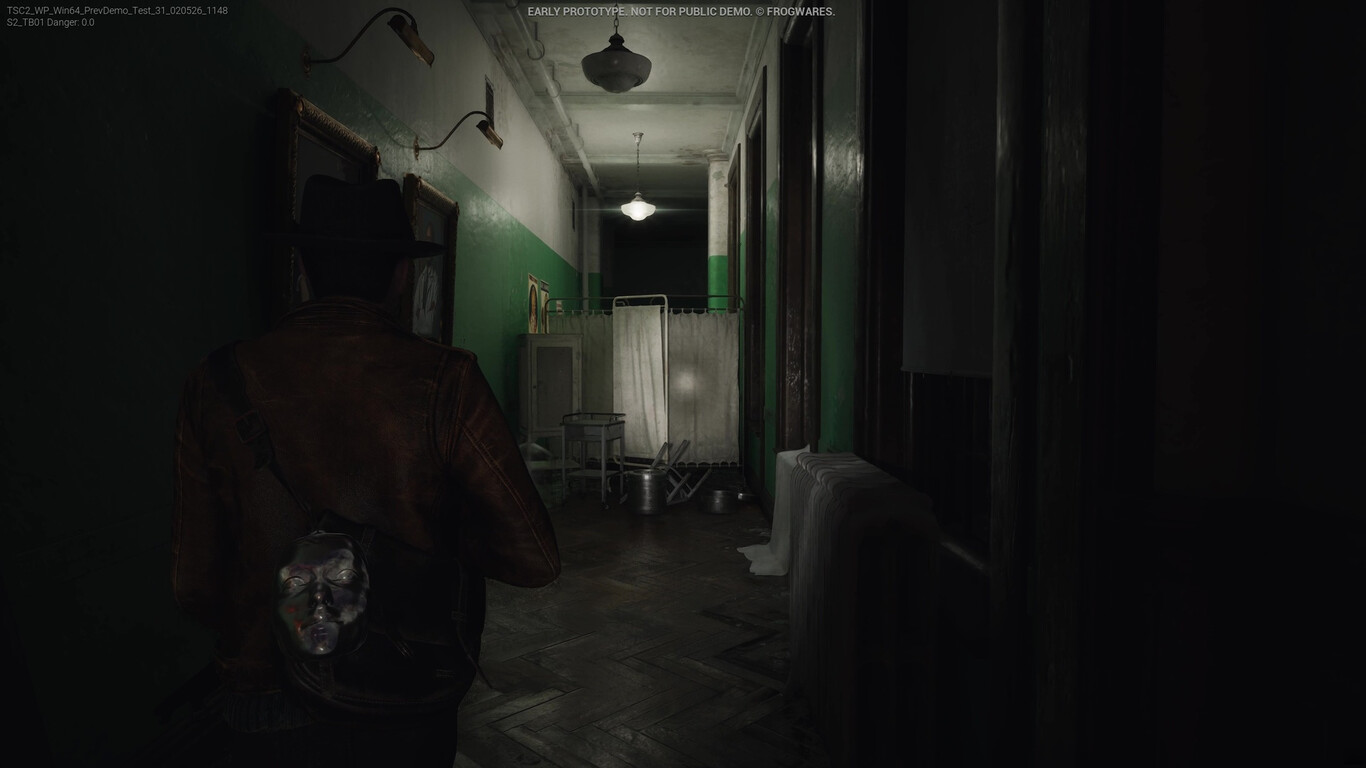
The city’s atmosphere is not built primarily around cheap shocks. Frogwares appears to be leaning on environmental horror instead: missing bodies, distant footsteps, oppressive interiors, narrow corridors, flooded streets and the feeling that every path in Arkham leads back toward something worse. A sudden scare is gone in a second, but a carefully built city can keep an unpleasant pressure in the player’s stomach long before the next door is opened.
Unknown Creatures, Familiar Weapons
The other major pillar is action. The Sinking City 2 is openly a third-person survival horror game, with an over-the-shoulder camera, heavier movement, simple dodges and stronger physical feedback. The goal is not to make the protagonist slide through monsters like an acrobat, but to make each encounter feel weighty. In that sense, combat may sit closer to the direction established by the Silent Hill 2 remake and modern Resident Evil, where uncertainty, low ammunition and close-range danger create the pressure together.
Frogwares is clearly responding to one of the first game’s weakest areas: combat. In the sequel, enemies appear to have more distinct roles rather than simply standing in the player’s way. Classic Lovecraftian creatures such as the Mi-Go appear, but the developers are also adding new threats. One of them is the Slither, a worm-like parasite that enters victims’ bodies, controls them, triggers mutations or even reanimates the dead.
That changes not only the imagery, but also how combat is approached. Some infected enemies develop pustules that act as weak points, while others have a tougher outer layer that must be stripped away before their more vulnerable muscle tissue can be exposed. Fast movers, rear attackers, ranged spitters and enemies that avoid melee suggest that the sequel is not aiming for a needlessly complicated combat system, but for enemy types that require better situational awareness.
Limited ammunition, inventory management, crafting and healing materials remain important. That is one of survival horror’s fundamental sources of tension: the question is not whether the player has a weapon, but whether using it is worth the cost. The Sinking City 2 will work best if combat becomes a risk the player genuinely considers before spending ammunition, health and nerves, rather than an obstacle to clear automatically.
Early material also suggests that the system may still need work. Enemy AI, attack patterns and larger wave-based survival sections could still require substantial polish. That is not surprising for a game still in development, especially when Frogwares is working in a genre that demands a very different pace, level rhythm and pressure curve from the studio’s earlier investigative adventures.
Unreal Engine 5, Strong Mood, Unsettled Technical Questions
The Sinking City 2 is being built in Unreal Engine 5, which suits flooded Arkham, wet surfaces, unnatural lighting and grotesque creatures very well. Technology, however, does not guarantee a clean result. The material shown so far points to a strong atmosphere, but visual and performance questions remain. Lighting, reflections, shimmering surfaces and stability could be especially sensitive issues in a horror game where image quality and spatial perception are not mere decoration, but part of the tension.
Frogwares is working under unusually difficult circumstances. As a Ukrainian studio, it is developing the game during the ongoing war, and that has directly affected production conditions. The planned 2025 release was moved into 2026, with the studio officially stating that it needed more time. This is not only a technical matter: the genre shift itself is a major design challenge. A full survival horror game requires a different logic from an investigative adventure, from level structure and enemy behavior to pacing, resources, fear rhythm and backtracking.
What remains most interesting is that the sequel appears to have a clearer vision. Frogwares is not trying to preserve everything from the first game at once. It is not clinging to the old RPG-like framework, nor forcing choice systems and branching dialogue into a story that may work better as a tighter, more cinematic horror experience. Investigation remains, but no longer slows the entire pace. Combat moves forward, but hopefully without becoming empty shooting. Arkham, meanwhile, is strong enough as a setting to become a character in itself.
The Sinking City 2 is planned for summer 2026 on PC, PlayStation 5 and Xbox Series X/S. The sequel is not interesting simply because it invokes Lovecraft again – plenty of games do that. It is interesting because Frogwares has finally chosen a more decisive direction. If Arkham’s open yet tightly controlled structure, resource-based combat, environmental horror and lighter investigative layer come together properly, The Sinking City 2 could not only improve on the first game’s weaknesses, but also become a strong survival horror in its own right.
-Gergely Herpai “BadSector”-
Source: Steam, Frogwares, Wccftech






![[GC 2026] Final Fantasy VII Revelation: The Planet's Crisis [VIDEO]](https://thegeek.games/wp-content/uploads/2026/08/theGeek-Final-Fantasy-VII-Revelation-300x365.jpg)
Leave a Reply