
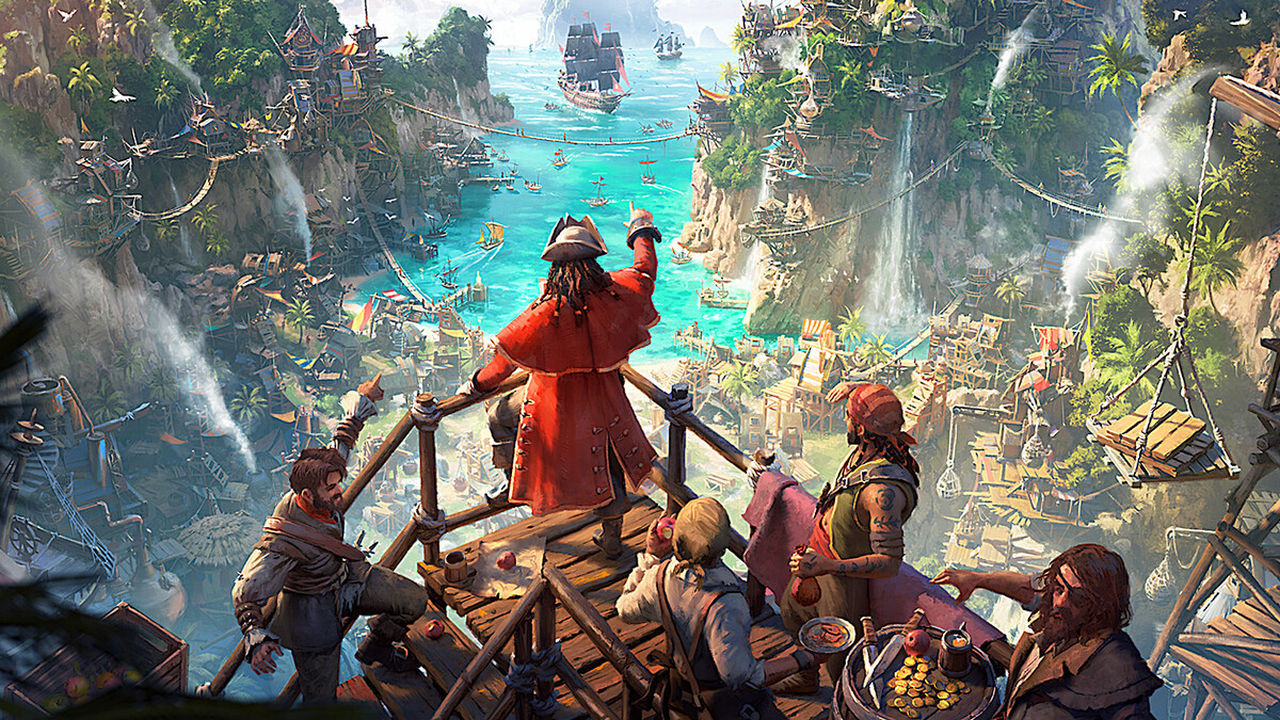
PREVIEW – When people think of pirate games, the usual names tend to surface immediately: Sid Meier’s Pirates!, Sea of Thieves, or more recently the breakout success of Windrose. Each of them approaches pirate fantasy from a different angle, which is exactly why Corsair Cove manages to feel surprisingly fresh. Hooded Horse and Limbic Entertainment are not simply slapping a pirate skin onto a familiar formula here. Instead, they are building a hybrid that mixes management and classic role-playing ideas in a way that feels far more distinctive than expected.
That is not entirely shocking when you consider the team’s background. Limbic’s history includes games such as Tropico 6 and Heroes of Might and Magic VI, so they clearly know their way around management systems with a bit of extra character. What really makes Corsair Cove stand out, however, is not only its mood or its pirate premise, but the way it lets players build a pirate empire using a concept that still feels oddly rare in this kind of strategy game: verticality.
An Anno-Style Pirate Game, Except You Build Up the Cliffs
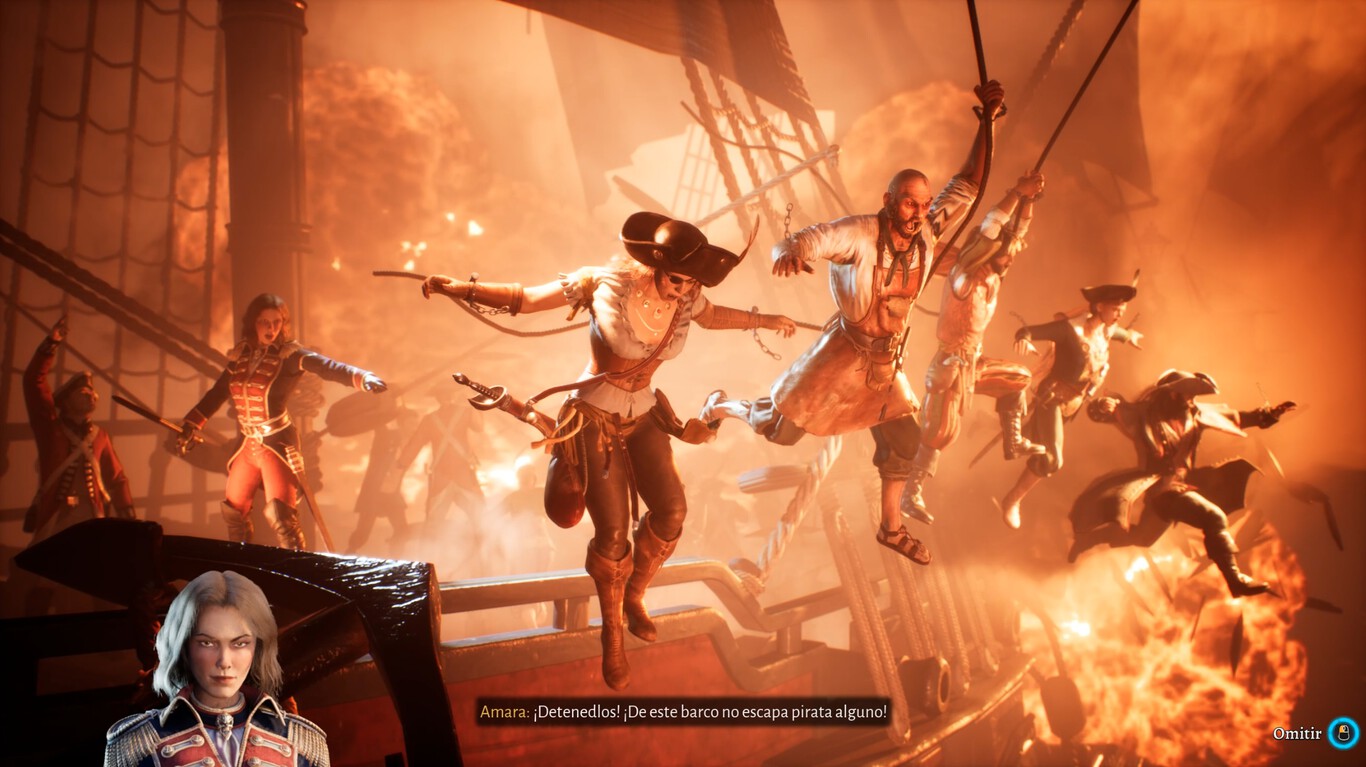
The basic setup sounds familiar enough. After a string of very unfortunate skirmishes, you and your battered crew wash up on a Caribbean island, all while Spanish naval officers remain close behind in pursuit. That is where the rebuilding begins, and anyone who has spent time with the Anno series will spot the similarities almost immediately.
Just like in those games, you need to establish buildings to feed your people, house them, and slowly turn a wrecked crew back into something functional. The twist is that, unlike most Anno titles where you spread across wide islands full of horizontally placed opportunities, Corsair Cove deliberately limits your flat building space. The solution is as simple as it is clever: you build up the walls.
The game’s flexible construction system actively encourages players to use every slope, outcrop, and cliffside they can find. Most buildings can still be placed on the ground, but the walls of the island become just as important. That is not only a stylish visual trick, it is a core management decision, because when horizontal space is scarce, vertical space becomes one of your most precious resources.
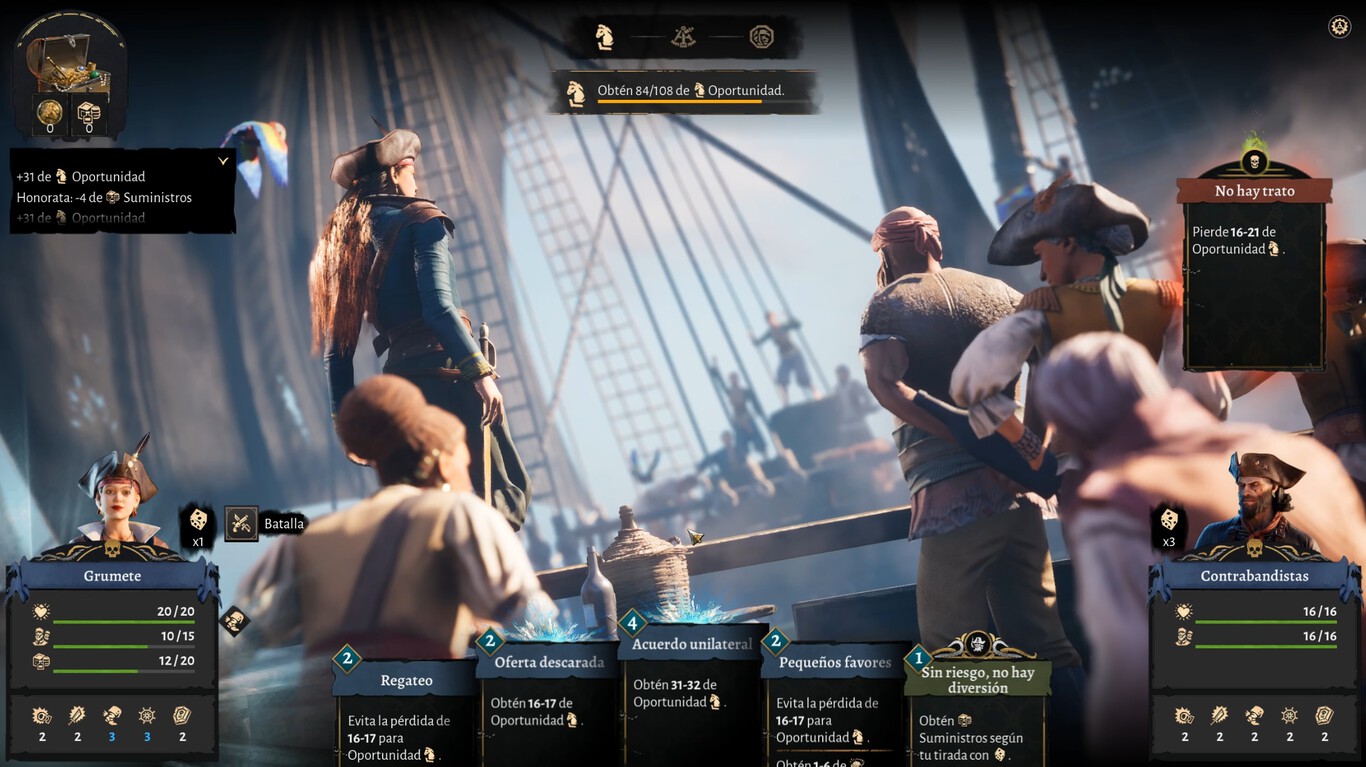
And it is not enough to simply stack structures upward. You also have to account for gravity and movement. Early on, you only have a few walkways and basic means of connecting things, but before long you unlock tools like pulley systems and zip lines that allow materials to move efficiently between levels. That gives Corsair Cove a refreshing edge over more traditional management games, because you are not just making sure resources reach the right production chains, you are also trying to make an entire layered logistical network actually function.
That is not just an aesthetic flourish either. If taverns, kitchens, depots, and service buildings do not receive their materials on time, pirate satisfaction starts to drop. If morale falls too far, mutiny follows, and that is the end of the run. The supply chain matters just as much when enemies try to raid your island, because your defensive towers also need to stay stocked and connected. Otherwise, you are left burning through precious resources just to rebuild the damage.
Dice Rolls, Story Missions, and Sea Raids Built Around Decisions
Corsair Cove does not stop at base management, though. It also has a surprisingly strong role-playing layer. Eventually, you need to put to sea in order to gather new resources, recruit new crew members, and earn the gold required for more advanced construction. You can do that through smaller events around your hideout or through larger story missions that also help define what kind of pirate career you want to pursue.
You can become a notorious pirate, a slippery smuggler, a bloodthirsty raider, or a wealthy pirate lord. Each path offers different advantages and affects more than just narrative flavor. It feeds back into your base management and your effectiveness at sea. To make any of that work, you have to build ships, assign crews, and recruit captains, each of whom can be gained by completing missions of their own.
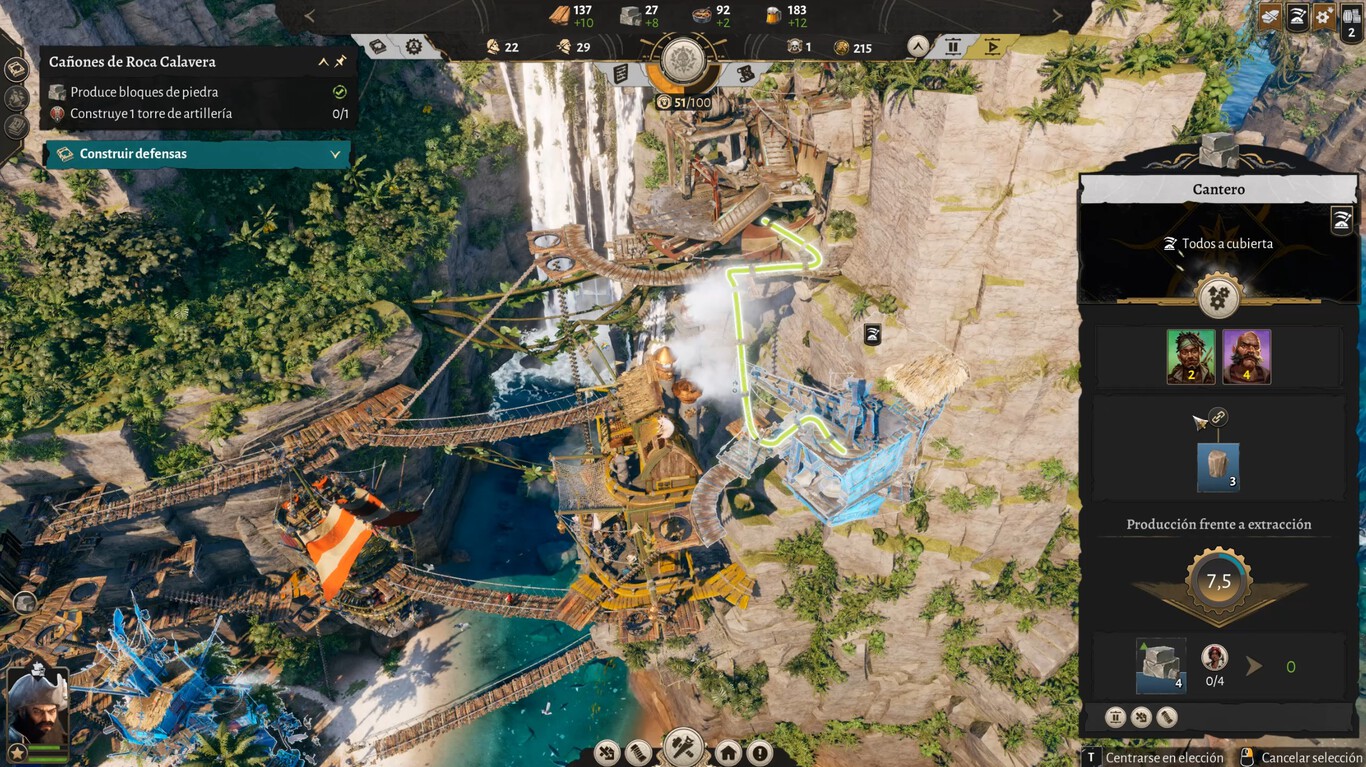
The sea-based action is not direct combat in the most traditional sense, and that will probably divide opinion. The game relies more on a decision-driven system built around cards, ship stats, and dice rolls. During an event, you are shown the objective, the enemy’s chosen action, and a selection of responses. You then decide whether to counter the enemy, push harder toward the mission goal, or simply try to survive the situation. The success of that strategy ultimately depends on the roll of the dice and the resources you prepared beforehand.
At first glance, that may sound simpler than what many people expect from a pirate game, but it is precisely what makes the system interesting. Every action consumes specific ship resources, and when those run out, you can try to replenish them at the cost of the crew’s health or the ship’s condition. That makes the choice of ship and captain extremely important, because one bad decision can turn a promising expedition into a total failure.
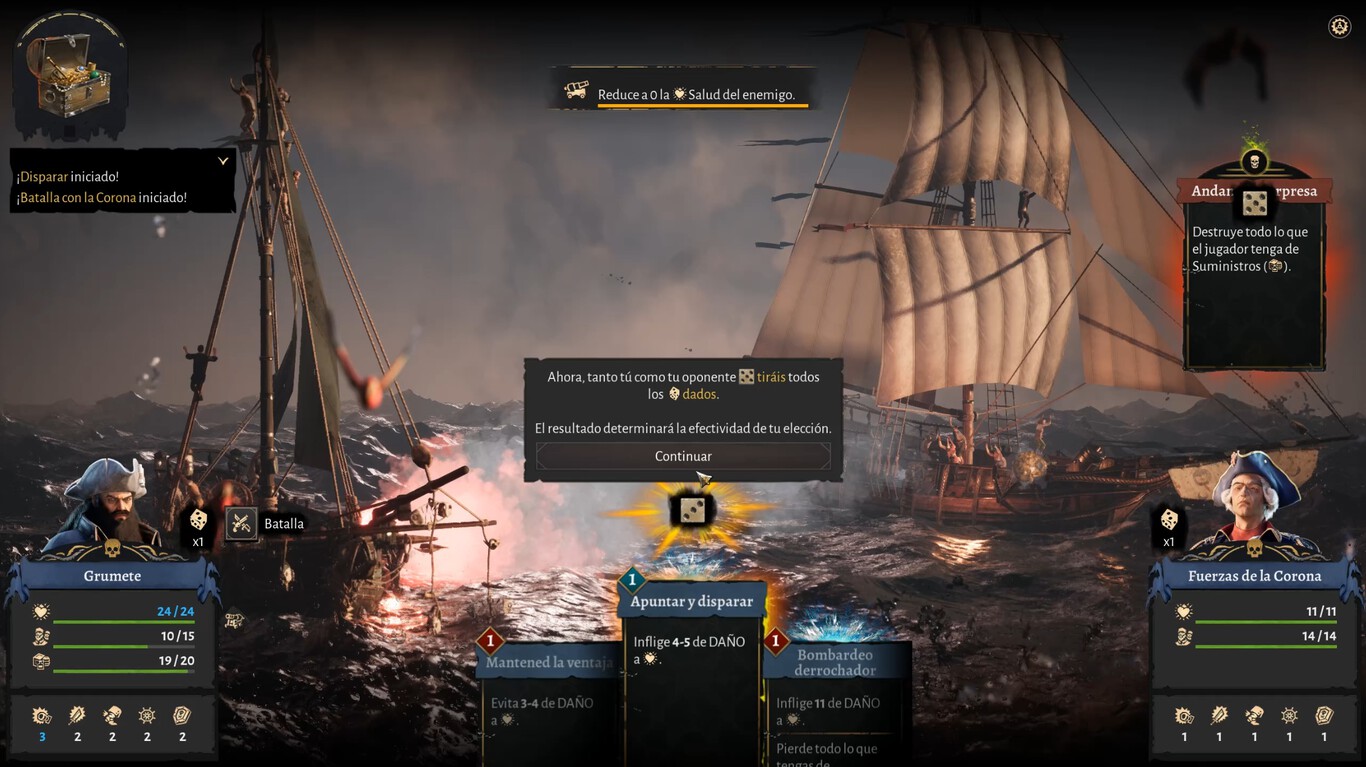
Meanwhile, your island cannot simply be ignored while you are away. Even if you can establish multiple bases, every structure still requires population, and your crews are recruited from that same pool. A longer voyage therefore forces you to decide which buildings can be paused, how satisfaction can stay high enough, and how to keep the entire system from unraveling while your ship is still out at sea. Yes, missions can reward you with gold, new recruits, or rare materials, but the more meaningful rewards come in the form of progression points that unlock further events, technologies, ships, and opportunities.
In the end, Corsair Cove does not seem interested in becoming the loudest or most action-heavy pirate game on the market. Instead, it looks like a genuinely inventive strategy-management hybrid that happens to use pirates far better than most games do. There is still no official release date after its FYNG 2026 showing, but it is expected to arrive this year. If it can maintain this balance between base-building, logistics, and decision-based seafaring, it may turn out to be one of the year’s most pleasant surprises.
Source: 3DJuegos









Leave a Reply