
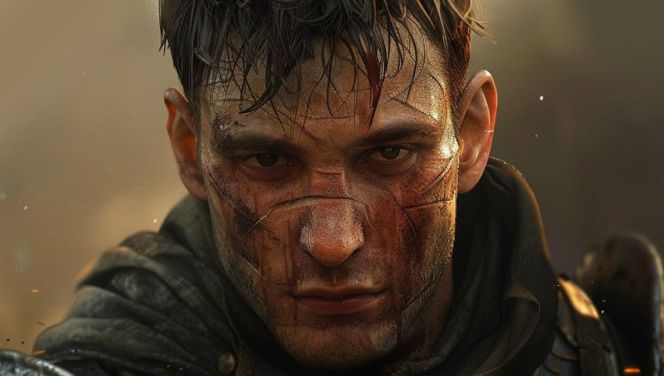
REVIEW – January mostly cleared its throat, but February wastes no time announcing that 2025 has no intention of letting RPG fans get bored. Kingdom Come: Deliverance 2 has every chance of becoming one of the year’s defining role-playing games, and after roughly 100 hours in its medieval Bohemia – during which I was robbed, beaten, covered in mud, taught how to use a sword and reminded that diplomacy becomes harder when Henry smells like a stable – I am comfortable saying Warhorse has delivered. Warhorse Studios did not merely make a bigger sequel; it has earned a seat at the table with the genre’s major names. This article was updated following the game’s arrival on PS Plus.
The story begins exactly where the first game ended, making Kingdom Come: Deliverance 2 a sequel in the most literal sense rather than a convenient new adventure that quietly forgets what happened before. We once again step into the boots of Henry of Skalitz, who has an important mission in Bohemia in 1403: alongside Hans Capon, he must reach Trosky Castle and secure support for King Wenceslaus in the struggle against King Sigismund. Naturally, things go wrong almost immediately, because otherwise this would be a very short RPG. Henry quickly finds himself back near the bottom of the social ladder and once again has to climb using steel, intelligence, persuasion and the occasional decision that probably would not survive close ethical inspection.
Mention the Kingdom Come series and most conversations reach the same two subjects within thirty seconds: combat and historical authenticity. The sequel, however, has grown far beyond those two calling cards, and its storytelling is the clearest evidence. The adventure in Deliverance 2 is not simply an excuse to drop us into a hostile medieval sandbox and give Henry reasons to ride between villages.
Political intrigue, reversals and memorable characters keep the campaign moving, while its presentation is considerably more cinematic and confident than before. The central story alone can consume 60 to 70 hours, but the missions rarely force one solution. Talking, sneaking, fighting, exploiting the environment or finding a route the designer never loudly points toward are all regularly viable. Major scenes are directed with much greater confidence without sacrificing the feeling that we are still shaping Henry’s journey ourselves. After sixty hours, most RPGs survive because there are still icons left on the map; here I genuinely wanted to know what would happen to the people involved.
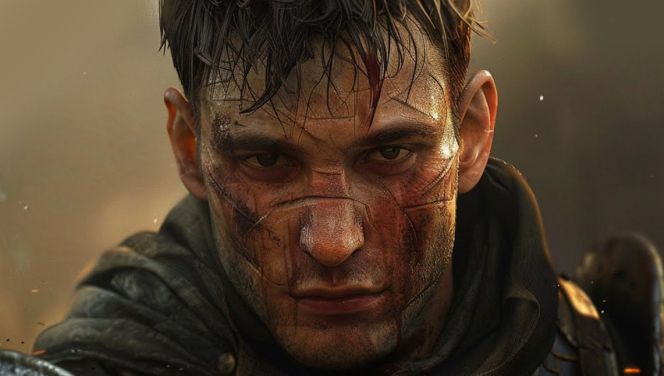
Great Characters Push the Story Even Further
A strong story can be efficiently murdered by boring characters, but Kingdom Come: Deliverance 2 has no such problem. Henry is no longer the completely inexperienced blacksmith’s son whom almost everyone could humiliate during the opening hours of the first game, yet he still carries anger, doubt and unresolved conflicts from his past. His decisions have consequences beyond selecting the next line in a dialogue window. Around him is a varied collection of allies, rivals, nobles, criminals and people who resist easy classification, turning the clash between factions into something considerably more human than two colored banners moving toward each other on a map.
Players who enjoy disappearing from an RPG’s main story for several evenings are in serious danger here. Warhorse has packed the world with side quests that substantially increase the running time without relying on the usual request to collect three wolf teeth from the neighboring forest. Henry becomes involved in disputes between towns, kidnappings, mysterious murders and stories shaped by contemporary beliefs about devils, ghosts and other things that frightened people perfectly well centuries before horror movies were invented. Several of these quest lines could comfortably pass for the central plot of a smaller RPG.
Bohemia also refuses to leave us alone while traveling. Bandits regularly decide that Henry’s purse belongs to a more communal economic system, an interpretation we usually settle with edged weapons. Wandering fighters may challenge us to duels, while merchants, travelers and assorted eccentrics provide less violent encounters. None of these moments rewrites the history of open-world design, but together they make the regions feel as though they continue existing whether or not Henry happens to be standing inside an active quest marker.
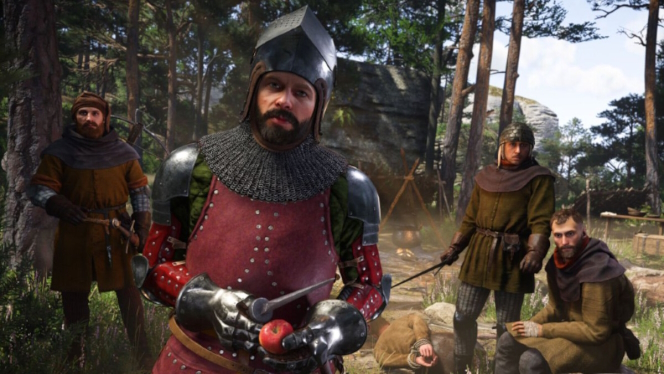
A Living, Believable Open World
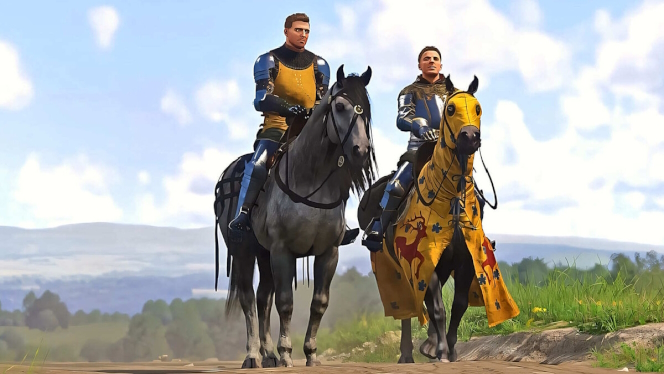
The two major regions of Kingdom Come: Deliverance 2 draw us in through more than quests and characters. Warhorse has reconstructed castles, villages, farms, forests and even ordinary huts with a degree of attention that makes it clear the Czech developers did more research than scrolling through a few medieval reference images on a Friday afternoon. CryEngine remains particularly effective with lighting, vegetation and dense environmental detail, but graphical fidelity is only half the reason the world feels convincing. Historical authenticity continually affects how we are expected to play inside it.
Kingdom Come: Deliverance 2 still has no interest in becoming a fantasy RPG. Dragons, fireballs and magical creatures have been left elsewhere; Warhorse Studios takes us to 15th-century Bohemia and expects us to live there rather than admire it as tourists. Social rank, clothing, laws and ordinary physical limitations matter. Walk into noble company dressed like a filthy laborer and people notice. Arrive covered in blood, mud and several days of sweat and they notice that too. The romantic appeal of medieval life can disappear remarkably quickly once somebody hits Henry in the face with a mace.
Combat remains demanding as well. It is not difficult simply because the game enjoys punishing us; it is difficult because a sword fight cannot be solved with the same enthusiastic button mashing that clears entire villages in more forgiving action RPGs. Attack direction, stamina, positioning, weapon choice and the opponent’s movement all matter. Swords, axes and other weapons require different techniques, while combinations need to be properly learned. Once the system clicks, individual fights gain real weight. Until it does, Henry serves as a useful historical demonstration of why armed conflict was generally considered dangerous.
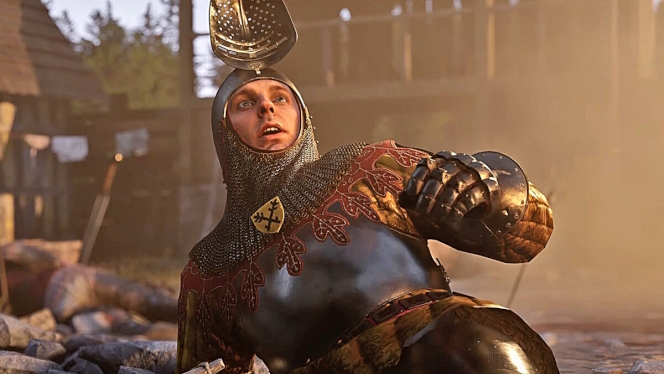
Far More Than a Combat System
Realism thankfully extends beyond the possibility of being killed by an angry mercenary. Brewing a potion requires following the recipe, preparing ingredients correctly and working through the process at an alchemy bench. Forging a sword or battle axe is not reduced to selecting “Craft” and watching a progress bar fill for three seconds. The work has to be learned and performed. These systems will not appeal to everyone, but they are a major reason the world feels internally consistent rather than like a collection of medieval-themed menus.
Equipment condition, hunger and fatigue all demand attention, but so do dirt and body odor. A filthy Henry inspires less confidence, while approaching peaceful villagers with a drawn weapon produces the understandable response of people who would rather not continue the conversation. Character progression follows the same philosophy. Improvements come through practice or through finding somebody capable of teaching Henry, rather than simply clicking a node and instantly becoming a master. It creates a slower rhythm than most modern RPGs, but progression consequently feels earned.
I will not pretend the opening hours treated me kindly. Bandits repeatedly introduced me to the road surface, badly judged duels ended at loading screens and several disasters happened because I approached the game with habits learned from more conventional RPGs. Kingdom Come: Deliverance 2 expects us to learn its own rules, usually while making mistakes. The Schnapps-based saving system remains one idea whose immersive purpose I understand far more readily than I enjoy it; brewing alcohol so I can safely save my progress still feels closer to administration than role-playing. Once that initial resistance is overcome, however, the game reveals an organic rhythm unlike almost anything else in the genre.
A project this large inevitably leaves a few cracks in the castle wall. Enemy AI occasionally behaves less like the lost genius of medieval military science and more like somebody who misplaced the plan, particularly during stealth. Minor bugs occur, characters can behave strangely and demanding scenes sometimes produce visible performance drops. None became serious enough during my experience to undermine the larger adventure. Warhorse Studios built an enormous network of interconnected systems, and with that many gears moving together, a few inevitably grind.
How Does It Perform on PC and Steam Deck?
Although I primarily reviewed the game on PS5, I also had the opportunity to see how well PC and Steam Deck handle medieval Bohemia. On PS5, Kingdom Come: Deliverance 2 looks excellent overall, although the early build still displayed occasional stutters, glitches and other technical rough edges. Performance nevertheless remained stable given the number of systems, characters and environmental details moving at once. Quality Mode targets 2160p/30 FPS from an internal 1440p image using FSR, while Performance Mode targets 1440p/60 FPS from 1080p with FSR upscaling. With VRR support above 60 FPS, this is not technological sorcery, but it is an entirely reasonable compromise for current-generation hardware.
On PC, Kingdom Come: Deliverance 2 made its appetite clear from the system requirements. This is not a game designed to launch on a decade-old office laptop out of politeness. Native 4K at maximum settings demands serious hardware, but the engine scales surprisingly well. Using an AMD RX 7900 GRE with a Ryzen 7 5800X3D, I reached 80-90 FPS at 4K with high settings, a few options reduced to medium and FSR Balanced. At 1440p with everything set to Very High and FSR Quality, the game crossed the 90 FPS line, making the PC version both beautiful and impressively smooth on suitable hardware.
Warhorse Studios also confirmed Steam Deck support, so naturally I had to discover whether an entire medieval Bohemia could travel in something approaching handheld form. With every setting at Low and FSR Performance, the game easily exceeded 60 FPS, although occasional dips remained. Raising several options to Medium and locking the system to 40 FPS produced a more balanced experience: steadier performance and image quality that remains perfectly acceptable on the Deck’s smaller screen. For an RPG of this scale, that is an impressive result.
A Genuine Medieval Challenge You Will Remember
Ultimately, Kingdom Come: Deliverance 2 deserves a place among the strongest RPGs of its generation because calling it “that realistic medieval game” no longer comes close to describing what Warhorse has built. Its lengthy story keeps Henry and his companions interesting until the end, its world is astonishingly detailed, and its systems are complex because they reinforce one another rather than because somebody wanted an impressive feature list. It can be frustrating, stubborn and entirely unwilling to reshape itself around the player’s habits. That is also why it works. Warhorse Studios did not merely produce a larger sequel; it created a far more confident RPG that anyone who genuinely enjoys disappearing into a role-playing world will find extremely difficult to ignore.
Thanks to Magnew Kft. and Warhorse Studios for the review copy!
-Gergely Herpai „BadSector”-
Pros:
+ Authentic and exceptionally detailed medieval world
+ Complex, challenging combat system
+ Distinctive gameplay mechanics that deepen immersion
Cons:
– Stealth suffers when the AI loses the plot
– The save system remains unnecessarily cumbersome and irritating
– Performance issues in certain demanding sections
Publisher: Deep Silver
Developer: Warhorse Studios
Genre: Medieval RPG and simulation
Release: February 4, 2025








Leave a Reply